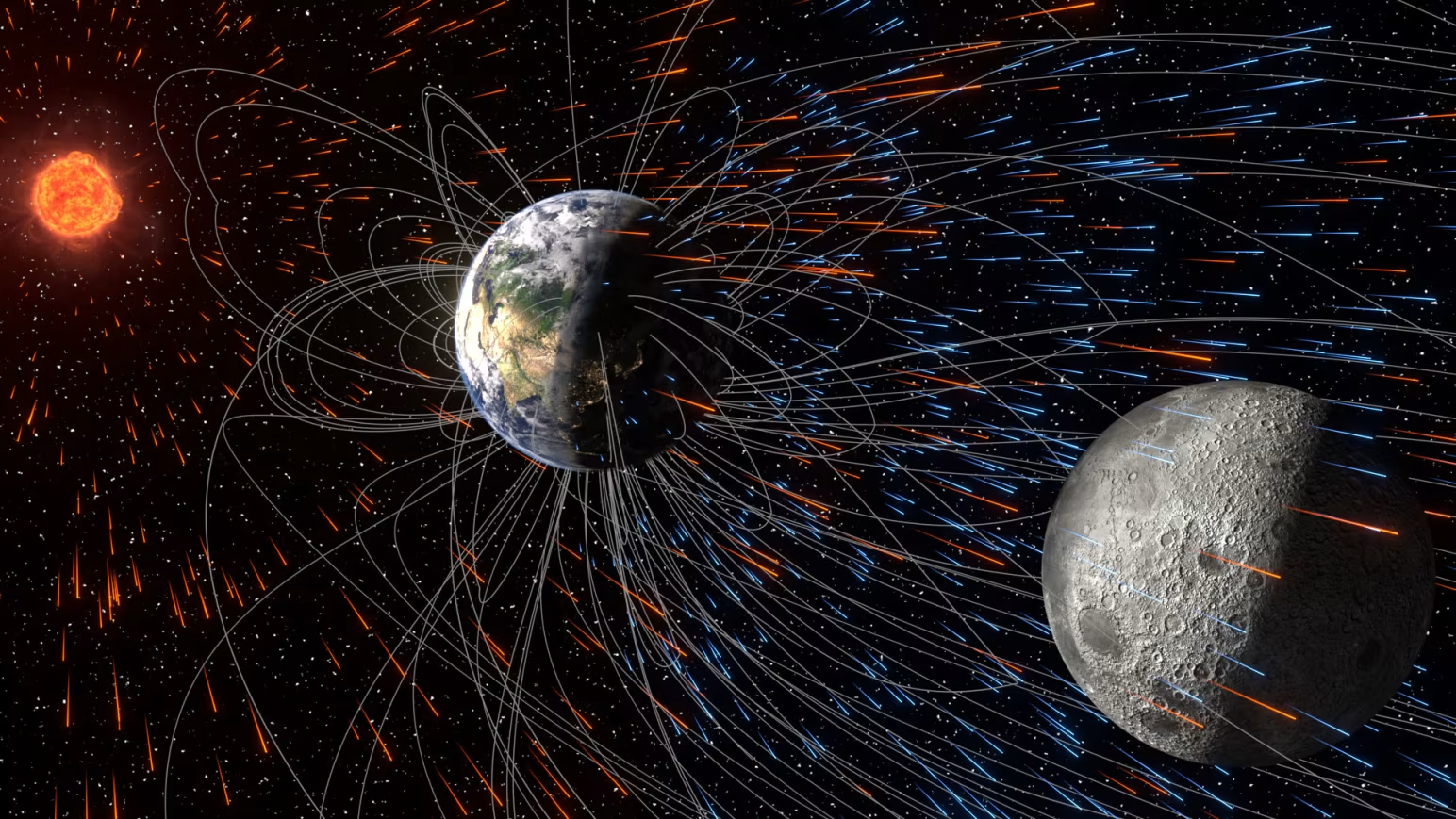
Atlanta, USA: For decades, we viewed the Moon as Earth’s loyal, rocky companion. However, a new study suggests a more “parasitic” early relationship. Scientists have discovered that billions of years ago, the Moon’s magnetic field was strong enough to pull gases directly from Earth’s atmosphere, effectively “stealing” the very air that was forming around our young planet.
The study explains that because the Moon was significantly closer to Earth shortly after its formation, the two bodies shared a connected magnetosphere. This connection acted as a bridge for atmospheric ions. As the Sun’s solar winds battered Earth, the shared magnetic connection funneled Earth’s oxygen and nitrogen toward the Moon. This “atmospheric theft” lasted for several hundred million years until the Moon drifted further away and its internal dynamo—the engine that creates a magnetic field—shut down.

This revelation is reshaping how astronomers look at planet-moon systems in other galaxies. It suggests that a moon’s proximity can dictate the atmospheric survival of its parent planet. For Earth, this loss wasn’t fatal, but it played a massive role in the chemical evolution of our world. The research also helps explain why current lunar missions are finding traces of Earth-originating oxygen in the lunar dust. This discovery is a reminder that the history of our sky is far more complex than a simple orbiting rock.