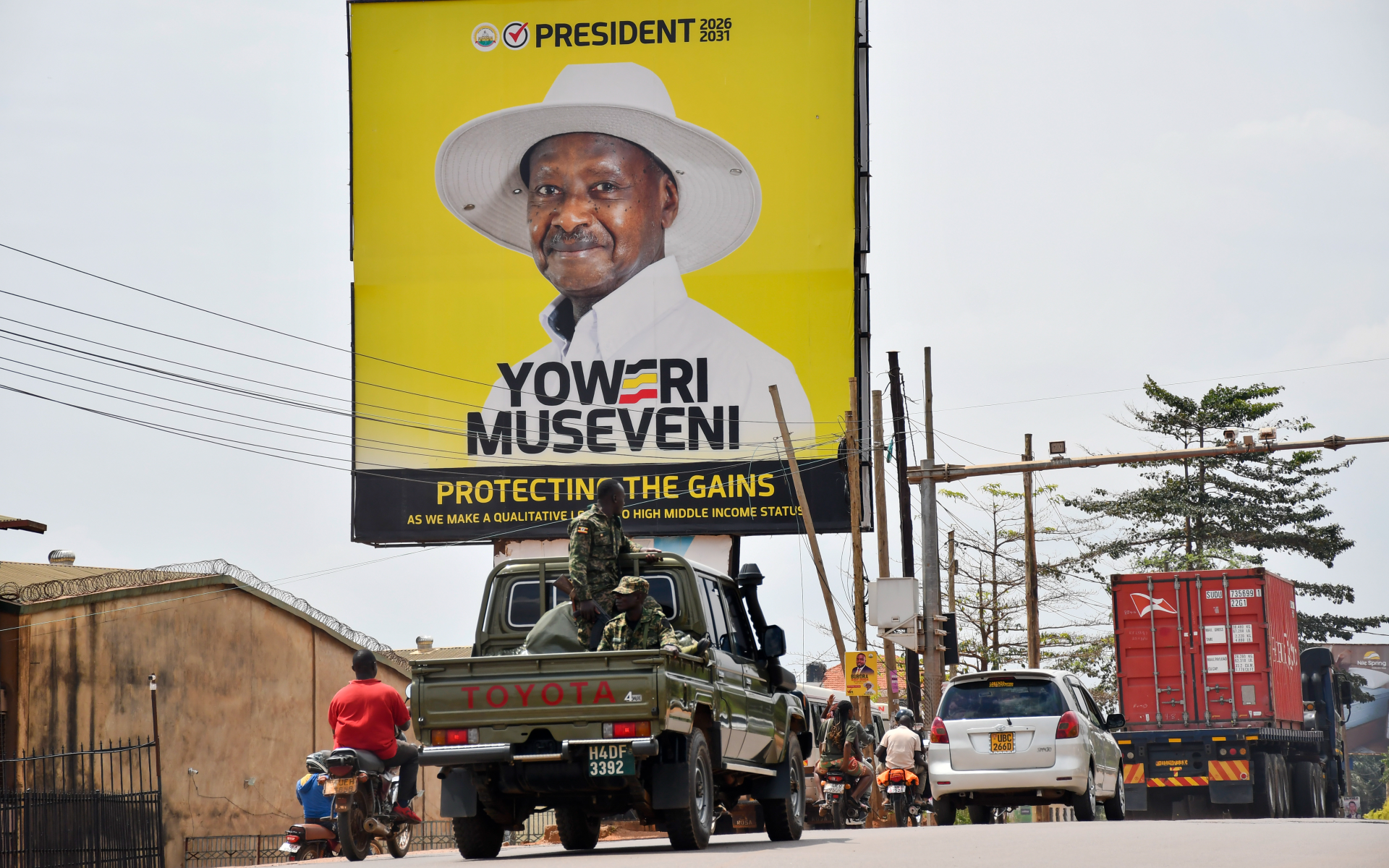
KAMPALA – To the surprise of few but the disappointment of millions, Yoweri Museveni has been declared President of Uganda for the seventh time. The 81-year-old leader, who took power in 1986, has successfully navigated what was arguably the toughest challenge of his career against the pop-star-turned-politician, Bobi Wine.
This election was framed as a battle of generations: the “Ghetto President” representing the 80% of Ugandans under 35, versus the “Old Man with the Hat” representing stability and the status quo. The Electoral Commission’s declaration that Museveni won nearly 59% of the vote cements the reality that in Uganda, the machinery of the state—the military, the police, and the electoral body—remains firmly in the incumbent’s grip.
Critics argue that the process was fundamentally flawed. With the internet severed, opposition agents arrested, and Bobi Wine physically isolated by the army, the transparency of the vote count is non-existent. For Museveni, this is a victory of endurance and tactical force. For Uganda’s youth, it is a harsh lesson in the resilience of entrenched power. The question now is not about the next five years, but whether the simmering anger on the streets can be contained that long.