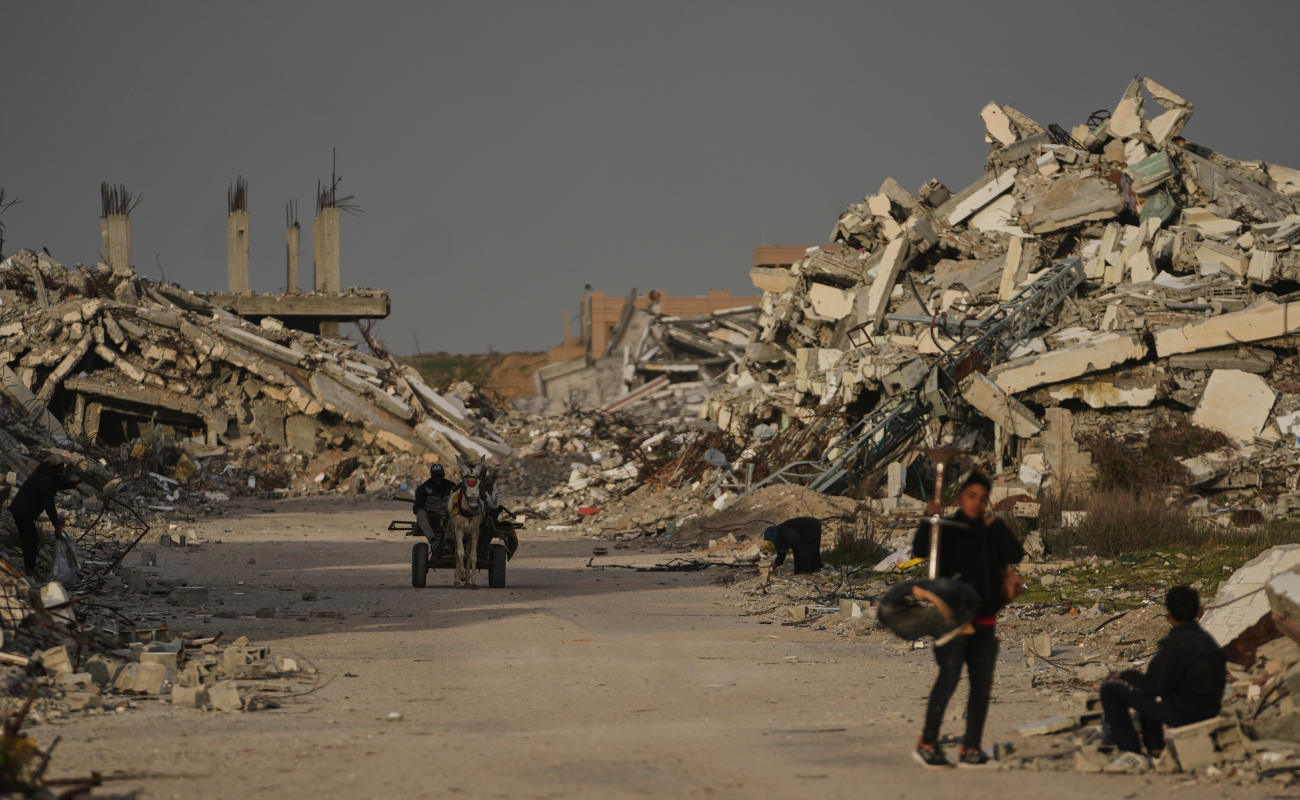
Gaza youth innovation is rewriting the idea of work in a territory where the formal economy has almost collapsed. With Israel’s blockade, repeated attacks and the destruction of key infrastructure, thousands of young Palestinians have watched traditional jobs disappear and are now forced to invent new ways to survive.
Unemployment crisis drives young people to reinvent themselves
Even before the latest war, Gaza’s economy was fragile. Now, according to 2024 data from the Palestinian Central Bureau of Statistics, the overall unemployment rate stands at about 69 percent, soaring to nearly 80 percent among those aged 15 to 29. Around 70 percent of Gaza’s residents are under 30, meaning most of the population is entering adulthood with almost no access to conventional work.
For 24-year-old nurse Hala Mohammed al-Maghrabi, the figures became painfully real. She graduated in 2023 and spent two years volunteering in hospitals, hoping experience would lead to a paid job. But unpaid shifts could not cover rising food, rent and transport costs. Rather than wait indefinitely, she began taking online courses in design and social media marketing, eventually moving into e-commerce and digital marketing to earn a modest income.
From destroyed warehouses to makeshift digital hubs
The shock of war has not spared business owners. Trader Mohammed al-Hajj once handled general trade and food supplies from his warehouses. When air strikes destroyed his storage facilities and goods, restarting imports became impossible. Instead of giving up, he looked at what was left: a relatively intact home in a neighbourhood with intermittent internet.
Al-Hajj converted part of his property into a small, internet-equipped workspace. Students, engineers and freelancers now come there to sit online exams, attend remote classes and complete digital jobs. The setup is basic, but it has turned into a new, if fragile, income stream for his family and a rare stable connection point for the community.
Gaza youth innovation turns waste into energy
One of the clearest examples of Gaza youth innovation comes from entrepreneur Ahmed Fares Abu Zayed. His small company once generated electricity using fuel-powered generators. When fuel ran out during the war, operations halted overnight. Instead of shutting down, Abu Zayed and his team began experimenting with using plastic waste as a fuel source.
The project eventually produced improvised electricity systems that relied on plastic scraps rather than traditional fuel. In the process, it created jobs for dozens of young people in manufacturing, installation and maintenance, giving them skills they would never have gained in a conventional job market.
Opportunity, exploitation and an uncertain future
Not every response to crisis is positive. With state institutions weakened and almost no social protection, some residents are being pulled into risky and exploitative activities, including informal money lending, currency schemes and remittance payments with heavy cuts that prey on families’ desperation.
Yet experts say the core issue is not a lack of skill, but a lack of an economic environment able to absorb it. In that void, Gaza youth innovation has become both a survival tactic and a quiet act of resistance. Even a small idea – a shared workspace, a digital service, a recycled power system – can support families and restore a fragile sense of dignity in a place where choices grow fewer by the day.