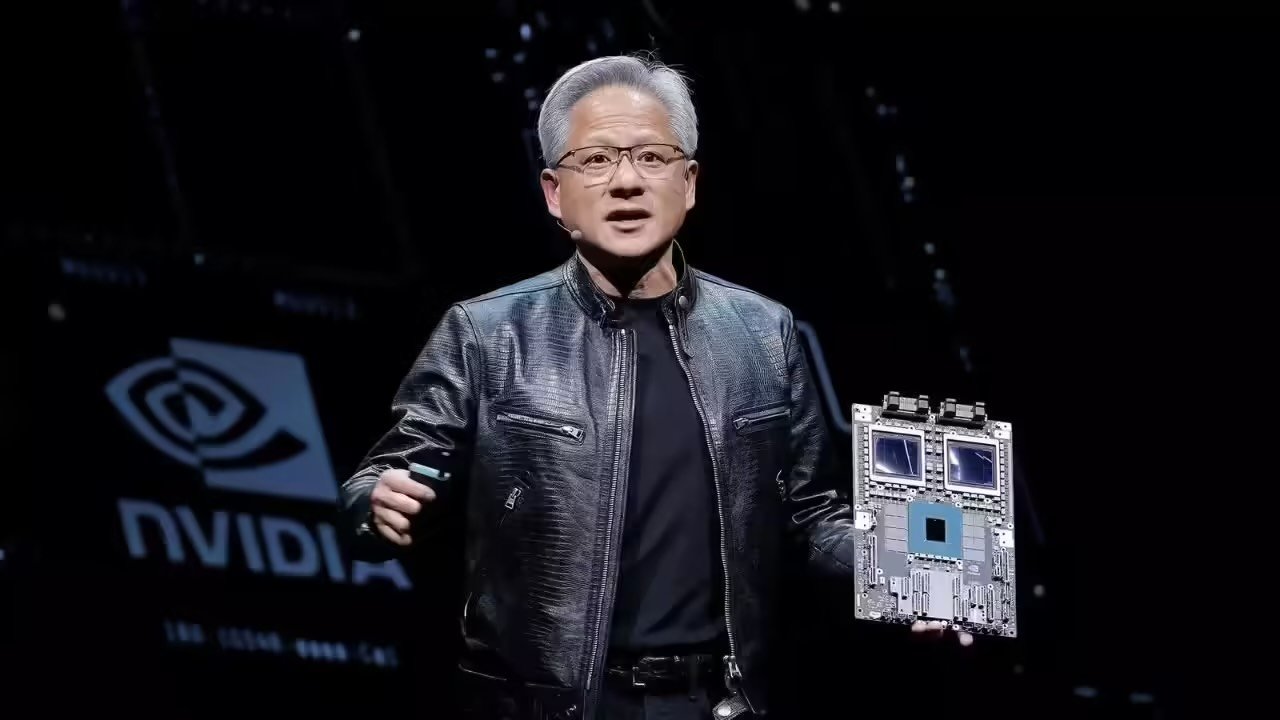
Mumbai: In a statement that has electrified India’s tech ecosystem, Nvidia CEO Jensen Huang has painted a visionary picture of the country’s economic future—one where “data centers” are not just cold storage rooms for servers, but bustling factories of the next industrial revolution.
Speaking at the Nvidia AI Summit in Mumbai, often sharing the stage with Reliance Industries Chairman Mukesh Ambani, Huang argued that India is on the cusp of a job creation cycle that could rival, or even surpass, the internet boom of the late 1990s.
The New “Intelligence” Factories
Huang’s core message challenged the traditional view of the IT sector. For decades, India has been the world’s back office, exporting software services and code. However, the Nvidia chief believes the paradigm is shifting.
“In the future, data centers will be factories,” Huang explained. “Just as we used to manufacture physical goods, we will now manufacture intelligence.”
According to Huang, the raw material for these factories is data—something India, with its billion-plus connected population, possesses in abundance. The machinery is the AI infrastructure (like Nvidia’s GPU clusters), and the final product is “intelligence” (AI models, insights, and automated solutions) that can be exported globally. This shift marks a transition for India from a service provider to a “manufacturer” of the world’s most valuable digital commodity.
More Than Just Coding Jobs
Perhaps the most reassuring part of Huang’s address was his outlook on employment. Amidst global fears that AI might steal jobs, Huang offered a contrarian and optimistic view. He drew a parallel to the internet era, reminding the audience that while the web automated some tasks, it created entirely new industries—from e-commerce to digital marketing—that no one had predicted.
He emphasized that the “AI factory” model would require a vast human workforce, but the nature of the work will evolve. It won’t just be about computer scientists writing Python code.
“You don’t need to be a C++ programmer to be successful in the AI age,” Huang noted. Instead, the demand will skyrocket for domain experts—biologists, chemical engineers, designers, farmers, and financial analysts—who can “teach” the AI. These professionals will be needed to curate the data, train the models, and apply the “manufactured intelligence” to real-world problems.
India’s Strategic Advantage
The timing of this “factory” boom aligns perfectly with India’s infrastructure push. With corporate giants like Reliance Jio pledging to build gigawatt-scale AI-ready data centers, the physical foundation for Huang’s vision is already being laid.
Mukesh Ambani, conversing with Huang, echoed this sentiment, noting that just as data became affordable and abundant for every Indian with 4G, “intelligence” will soon be democratized. This lowers the barrier to entry for Indian startups, allowing a young entrepreneur in a small town to access the same world-class AI computing power as a researcher in Silicon Valley.
Conclusion
Jensen Huang’s visit serves as a potent reminder that the AI revolution is not just a technological upgrade; it is an industrial restructuring. By positioning data centers as the manufacturing hubs of tomorrow, he has outlined a roadmap where India doesn’t just adapt to AI, but powers it.
For the millions of young Indians entering the workforce, the message is clear: the factories of the future are being built, and they deal in bytes, not bricks.