The streets of Tel Aviv and Jerusalem witnessed a rare sight this weekend: tens of thousands of people, both Palestinian and Jewish Israelis, unified in a desperate cry for security. The catalyst for this historic mobilization was a single act of defiance by Ali Zbeedat, a shopkeeper in the northern town of Sakhnin. After receiving death threats and surviving four separate shootings at his family businesses, Zbeedat did something few dare to do—he said “no” to the gangs and shut his doors for good.
His protest ignited a firestorm. What began as a local shutdown in Sakhnin has evolved into a nationwide demand for the Israeli government to intervene in a crime wave that claimed 252 Palestinian lives in 2025 alone. Critics argue the violence is not just a police failure but a “deliberate policy of neglect.” Palestinian citizens of Israel, who make up about 21% of the population, often live as second-class citizens in enclaves where the state is effectively absent.
Aida Touma-Suleiman, a prominent member of the Israeli parliament, highlights that the murders are only the visible tip of the iceberg. Beneath the surface lies a “Hobbesian” reality where families are forced to pay a significant portion of their income for “protection,” and criminal organizations operate their own shadow banking and judicial systems. With roughly 38% of Palestinian households in Israel living below the poverty line, these gangs have found fertile ground to flourish.
The situation is further complicated by the political landscape. The Israeli police force is currently overseen by National Security Minister Itamar Ben-Gvir, a far-right figure with a history of anti-Palestinian rhetoric. Reports suggest Prime Minister Benjamin Netanyahu is preparing to name Ben-Gvir as the head of a task force to address the issue—a move that many in the affected communities view with deep skepticism.
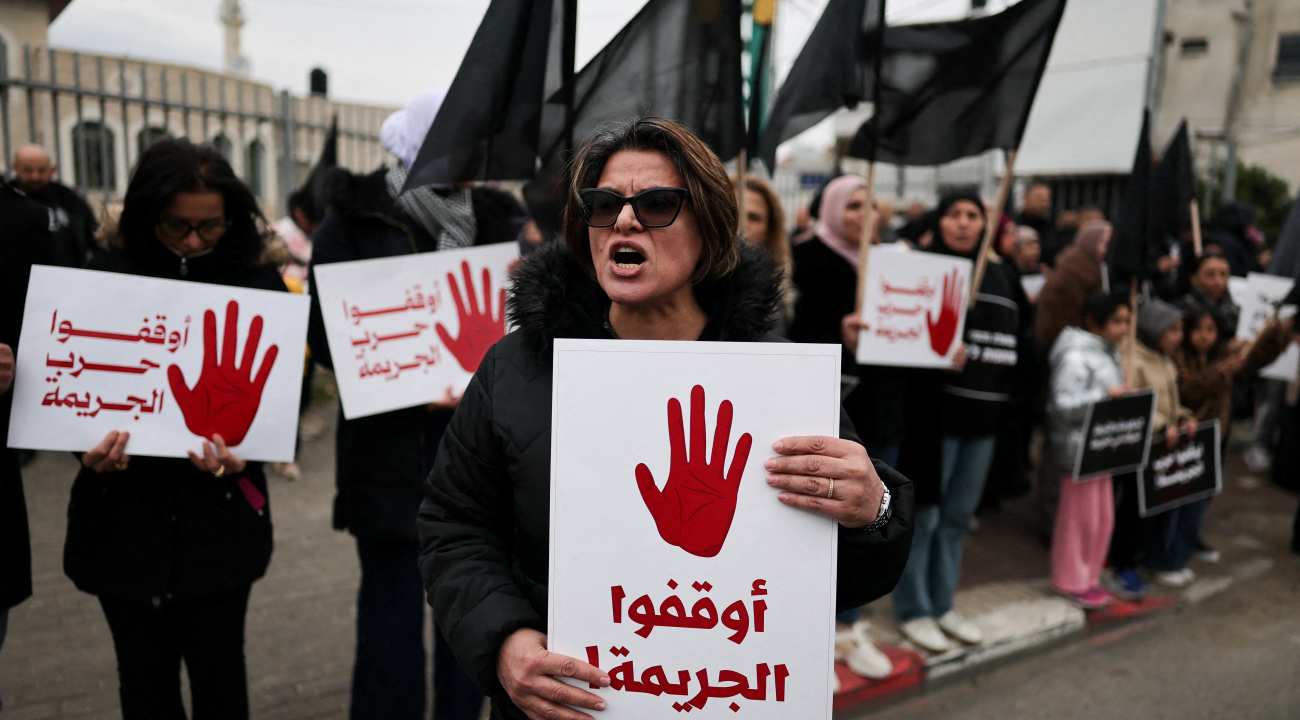
The protests carry a heavy emotional weight. Demonstrators in Tel Aviv carried banners reading “Arab Lives Matter” and “Enough Violence.” For many, the movement is about reclaiming the basic right to safety. As Hassan Jabareen, director of the rights organization Adalah, put it: while a Jewish Israeli child grows up knowing they are safe, a Palestinian child in Israel goes to sleep to the sound of gunfire, wondering if they will be hit by a stray bullet on the way to school.