In what is being seen as a watershed moment in Indian politics, a special court in New Delhi has discharged former Delhi Chief Minister Arvind Kejriwal, his erstwhile deputy Manish Sisodia, and 21 others in the high-profile Delhi excise policy case. The ruling, delivered on Friday by the Rouse Avenue Court, dealt a severe blow to the Central Bureau of Investigation (CBI), fundamentally dismantling the agency’s claims of a deep-rooted criminal conspiracy.
Special Judge Jitender Singh refused to frame charges against any of the 23 accused, which included prominent figures like Bharat Rashtra Samithi (BRS) leader K. Kavitha. The court categorically stated that the CBI failed to present cogent material to warrant a trial. In a scathing critique of the investigative agency, the judge noted that the voluminous chargesheet was riddled with lacunae and lacked substantive evidentiary backing.
The court particularly pulled up the CBI for its reliance on the statements of approvers—accused individuals who were granted pardons in exchange for testimony. The judge warned that using such statements to fill gaping holes in an investigation, without independent corroboration, is a grave violation of constitutional principles. The prosecution’s narrative of a “South Group” cartel and an overarching conspiracy was dismissed as mere conjecture.
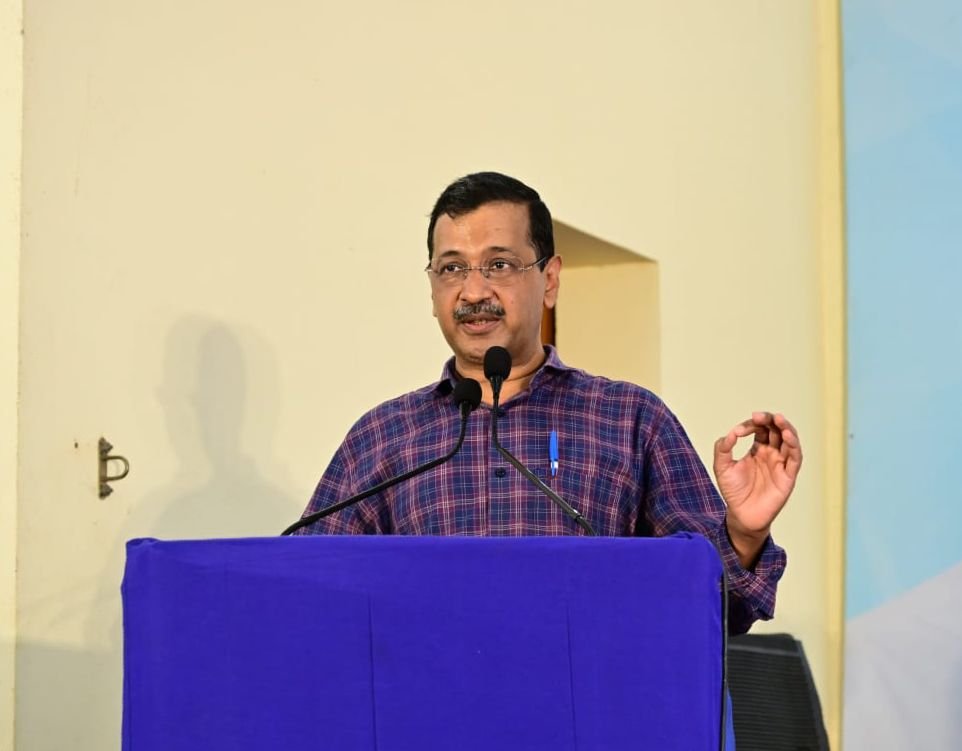
Stepping out of the courtroom, an overwhelmed Arvind Kejriwal broke down in tears. Flanked by party colleagues, the AAP supremo launched a blistering attack on the ruling dispensation at the Centre. “I am not corrupt. Today, the court has proven that Kejriwal and Manish Sisodia are staunchly honest,” he told reporters, his voice trembling. He accused Prime Minister Narendra Modi and Home Minister Amit Shah of orchestrating the “biggest political conspiracy of independent India” to destroy the Aam Aadmi Party by incarcerating its top leadership.
The verdict sparked immense celebrations at the AAP headquarters, with Sunita Kejriwal taking to social media to declare that truth ultimately prevails over power.
However, the legal battle may not be entirely over. Sources indicate that the CBI is already preparing to challenge the trial court’s discharge order in the Delhi High Court, arguing that the totality of the evidence and the conspiracy should be tested during a full trial.
The controversy stems from the Delhi government’s Excise Policy for 2021-22, which marked a major shift by handing over retail liquor sales to private players. While the AAP government touted it as a reform to maximize revenue and crush the liquor mafia, the Lieutenant Governor flagged procedural irregularities, prompting the CBI to register an FIR in August 2022. The subsequent fallout saw the scrapping of the policy, sweeping raids, and the unprecedented arrest of a sitting Chief Minister.
For now, Friday’s verdict provides massive vindication for the Aam Aadmi Party, shifting the political narrative just as the dust settles on years of intense legal scrutiny.