Mumbai | Enoxx News
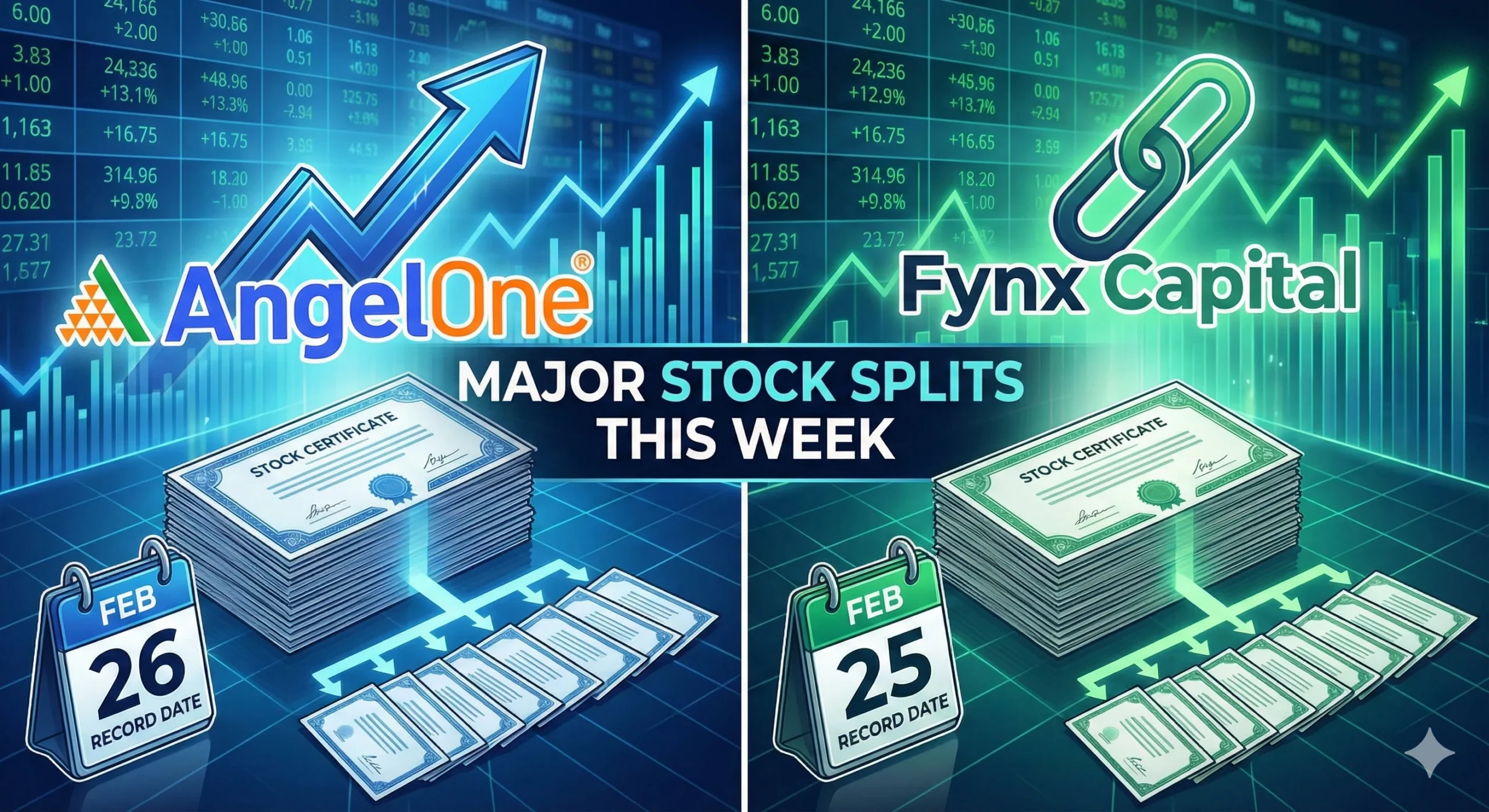
The Indian stock market is bracing for an action-packed week filled with significant corporate announcements, but the spotlight is firmly fixed on two major stock splits. Both Angel One, a leading domestic brokerage firm, and Fynx Capital, a prominent financial services company, have scheduled the record dates for their much-anticipated share subdivisions this week.
For retail investors, a stock split is often seen as a highly positive corporate action. By breaking down the price of a single high-value share into smaller, more affordable units, companies make it significantly easier for smaller retail participants to buy and trade their stock. This strategic move inevitably leads to a massive boost in trading volumes and overall market liquidity, without altering the underlying market capitalization of the firm.
Fynx Capital Stock Split Details Fynx Capital, a company well-known for offering a comprehensive suite of loan products and supply chain financing solutions, will be the first to undergo its split this week. The board of directors has fixed Wednesday, February 25, 2026, as the official record date.
The company has approved a split ratio of 1:10. This means that every single existing equity share bearing a face value of ₹10 will be subdivided into 10 smaller equity shares, each carrying a new face value of ₹1. Consequently, investors holding shares of Fynx Capital in their Demat accounts as of the record date will see their total share count multiplied by ten, while the price per share will adjust downward proportionately on the ex-date.
Angel One Stock Split Details Following closely behind is Angel One. The retail broking giant has designated Thursday, February 26, 2026, as the record date for its own stock split.
Similar to Fynx Capital, Angel One has also opted for a 1:10 split ratio. The face value of Angel One shares will drop from ₹10 to ₹1. Historically, Angel One’s share price has remained on the higher side, which can sometimes act as a psychological barrier for small-scale investors. By implementing this subdivision, the management aims to democratize its stock ownership further. It is also worth noting that Angel One recently rewarded its shareholders with a robust interim dividend of ₹23 per share earlier this year, reflecting strong financial health.
What Investors Must Remember For investors looking to benefit from these corporate actions, understanding the timeline is crucial. Because the Indian equity markets operate on a T+1 (Trade plus one day) settlement cycle, an investor must purchase the shares at least one day prior to the ex-date (which usually aligns with the record date for splits) to ensure the shares are credited to their Demat account in time.
If you buy the shares on or after the ex-split date, you will be purchasing them at the new, lower adjusted price, and you will not be eligible to receive the additional split shares. Existing shareholders do not need to take any manual action; the newly subdivided shares will automatically be credited to their respective Demat accounts within a few working days after the record date.