Shimla | Enoxx News
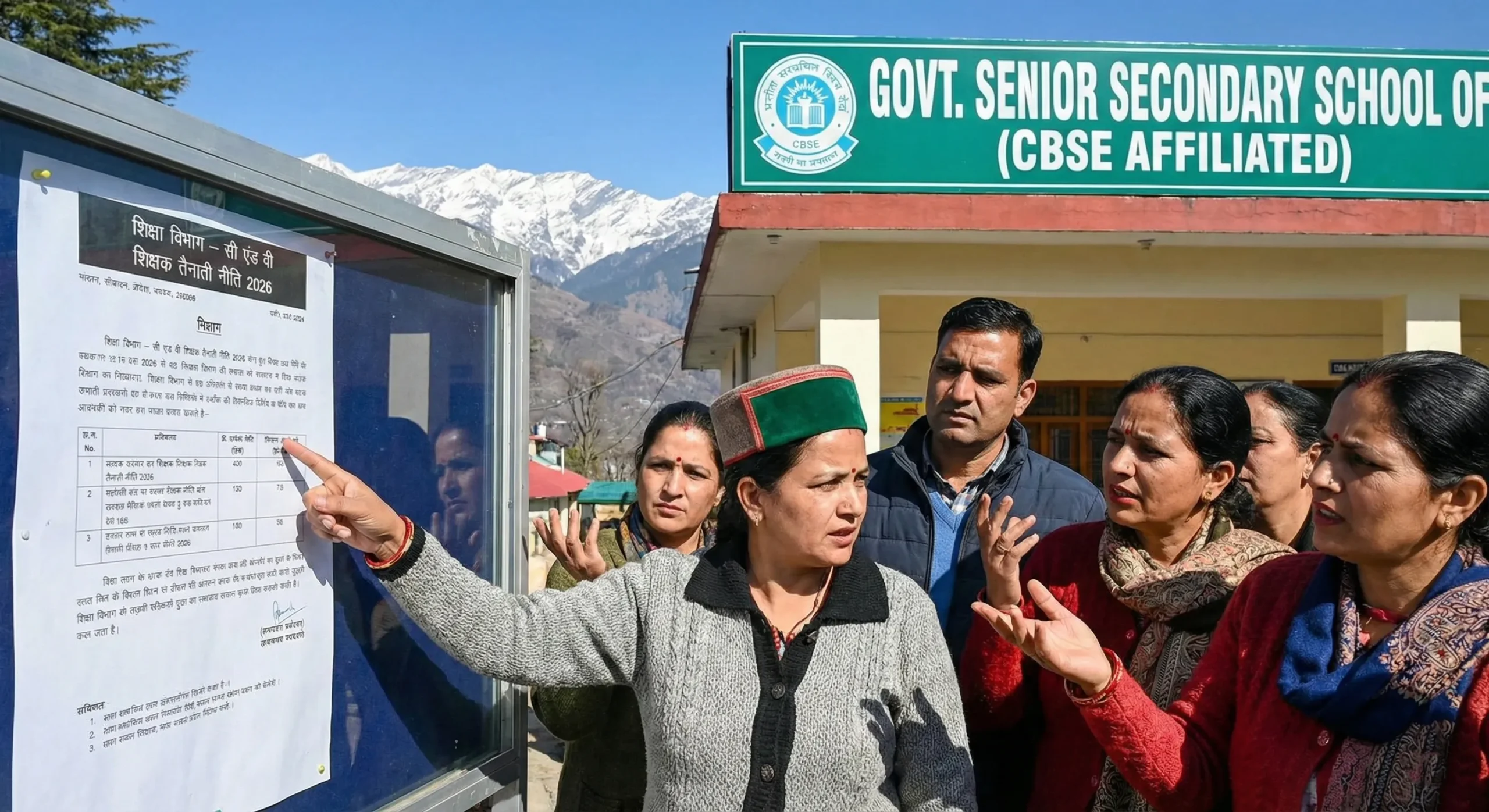
The Himachal Pradesh government’s ambitious initiative to upgrade state-run schools to the Central Board of Secondary Education (CBSE) curriculum has hit a significant administrative stumbling block. The scale of this transition is massive, with the state aiming to introduce the CBSE framework across 130 government schools, starting with 100 institutions in the first phase. While the core intent is to elevate public education standards to match national competitive levels, the execution has inadvertently triggered widespread anxiety and confusion among existing educators—particularly the Craft and Vernacular (C&V) teachers.
The root of the issue lies in the creation of a brand-new, separate teaching sub-cadre specifically designed for these CBSE-affiliated schools. Recently, the government notified the creation of 560 specialized posts, establishing a completely distinct structure from the traditional state board cadre. The Education Department plans to implement fixed, non-transferable postings for these roles to ensure academic consistency. However, the lack of a comprehensive policy document explaining how current state teachers will be integrated into this new system has left many completely in the dark.
Representing the concerns of the C&V teachers, educator Sushma Thakur has formally approached the Education Department seeking urgent clarification on their status. In her official correspondence, she raised several critical questions that remain unanswered by the current notifications. The primary concern is whether C&V teachers, if selected and deployed to these new CBSE schools, will retain their original district cadre seniority. Additionally, she questioned if the new deployment process would allow teachers to change their assigned districts based on merit during the time of appointment.
Currently, C&V teachers operate under a strict district-level cadre system. Moving to a separate CBSE sub-cadre without clear transitional rules threatens to disrupt their long-established seniority lines. Teachers are expressing fears that this administrative ambiguity will lead to massive hurdles regarding future transfers, standard postings, and crucial career promotions.
Adding to the friction is the mandate that existing teachers must clear a special eligibility examination conducted by the state board to even be considered for deputation to these CBSE schools. While the government insists this will ensure only the most meritorious candidates are selected, educators argue that subjecting experienced teachers to new tests without securing their service benefits creates unnecessary insecurity.
The teaching fraternity is fundamentally supportive of adopting the CBSE curriculum to benefit the students. However, they argue that running two parallel cadres under a single state education department could severely impact employee morale if not handled transparently. The teachers’ unions are now strongly urging the state government to immediately release detailed, unambiguous guidelines covering the service conditions, seniority protection, and transfer protocols for the newly formed CBSE sub-cadre to resolve the growing unrest.