Shimla, Himachal Pradesh – A dramatic police-vs-police confrontation that stretched through the night ended early Thursday morning when the Delhi Police pulled out of Shimla with three accused in its custody after securing a transit remand from a local court.
The incident unfolded on Wednesday when a team of Delhi Police officers reached the Rohru area in Shimla district on a warrant tied to arrests linked with a protest during the India AI Impact Summit earlier this month. The team took into custody three Youth Congress workers — identified as Saurabh Singh and Arbaaz Khan from Uttar Pradesh, and Siddharth from Madhya Pradesh — and began their return journey to the national capital.
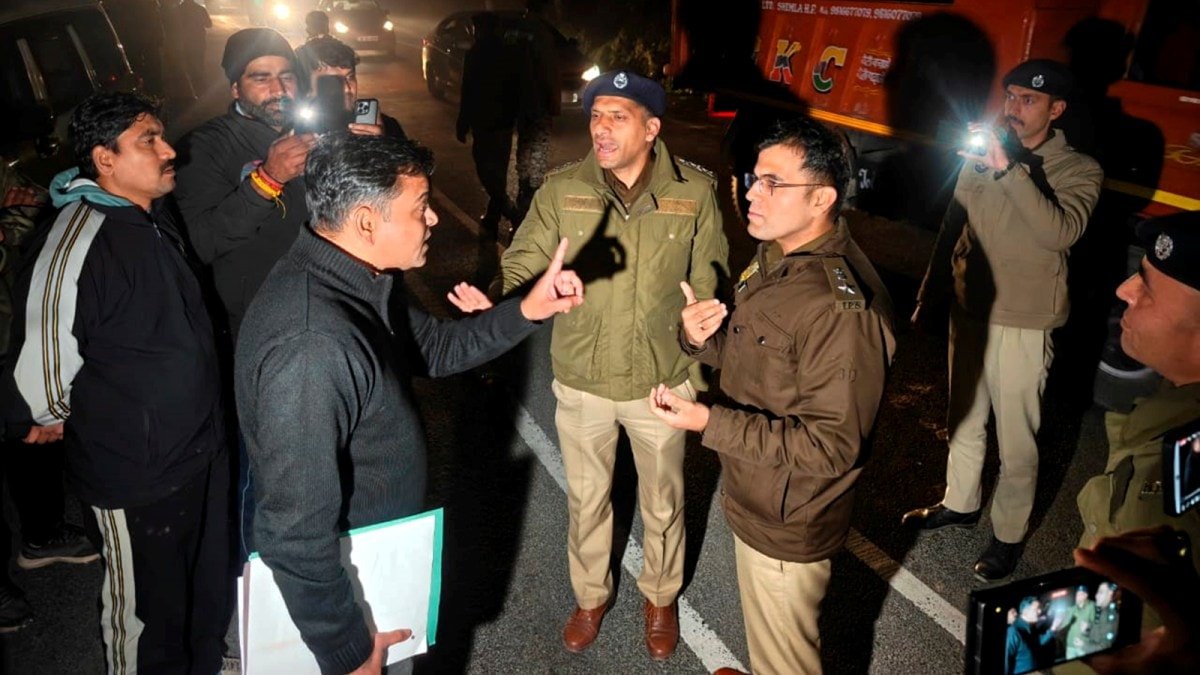
However, the situation quickly escalated when the Himachal Pradesh Police intercepted the convoy near Solan and at the Shoghi barrier, raising questions about whether proper legal procedure was followed. Local officers argued that the Delhi team had not notified them before conducting the operation in another state, and they pressed for procedural compliance, including proper documentation and paperwork.
The matter intensified into a standoff as disagreements continued over hours. At one point, Himachal Police even registered an FIR alleging kidnapping and unlawful removal of CCTV footage from the resort where the arrests occurred, prompting heated exchanges and the temporary detention of some Delhi Police personnel and vehicles.
Through late night proceedings, lawyers and officers from both sides appeared before an Additional Chief Judicial Magistrate in Shimla. After listening to arguments over jurisdictional rights and procedural requirements, the court granted a transit remand — a legal authorization that allows the accused to be taken to Delhi for further legal action.
Following the court order, formalities were completed and, by around 6 a.m., the Delhi Police convoy, along with the three accused, started its journey back towards Delhi. Officials stated that all proceedings were carried out within the bounds of law, and that the remand was obtained to ensure lawful custody transfer.
The high-tension episode put a spotlight on interstate police coordination protocols and raised questions about how law enforcement agencies communicate and cooperate when operating beyond their home jurisdictions. Although the immediate crisis has passed, the legal and political discussions around the incident are likely to continue.