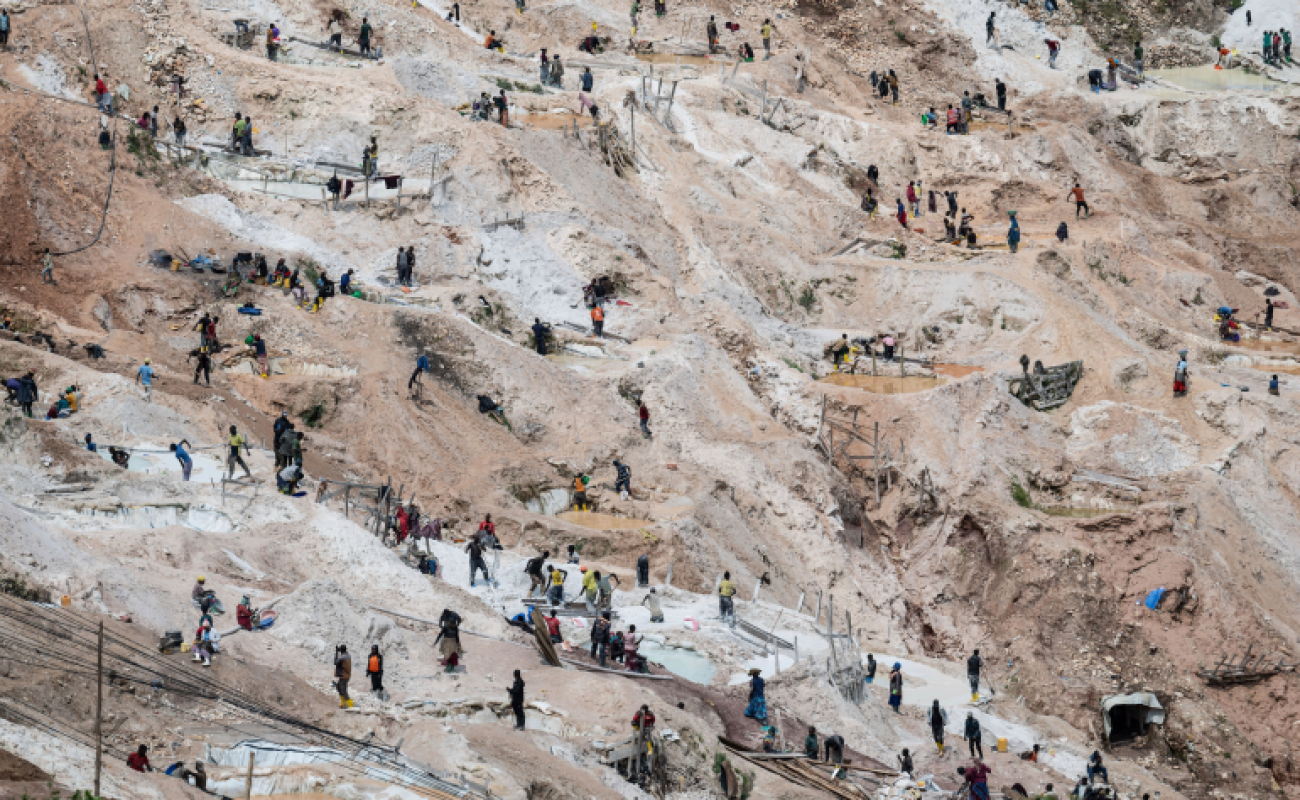
Goma: In the bustling, dust-choked streets of Goma, thousands of miles away from the polished halls of Washington D.C., the mood is far from celebratory. While diplomats and technocrats gather in the US capital for Secretary of State Marco Rubio’s inaugural Critical Minerals Ministerial, the people actually standing on top of the world’s largest cobalt and copper reserves are bracing for impact.
For the United States, the newly minted agreements with Kinshasa are a strategic masterstroke—a necessary pivot to secure the supply chains essential for electric vehicles and national security, all while loosening China’s grip on the sector. But for the creuseurs (artisanal miners) and residents of the eastern Democratic Republic of the Congo (DRC), the headlines about “strategic partnerships” sound alarmingly familiar.
Promises vs. Reality on the Ground
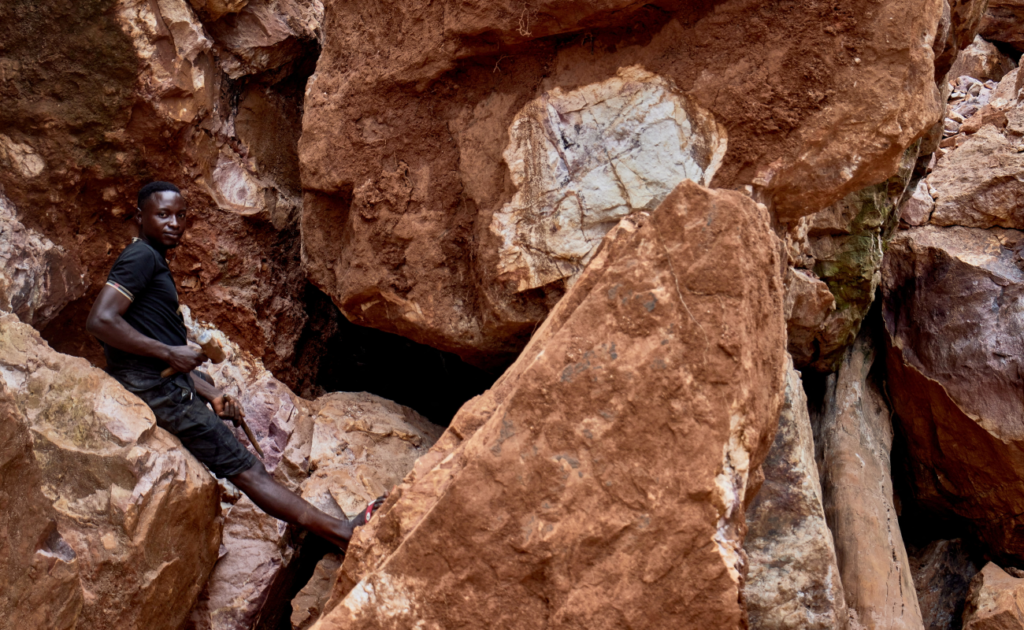
Gerard Buunda, a 28-year-old economics student in Goma, voices a skepticism that is pervasive across the region. “We are exploited in mineral extraction,” he says bluntly. For young men like him, foreign investment rarely translates to local prosperity. Instead, it often means displacement. “There are investors who make us work; sometimes they chase us off our land and force us to work for them in their mines for their own selfish interests.”
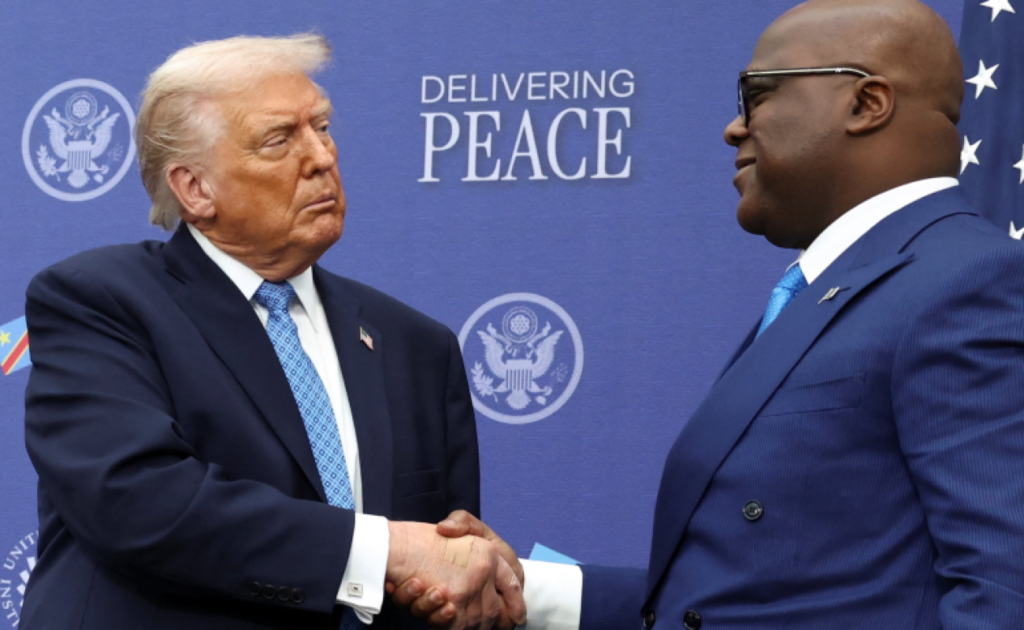
The disconnect is stark. In Washington, the narrative is one of “resources-for-security” and mutual growth. President Felix Tshisekedi has championed these deals as a path to sovereignty, promising jobs and local value addition. Yet, the reality in mining hubs like Kolwezi and Rubaya tells a different story.
Global Witness, a campaign group monitoring the situation, has raised red flags about the ambitious Lobito Corridor project—a railway line intended to connect the DRC’s mining heartland to the Atlantic coast in Angola. While touted as a lifeline for export efficiency, satellite analysis suggests up to 6,500 people could be displaced to make way for the tracks. The group warns that this project will be a “litmus test” for Western partners who claim their model of development is more humane than their competitors’.
The “Resource Curse” Anxiety
The fear isn’t just about displacement; it’s about the systemic “resource curse” that has plagued the Congo for generations. Koko Buroko Gloire, a commentator based in Kenya, views the scramble for minerals as an “increasingly geopolitical” battle where the DRC risks being collateral damage.
“If this deal will allow us… to have clean water, to have hospitals… I think it’s a good deal,” he told reporters. But the conditional “if” hangs heavy in the air.
Activists like Gentil Mulume argue that high-level meetings in Washington often treat the DRC as a mere warehouse of raw materials rather than a partner. He warns that without strict adherence to environmental standards and transparency, these agreements will only reinforce “structurally unbalanced partnerships.”
The shadow of conflict also looms large. The eastern DRC remains a volatile zone, with armed groups like the M23 still active. Chirac Issa, an environmental activist in Tanganyika province, points out a grim correlation: “When there is war, there is illegal exploitation of our minerals.” The fear is that an intensified rush for resources could inadvertently fuel further instability as various actors vie for control of the mines.
A Call for Dignity
Despite the pessimism, there is a clear demand for change. Civil society voices are not asking for a halt to mining, but for a fundamental shift in how it is governed. They want the “value added” to happen on Congolese soil, not in foreign processing plants.
As Kuda Manjonjo of PowerShift Africa notes, the current model is simply unfair. Africa holds the minerals essential for the global energy transition but remains marginalized in the value chain.
For now, the people of Goma are watching and waiting. They hear President Tshisekedi’s assurances that the DRC “will sell neither its future nor its dignity.” But as they look at the poverty surrounding the mines that power the world’s smartphones and electric cars, they remain unconvinced that this time will be any different.