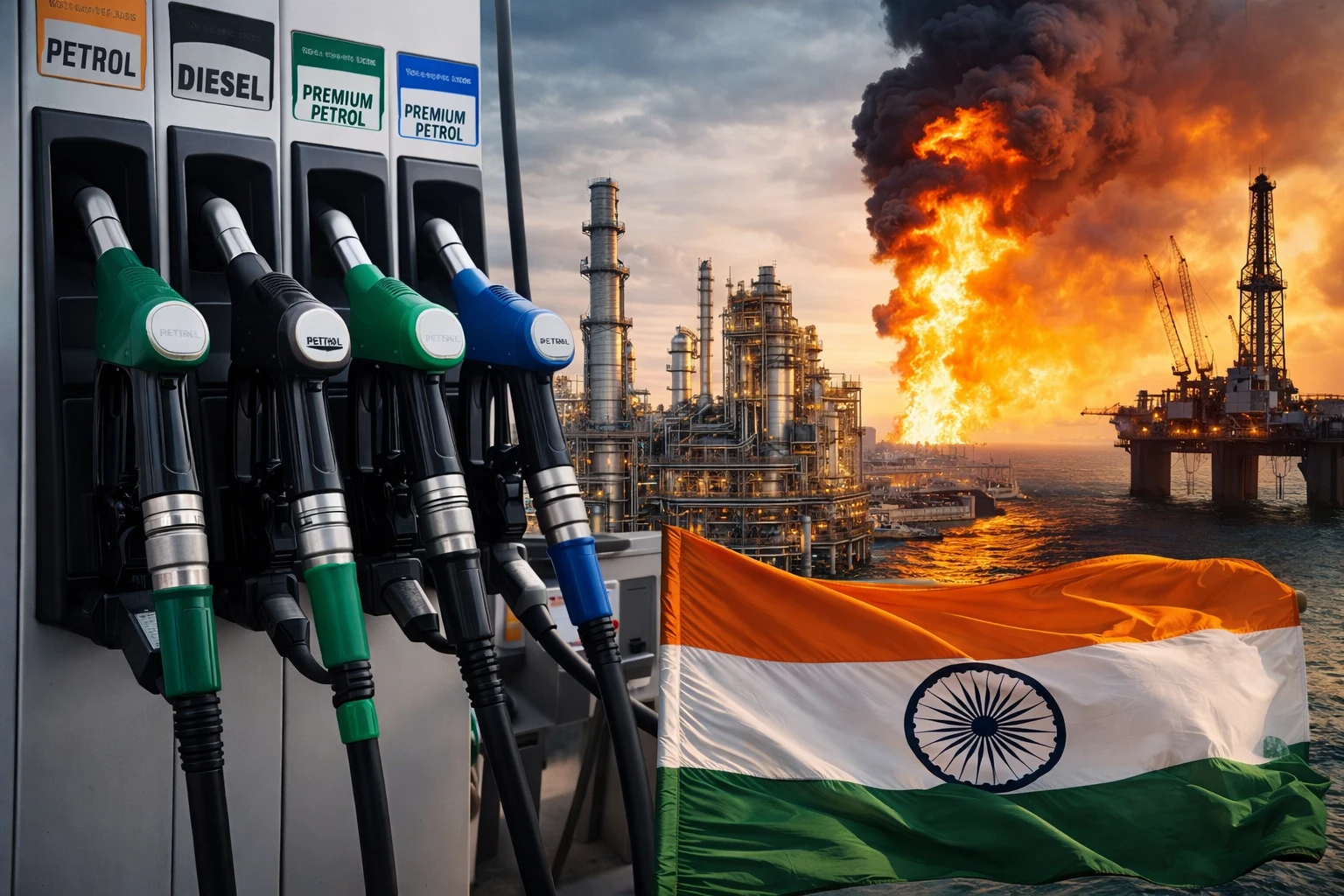
New Delhi, March 11 — Global conflicts affecting oil and gas supplies are increasingly influencing India’s economy, highlighting the country’s reliance on imported energy and the vulnerability of domestic markets to geopolitical developments.
Recent tensions in the Middle East and disruptions in energy supply chains have once again drawn attention to how international conflicts can influence fuel prices, inflation and industrial costs in India. As one of the world’s largest energy consumers, India imports a significant share of its crude oil and natural gas requirements.
According to government data, India imports more than 85 percent of its crude oil needs, making the economy sensitive to global price fluctuations triggered by wars or political instability in energy-producing regions.
ALSO READ: Iran Conflict Triggers LPG Shortage for India’s Major Fast-Food Chains
Why global conflicts affect energy markets
Oil and gas are traded globally, and supply disruptions in one region can quickly affect prices worldwide. When conflicts erupt in major energy-producing areas such as the Middle East, shipping routes and production facilities may face disruptions.
Energy analysts note that concerns over supply shortages often push crude oil prices higher in global markets. These price increases are then reflected in fuel costs across importing countries like India.
Even the perception of risk to key maritime routes such as the Strait of Hormuz can lead to volatility in oil markets.
Impact on fuel prices and inflation
Higher crude oil prices typically translate into increased costs for petrol, diesel and cooking gas in India. Since fuel is a major input for transportation and manufacturing, rising energy prices can push up the cost of goods and services.
Economists say this creates inflationary pressure, affecting household spending and business operations. Sectors such as logistics, aviation, agriculture and manufacturing are particularly sensitive to fluctuations in fuel costs.
In the past, global energy shocks have contributed to rising inflation in India, forcing policymakers to balance economic growth with price stability.
Effect on industries and consumers
Energy price volatility also impacts industries that rely heavily on petroleum products. For example, transport companies face higher operating expenses, while power generation and manufacturing costs can increase when fuel prices rise.
The hospitality sector, aviation industry and food service businesses also feel the impact through higher utility costs and supply chain expenses.
Consumers may eventually face higher prices for everyday goods, as companies pass on increased costs to maintain profitability.
Government response and long-term strategy
To reduce vulnerability to global energy shocks, India has been pursuing several strategies, including diversifying oil import sources and expanding renewable energy capacity.
The government has also developed strategic petroleum reserves to help manage supply disruptions during global crises. Investments in solar, wind and green hydrogen projects are part of a broader effort to reduce dependence on fossil fuels.
Experts believe that strengthening domestic energy infrastructure and accelerating the transition to alternative energy sources could help India better withstand future geopolitical shocks.
While global energy conflicts may be beyond India’s control, policymakers continue to focus on measures aimed at protecting the economy from sudden price volatility and supply disruptions.