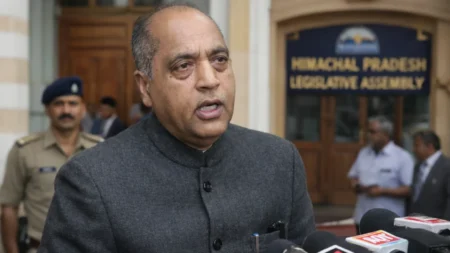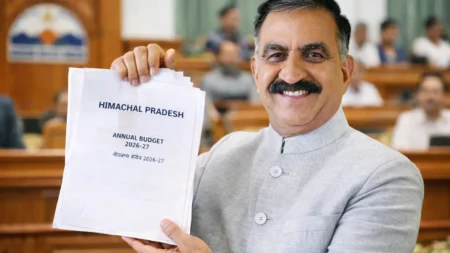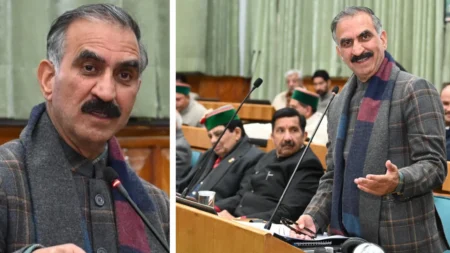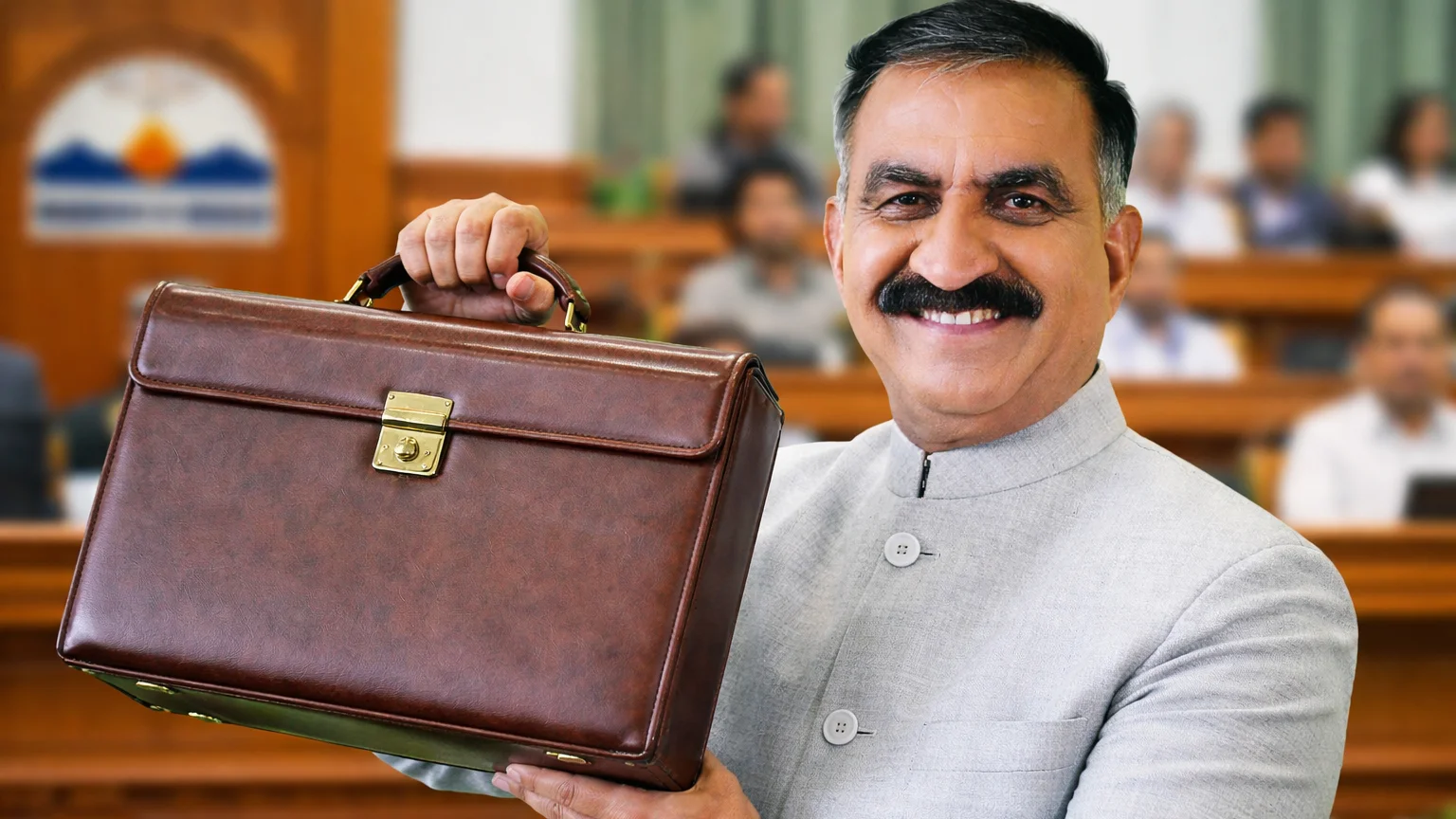
SHIMLA, March 22: Himachal Pradesh Chief Minister Sukhvinder Singh Sukhu on Saturday presented the state Budget for 2026–27, putting forward a ₹54,928 crore spending plan that attempts to walk a tightrope between development needs and financial constraints.
At first glance, the budget carries familiar promises — jobs, welfare schemes, better infrastructure. But a closer look reveals the bigger story: the state is operating under significant fiscal pressure, and that reality shapes almost every major decision in this budget.
The numbers tell the story clearly. The government has projected revenue receipts of ₹40,361 crore against an estimated expenditure of ₹46,938 crore, leaving a revenue deficit of ₹6,577 crore. In simple terms, Himachal is spending far more than it earns.
That gap has forced the government to take corrective steps. The overall outlay has been reduced by ₹3,586 crore compared to earlier estimates, and the Chief Minister openly acknowledged that reduced central support — particularly changes linked to revenue deficit grants — has made this a “tight” budget year.
Where the Money Is Going
Despite the constraints, the government has tried to protect key sectors. Education and healthcare continue to receive priority, with a focus on filling vacancies, improving facilities and expanding services in rural areas.
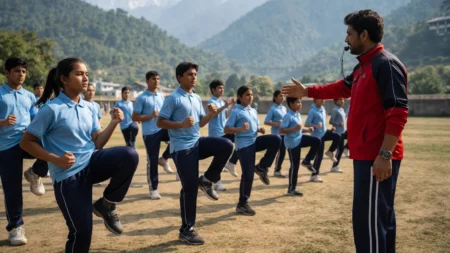
There is also a clear push toward employment. Recruitment initiatives, including the recent hiring of 870 Physical Education Teachers with a monthly remuneration of ₹21,500, signal an attempt to address youth concerns. However, the scale of employment generation remains a question going forward.
Agriculture and horticulture — especially the apple economy — remain central to Himachal’s financial health. The budget includes provisions for irrigation, crop diversification and incentives such as support for seed production. These steps are expected to strengthen rural incomes, but their effectiveness will depend on execution.
Infrastructure and tourism are another major focus area. The proposed Kangra Aerocity project, estimated at around ₹3,300 crore, reflects the government’s intent to attract investment and boost tourism-driven growth. Road connectivity and urban infrastructure projects also form a significant part of the plan.
Welfare Commitments vs Financial Pressure
A large portion of the budget continues to be directed toward welfare schemes. Support for women, vulnerable families and rural communities has been retained, indicating that the government is not willing to scale back social spending despite fiscal stress.
At the same time, the need to raise additional revenue is visible. The proposal to impose a cess of up to ₹5 per litre on petrol and diesel is one such measure. While the government says the funds will support social initiatives, the move is likely to draw criticism for increasing the burden on consumers.
Debt Burden and Hard Choices
The bigger concern lies in the state’s debt position. Himachal Pradesh’s outstanding debt is estimated to be over ₹80,000 crore, and servicing this debt — along with salaries and pensions — consumes a substantial share of the budget.
This leaves limited room for fresh capital investment. In practical terms, the government has to carefully choose where to spend, often prioritizing immediate needs over long-term expansion.
To manage the situation, the government has also announced austerity measures. These include temporary deferment of a portion of salaries for top officials, including the Chief Minister and ministers, for a limited period. While largely symbolic in financial terms, the move underscores the seriousness of the situation.
The Real Test Ahead
This is not a budget built on big-ticket announcements alone — it is a budget shaped by constraints. The challenge for the government will be to deliver on its promises while keeping finances under control.
In the coming months, the focus will shift from announcements to implementation. Whether the state can generate revenue, control expenditure and still drive growth will determine how this budget is ultimately judged.