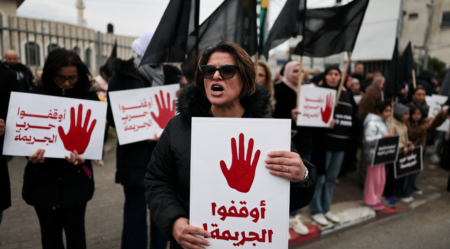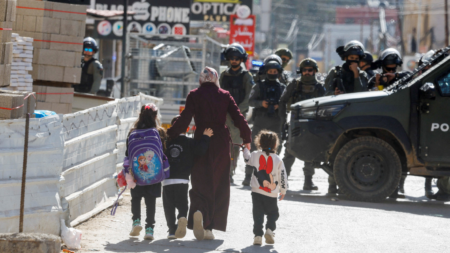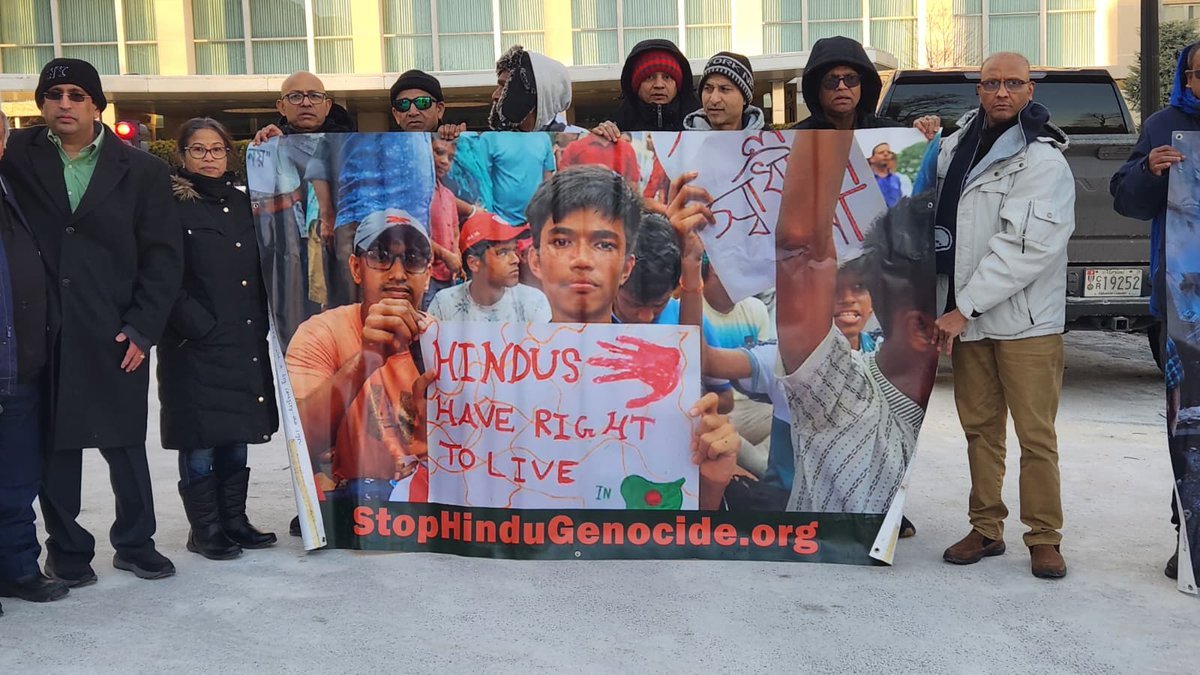
In a significant display of diaspora concern, members of the Hindu community and human rights advocates gathered outside the US State Department in Washington on Monday. The peaceful protest was aimed at drawing the attention of the US government to what the demonstrators described as a “humanitarian catastrophe” involving the systemic persecution of religious minorities in Bangladesh.
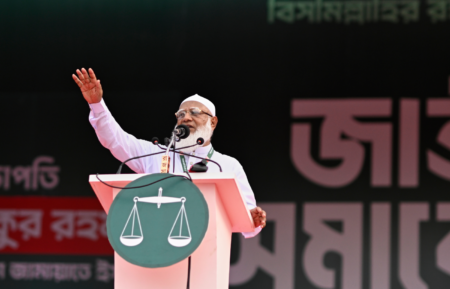
The protesters, carrying placards and chanting slogans for justice, urged the Biden-Harris administration and the incoming Trump administration to leverage diplomatic influence to protect Hindus and other minorities in the South Asian nation. The demonstration comes at a critical time, as Bangladesh prepares for national elections scheduled for February 12, 2026. Reports of intimidation, property vandalism, and targeted violence have surged in the months leading up to the polls, particularly following the political upheaval that saw the ouster of the Sheikh Hasina government in August 2024.
According to community leaders at the rally, the situation in Bangladesh has escalated beyond a regional issue. “Silence is complicity,” one organizer remarked, echoing the sentiment of various human rights groups that have flagged a rise in extrajudicial killings and enforced disappearances. The recent incarceration of ISKCON leader Chinmoy Das and reports of attacks on temples in Chittagong and Rangpur were cited as primary drivers of the global Hindu community’s anxiety.
The protest also featured a specific demand for accountability from international financial institutions. Demonstrators argued that organizations like the World Bank, IMF, and Asian Development Bank should condition their lending to Bangladesh on its compliance with social and gender justice policies. They further called on major US retailers to reconsider their garment supply chains if the Bangladeshi government fails to safeguard its citizens’ human rights.
As the international community watches the evolving situation in Dhaka, the Washington protest serves as a reminder that the safety of minorities remains a pivotal benchmark for the democratic process. The State Department has been urged to transition from strategy to execution in its foreign policy to prevent further atrocities before the region descends into deeper instability.