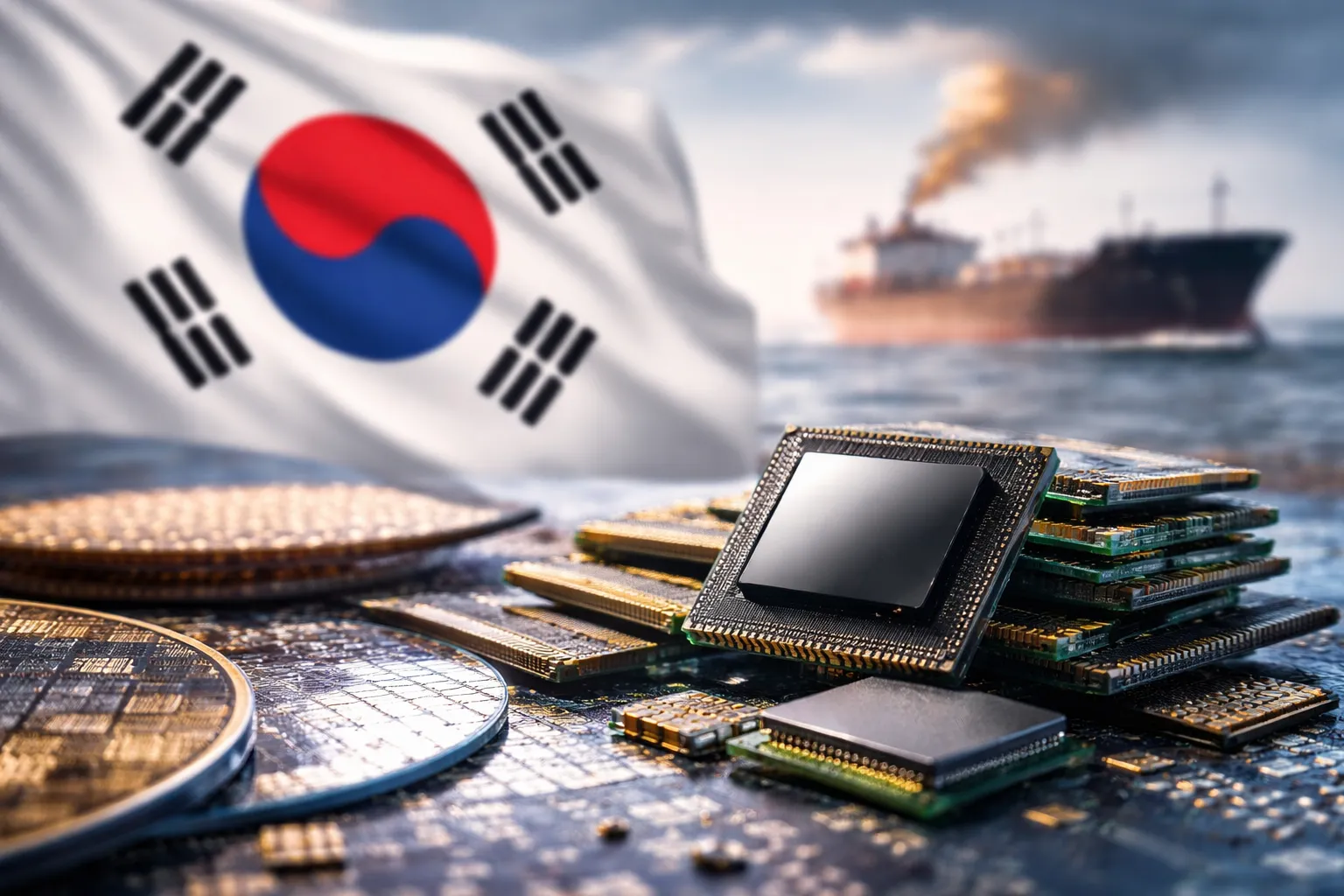
Growing tensions linked to the Iran conflict could create risks for the global semiconductor industry, particularly affecting major South Korean chip manufacturers such as Samsung Electronics and SK Hynix. Industry analysts say geopolitical developments in the Middle East may disrupt key supply routes and increase uncertainty for chip production and exports.
According to recent assessments by market observers, semiconductor companies operating across global supply chains may face indirect consequences if the situation escalates further. South Korea’s semiconductor sector, which relies heavily on stable logistics networks and access to energy resources, could experience challenges related to shipping routes, component sourcing and operational costs.
Semiconductor Supply Chains Closely Linked to Global Stability
Semiconductors are among the most globally integrated industries. Raw materials, manufacturing equipment, fabrication plants and final distribution networks span multiple continents. Any disruption in key transport corridors or commodity markets can influence production schedules.
Analysts note that rising tensions in the Middle East could affect maritime trade routes used to transport technology components and finished semiconductor products. The region also plays a central role in global energy markets, and fluctuations in oil prices could increase manufacturing costs for chip producers that depend on energy-intensive fabrication facilities.
South Korea is home to some of the world’s largest semiconductor manufacturers. Samsung Electronics and SK Hynix together account for a significant share of the global memory chip market, supplying components used in smartphones, computers, data centres and automotive electronics.
Industry experts say that even a limited disruption to supply chains could affect the availability and pricing of these products.
Potential Effects on Technology Manufacturing
Market researchers suggest that the impact may initially be indirect. Semiconductor companies do not typically rely on the Middle East for core manufacturing, but they depend on stable trade routes and energy supplies.
If tensions lead to disruptions in shipping through critical waterways or result in higher transportation costs, semiconductor exports from Asia to Europe and other regions could face delays. At the same time, rising energy prices may raise operational expenses for semiconductor fabrication plants, which consume large amounts of electricity and water.
Technology analysts say companies may also need to reconsider risk management strategies in case geopolitical uncertainty continues.
Government and Industry Monitoring Developments
Officials in South Korea have been monitoring international developments closely, particularly because the semiconductor industry represents one of the country’s most important export sectors. South Korea’s Ministry of Trade, Industry and Energy has previously emphasised the need to strengthen supply chain resilience in response to global uncertainties.
Industry groups have also urged companies to diversify logistics routes and maintain buffer inventories to minimise disruptions.
The semiconductor sector has faced several supply chain challenges in recent years, including disruptions caused by the COVID-19 pandemic, trade restrictions involving advanced chip technology and fluctuations in demand for consumer electronics.
Global Semiconductor Demand Remains Strong
Despite the potential risks linked to geopolitical tensions, demand for semiconductor components remains robust. Memory chips produced by companies such as Samsung Electronics and SK Hynix are widely used in artificial intelligence infrastructure, cloud computing and advanced mobile devices.
Technology market analysts say that long-term demand for chips is expected to continue rising as industries increasingly rely on digital technologies.
However, experts caution that geopolitical instability could create short-term volatility in the technology supply chain.
Why the Situation Matters
The semiconductor industry forms the backbone of modern electronics. From smartphones and laptops to vehicles and industrial equipment, many products depend on a steady supply of chips.
Any disruption affecting major producers could ripple through the broader technology ecosystem, influencing manufacturing timelines and pricing across multiple sectors.
For South Korea, the stakes are particularly high because semiconductors represent a major share of national exports and play a key role in the country’s economic growth.
Outlook for the Industry
Industry observers say it is still too early to determine the full impact of the Iran-related tensions on the semiconductor market. Much will depend on whether the situation stabilises or leads to broader disruptions in global trade routes and energy supplies.
Companies across the technology sector are expected to continue monitoring developments while maintaining contingency plans designed to manage supply chain risks.
For now, the global semiconductor market remains operational, but analysts say ongoing geopolitical uncertainty underscores the vulnerability of highly interconnected supply chains.