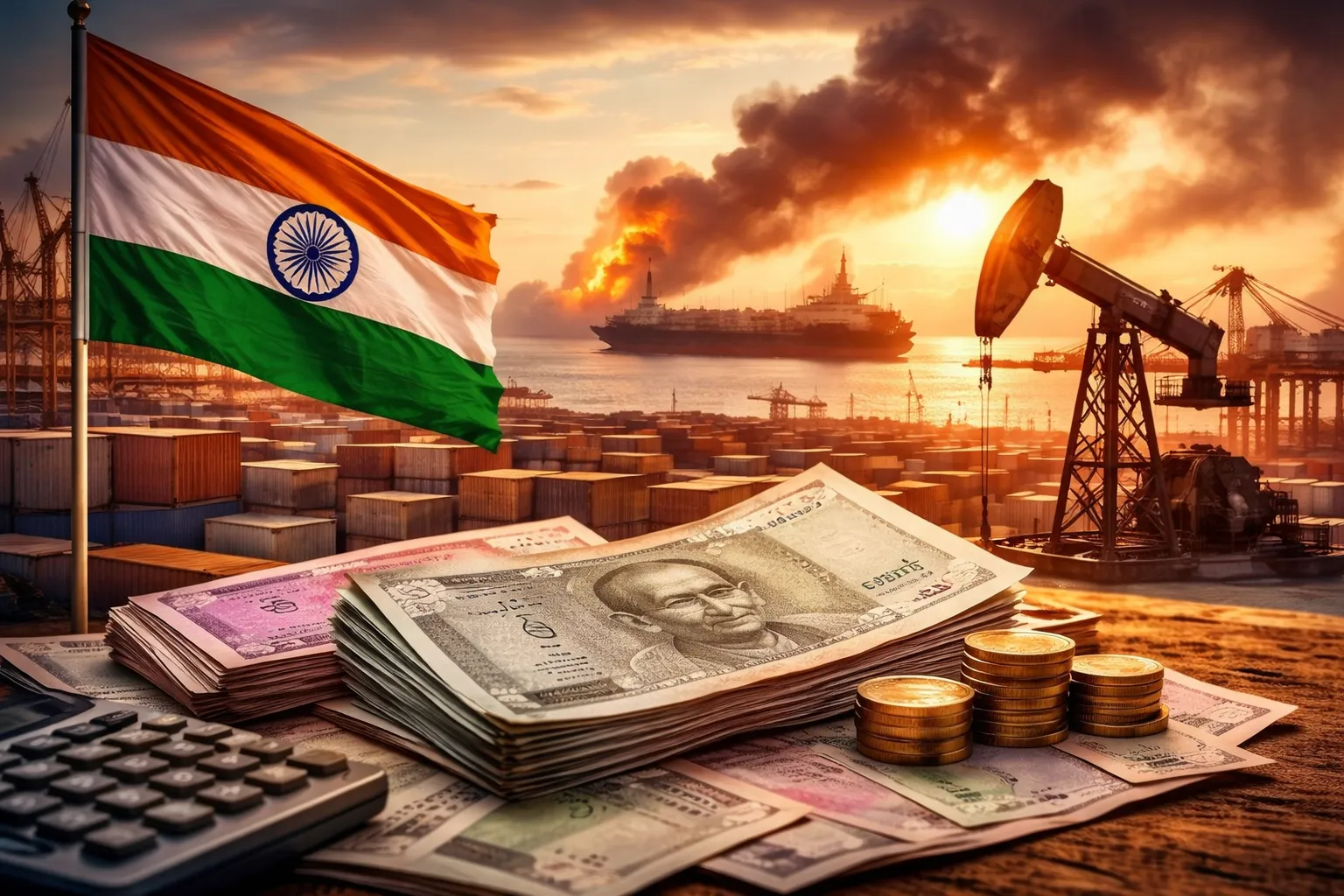
New Delhi: The escalating conflict involving Iran is expected to have a greater impact on India’s economic growth than on inflation, according to policymakers and market analysts, suggesting that the country’s central bank may maintain relatively low interest rates to support economic activity in the months ahead.
Financial markets and policymakers are closely monitoring the economic fallout of the crisis in West Asia, which has already led to volatility in energy prices, currency markets and capital flows. Economists say that while higher crude prices may increase costs for India, the larger risk lies in a slowdown in economic momentum rather than a sharp rise in inflation.
Growth Risks Take Priority
Officials familiar with monetary policy discussions say the Reserve Bank of India (RBI) is currently more concerned about the potential impact on economic expansion than on consumer prices. The conflict has already caused a rise in global oil prices and disruptions in natural gas supplies from the region, developments that could affect sectors such as fertilisers, power generation and transportation.
Higher energy costs can affect industrial production and investment, both of which are key drivers of India’s growth trajectory. Analysts estimate that if crude oil prices remain elevated for a sustained period, India’s economic growth could moderate from earlier projections above 7% to closer to 6.5%.
Despite these risks, inflation has remained relatively contained in recent months, providing the central bank with some flexibility in setting monetary policy. Economists say this environment makes it less likely that the RBI will move quickly toward interest rate increases.
Financial Markets React to Global Tensions
The conflict has also unsettled India’s financial markets. The Indian rupee briefly touched a record low against the U.S. dollar amid rising oil prices and investor caution, prompting the central bank to intervene to stabilize the currency.
Currency traders said the RBI stepped in by selling dollars through state-run banks in order to limit excessive volatility and restore confidence in the market. The move helped the rupee recover partially during subsequent trading sessions.
Market participants say that geopolitical tensions tend to trigger capital outflows from emerging markets as investors shift toward safer assets such as the U.S. dollar. This dynamic can add further pressure on currencies and financial markets in developing economies.
Oil Prices and India’s Energy Dependence
India is particularly sensitive to fluctuations in global oil prices because it imports a large share of its crude oil requirements. Any prolonged disruption to supply routes in the Middle East could therefore have a significant impact on the country’s trade balance and fiscal position.
Energy analysts note that even moderate increases in oil prices can translate into higher import bills and pressure on government finances. The cost of imported crude directly affects transportation, manufacturing and other energy-intensive sectors across the economy.
The strategic Strait of Hormuz, through which a large portion of the world’s oil shipments pass, has emerged as a key area of concern during the ongoing conflict. Disruptions in this region can affect both oil and liquefied natural gas flows, influencing global prices and supply chains.
Broader Economic Context
The developments come at a time when India’s economy had been showing signs of steady expansion supported by stable inflation and strong domestic demand. However, external shocks—particularly those linked to energy markets—remain a key vulnerability.
Economic analysts say the Middle East is an important region for India not only as an energy supplier but also as a destination for exports and a source of worker remittances. A prolonged conflict could therefore affect multiple channels of economic activity, from trade flows to foreign currency inflows.
India’s stock markets have also shown sensitivity to the situation, with investors factoring in the possibility of higher commodity prices and slower global growth. Market strategists say countries heavily dependent on imported oil, including India, are often among the first to feel the effects of energy-driven geopolitical shocks.
Policy Outlook
For now, policymakers appear to be balancing two competing concerns: protecting economic growth while remaining alert to potential inflation pressures from higher fuel costs.
Analysts say the RBI is likely to maintain a supportive policy stance unless energy prices rise sharply or remain elevated for an extended period. If the conflict continues to disrupt energy markets, however, the central bank’s room for further policy easing could become more limited.
Government officials are also monitoring fuel supplies and financial market developments to ensure that domestic economic conditions remain stable.
Looking Ahead
While the immediate impact of the Iran-related tensions on India’s economy remains uncertain, economists agree that the duration of the conflict will be the key factor determining its economic consequences.
If geopolitical tensions ease in the coming weeks, markets may stabilize and energy prices could moderate. However, a prolonged conflict could pose broader challenges for India’s growth outlook, reinforcing the need for careful policy management and market monitoring.