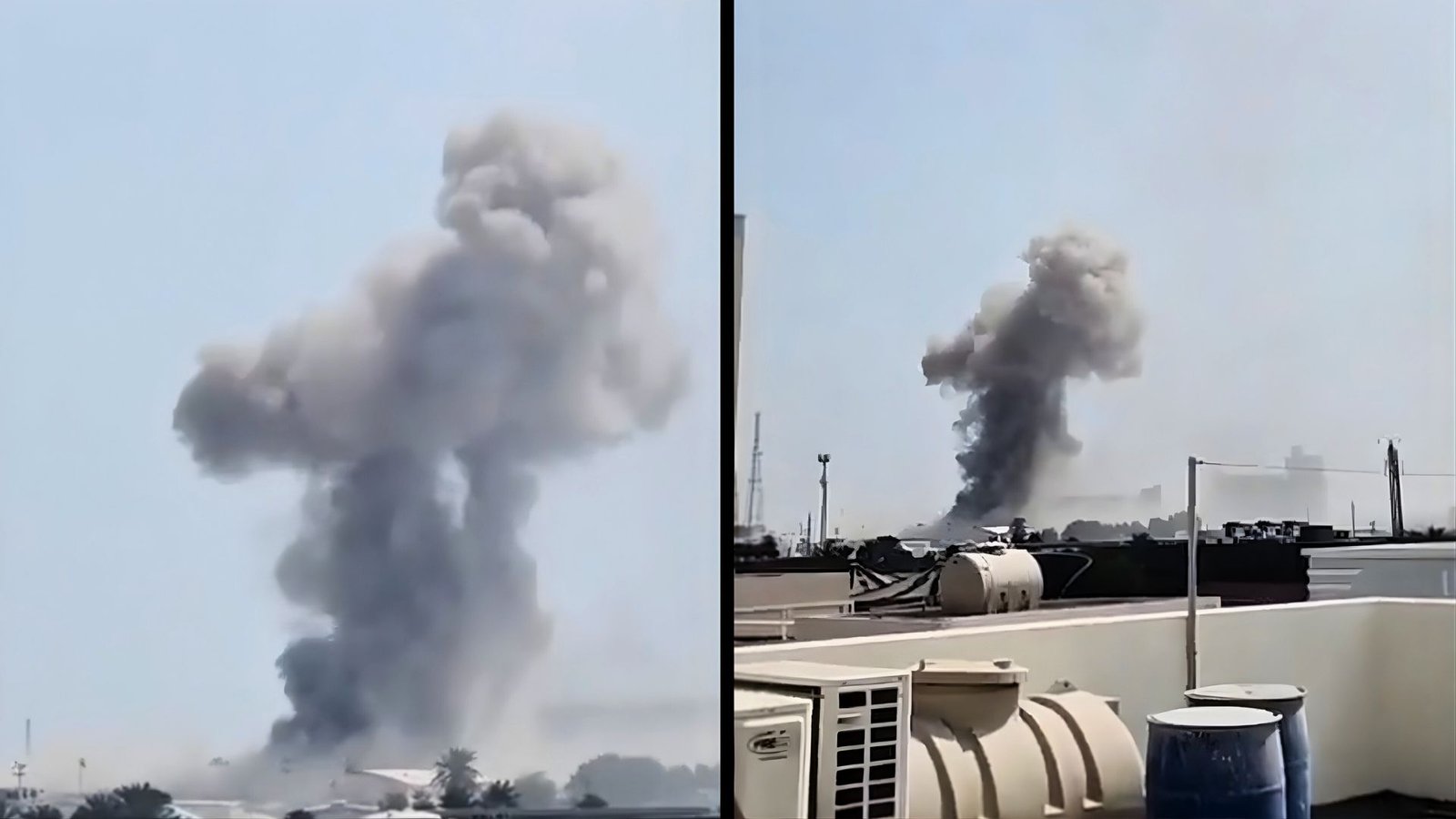
Abu Dhabi/Doha: Explosions were reported in parts of Abu Dhabi late Monday, while Qatari authorities said their air defence systems intercepted an incoming missile that officials linked to Iran, marking a significant escalation in tensions across the Gulf amid ongoing hostilities involving Israel and Iran.
Residents in the United Arab Emirates capital reported hearing loud blasts, prompting local authorities to issue precautionary advisories. UAE officials did not immediately confirm the cause of the explosions but said security agencies were assessing the situation. There were no immediate reports of casualties or major structural damage at the time of writing.
In Doha, Qatar’s Ministry of Defence stated that its air defence systems successfully intercepted a missile targeting its airspace. In an official statement carried by state media, Qatari authorities said the projectile was neutralised before reaching its intended location. The statement did not specify the exact target but added that investigations were underway to determine the full circumstances surrounding the incident.
The developments come amid heightened tensions between Israel and Iran, following a series of strikes and counter-statements in recent days. While Israel has not officially commented on the reported incidents in Abu Dhabi and Qatar, regional analysts note that the broader confrontation between the two countries has created security concerns across neighbouring Gulf states.
Iranian officials have not issued an immediate statement regarding the reported missile interception in Qatar or the explosions heard in Abu Dhabi. However, Tehran has previously warned that it would respond to what it describes as Israeli aggression. Israeli authorities, for their part, have maintained that any military action is aimed at preventing threats to their national security.
Security experts say the widening geographic scope of reported incidents underscores the fragile security environment in the Gulf. “When tensions rise between major regional actors, smaller neighbouring states often feel the ripple effects,” said a regional affairs analyst based in Dubai. He added that Gulf countries have invested heavily in air defence systems in recent years to mitigate such risks.
The UAE and Qatar are key economic and transportation hubs in the Middle East, hosting major international airports, ports and multinational corporations. Any sustained instability in the region could have implications for energy markets, aviation routes and investor confidence. Both countries have maintained diplomatic channels with multiple regional players in an effort to reduce escalation.
Airspace monitoring services reported temporary flight path adjustments over parts of the Gulf following the reported incidents. Airlines operating in the region are said to be closely tracking official advisories. There was no confirmation of major airport closures as of late Monday night.
The latest incidents follow a series of cross-border exchanges between Israel and Iran, which have heightened concerns of a broader confrontation. While past episodes have typically been contained within limited geographic zones, the reported interception in Qatar and explosions in the UAE suggest that the security calculus may be shifting.
Regional governments have urged restraint and called for de-escalation through diplomatic channels. International stakeholders, including the United Nations and major global powers, have in recent days reiterated the need to prevent further deterioration of security in the Middle East.
For residents in the Gulf, the immediate concern remains safety and continuity of essential services. Authorities in both the UAE and Qatar have advised the public to rely on official updates and avoid spreading unverified information on social media.
As investigations continue into the reported incidents, the broader regional situation remains fluid. Diplomatic engagement and crisis management efforts are likely to intensify in the coming days as regional and international actors seek to prevent further escalation.