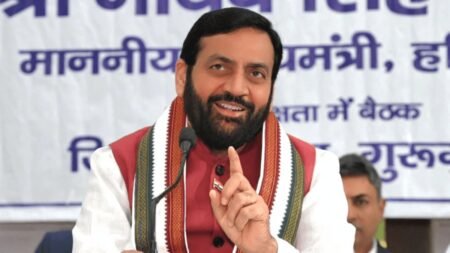
Shimla — A fiery political row has erupted in Himachal Pradesh after a dramatic interstate law-and-order confrontation last week involving Delhi Police and the local Himachal Pradesh Police. Taking strong exception to how the state government handled the situation, Leader of Opposition and former chief minister Jai Ram Thakur accused Chief Minister Sukhwinder Singh Sukhu of playing “anarchy politics” in an attempt to get into the good books of senior Congress leaders, including Rahul Gandhi.
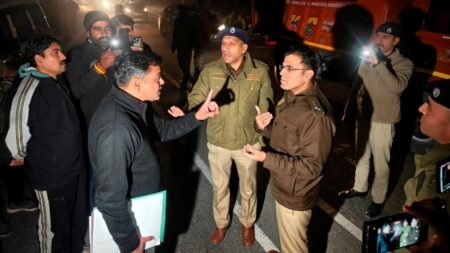
The controversy stems from the arrest and attempted transit of three Youth Congress activists by the Delhi Police in Shimla district in connection with a protest at the AI Impact Summit in Delhi. When the Delhi police team tried to take the accused to the national capital, it was intercepted and briefly detained by Himachal Pradesh Police at multiple points on the highway, leading to legal and procedural friction between the two forces.
In a sharp statement, Thakur said the state government’s actions were “shameful” and suggested that Sukhu’s administration appeared more interested in currying favour within the party leadership than in upholding constitutional procedures and protecting the state’s dignity. “Criticising the work of another state’s police force and creating roadblocks during an interstate operation is not just unnecessary — it smacks of pandering to political masters,” he told reporters in Shimla.
Thakur went on to complain that Himachal’s image had taken a hit nationally because of the spectacle. The opposition leader said that what should have been routine police cooperation between two states turned into a spectacle because of what he described as a lack of clarity in the state government’s approach. “Police forces should work hand in hand during such interstate matters, not treat visiting officers as adversaries,” he asserted.
The chief minister’s office has not officially responded to Thakur’s remarks, but government sources defend their actions, saying that ensuring local jurisdictional rights and legal propriety was their priority. They argue that democratic processes and rule of law require careful checks whenever law enforcement from another state operates within Himachal Pradesh.
Political analysts in the region note that the issue could become a point of contention as the state’s ruling party grapples with internal cohesion and public perception. The standoff itself also raised questions about protocols governing police cooperation across state lines — and whether these need clearer frameworks to prevent such incidents in the future.
The larger backdrop of the controversy is the ongoing debate around the protest at the AI Summit, which saw Youth Congress members staging a demonstration that Delhi police linked to offences including rioting and promoting enmity. Such protests and subsequent arrests have turned into flashpoints in the broader political narrative around governance, civil liberties and party politics ahead of upcoming electoral cycles.