Kasauli | Enoxx News
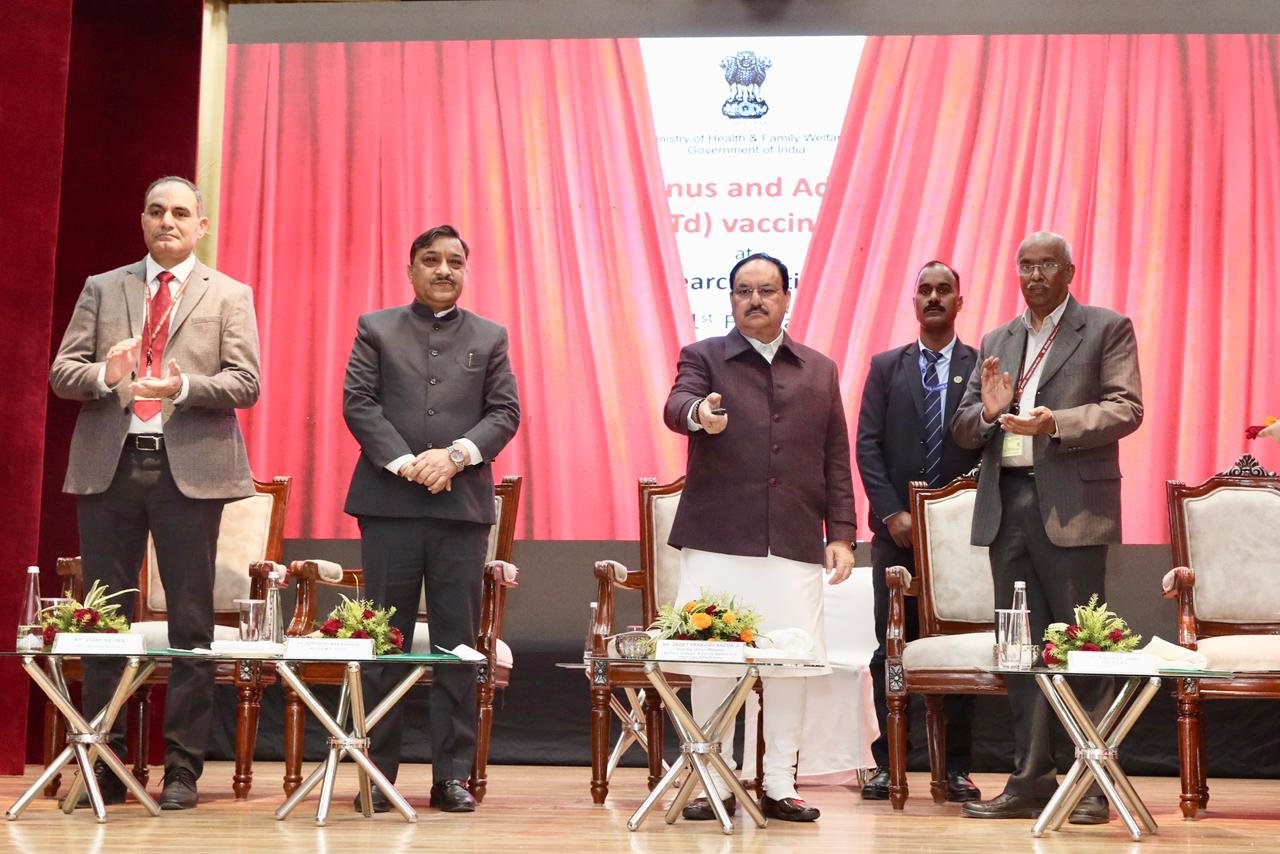
In a monumental stride for India’s healthcare sector and the vision of an ‘Aatmanirbhar Bharat’, Union Minister for Health and Family Welfare J.P. Nadda officially launched the indigenously manufactured Tetanus and Adult Diphtheria (Td) vaccine today. The launch ceremony took place at the historic Central Research Institute (CRI) in Kasauli, Himachal Pradesh.
Addressing scientists, medical experts, and staff at the institute, the Health Minister described the rollout as a historic milestone that will significantly fortify the nation’s public health infrastructure.
For decades, India has relied on the standard Tetanus Toxoid (TT) vaccine to prevent tetanus infections. However, medical experts note that immunity against diphtheria tends to wane as individuals grow older. Aligning with global recommendations from the World Health Organization (WHO) and India’s own National Technical Advisory Group on Immunization (NTAGI), the government is now completely replacing the TT shot with the broader Td vaccine across all eligible age groups, including pregnant women.
“This launch represents a concrete step towards safeguarding our national health security,” Nadda said during the event. “Under the leadership of Prime Minister Narendra Modi, we have set clear targets for achieving absolute self-reliance in the health and pharmaceutical sectors. Institutions like CRI are playing a pivotal role in realizing these goals.”
With its formal introduction, the Td vaccine is now integrated into the Universal Immunization Programme (UIP)—widely recognized as the largest immunization initiative globally. The Health Minister announced that the Central Research Institute will supply an initial 55 lakh doses to the UIP by April 2026. Production will be progressively scaled up in the coming years to meet the massive domestic demand.
Currently, the UIP targets nearly 5 crore beneficiaries annually, comprising roughly 2.5 crore pregnant women and 2.5 crore newborn children. Beneficiaries are tracked digitally from pregnancy registration up to the age of 16 through the U-WIN platform, ensuring no child is left behind.
Highlighting the capabilities of Indian manufacturing, Nadda pointed out that the CRI in Kasauli has become the first government institute to manufacture vaccines strictly under Good Manufacturing Practices (GMP) standards. This reflects a major revitalization of public sector vaccine manufacturing units in the country.
The Health Minister also took a moment to reflect on India’s rapid evolution from a vaccine importer to the “pharmacy of the world.” He contrasted historical timelines, noting that while the development of earlier vaccines like tetanus and Japanese Encephalitis took decades to a century, India successfully developed two indigenous COVID-19 vaccines within just nine months during the pandemic.
Through sustained efforts, systematic monitoring, and the introduction of advanced native vaccines like Td, India’s immunization coverage currently stands at an impressive 99 percent, ensuring a safer, healthier future for millions of citizens.