Washington | Enoxx News
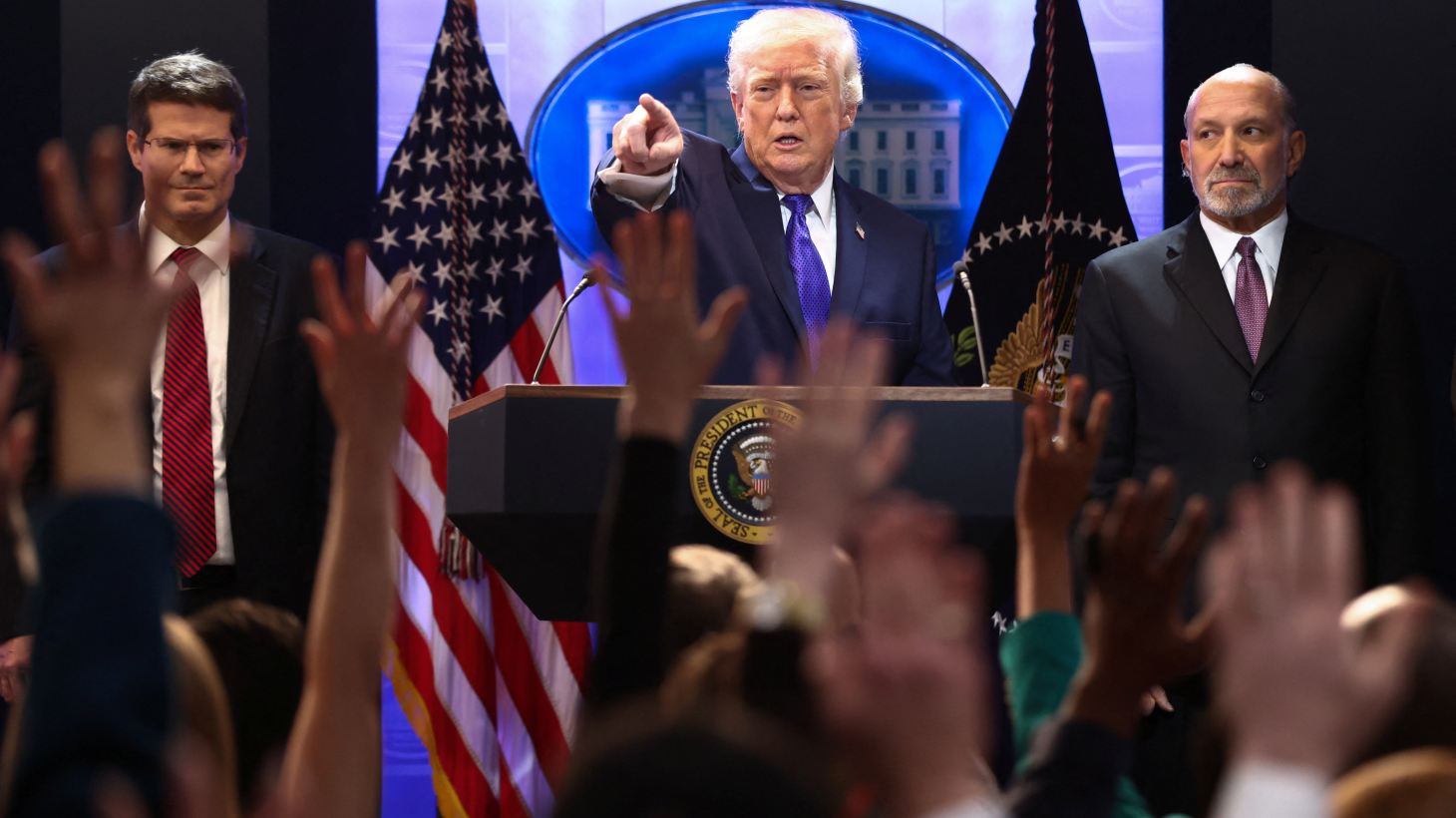
President Donald Trump significantly escalated his aggressive trade agenda over the weekend, announcing a 15 percent global tariff on all imports entering the United States. The sudden hike comes just a day after the U.S. Supreme Court dealt a severe blow to his economic strategy by striking down his previously established global duties.
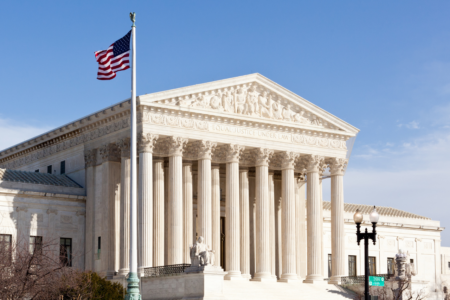
The judicial standoff reached a boiling point on Friday when the Supreme Court, in a decisive 6-3 ruling, determined that the president had overstepped his constitutional bounds. The justices concluded that Trump could not use the 1977 International Emergency Economic Powers Act (IEEPA)—a law primarily designed for national security emergencies—to unilaterally impose sweeping import taxes across the globe.
Infuriated by the legal rebuke from a conservative-majority court, Trump lashed out at the justices, labeling the decision “ridiculous, poorly written, and extraordinarily anti-American.” However, rather than retreating, the administration immediately hunted for an alternative legal avenue.
On Friday evening, Trump signed an executive proclamation invoking Section 122 of the Trade Act of 1974, initially placing a 10 percent surcharge on global imports. By Saturday morning, he took to his Truth Social platform to maximize the penalty.
“I, as President of the United States of America, will be, effective immediately, raising the 10% Worldwide Tariff on Countries, many of which have been ‘ripping’ the U.S. off for decades… to the fully allowed, and legally tested, 15% level,” Trump declared in his post.
The pivot to Section 122 represents a significant shift in Washington’s trade mechanics. The rarely utilized 1974 statute permits the commander-in-chief to impose an import duty of up to 15 percent to combat “large and serious United States balance-of-payments deficits.” While this provides a sturdy legal shield against immediate court challenges, it comes with a major caveat: the tariffs are strictly temporary and will automatically expire after 150 days unless the U.S. Congress formally votes to extend them.
To mitigate severe domestic shortages, the White House has carved out a list of exemptions for the new 15 percent levy. Critical imports such as pharmaceuticals, agricultural goods, energy products, and certain essential electronics will be spared. Furthermore, the new global tax will not be stacked on top of existing industry-specific tariffs, meaning foreign steel and aluminum that already face heavy duties under Section 232 will remain unaffected.
Despite these exemptions, the abrupt policy shift has rattled global financial markets and international allies. Trade experts warn that while the new 15 percent baseline is lower than some of the extreme country-specific tariffs previously imposed under the IEEPA, the overarching unpredictability threatens to disrupt global supply chains. Importers and retailers in the U.S. are now bracing for higher costs, which are widely expected to be passed down to American consumers.
In the meantime, the Trump administration views this 150-day window as a bridging period. The president explicitly noted that his team will spend the coming months formulating new, “legally permissible” tariff structures to permanently replace the ones dismantled by the Supreme Court. As the deadline approaches, the ultimate fate of America’s tariff wall will inevitably fall into the hands of a deeply divided Congress.