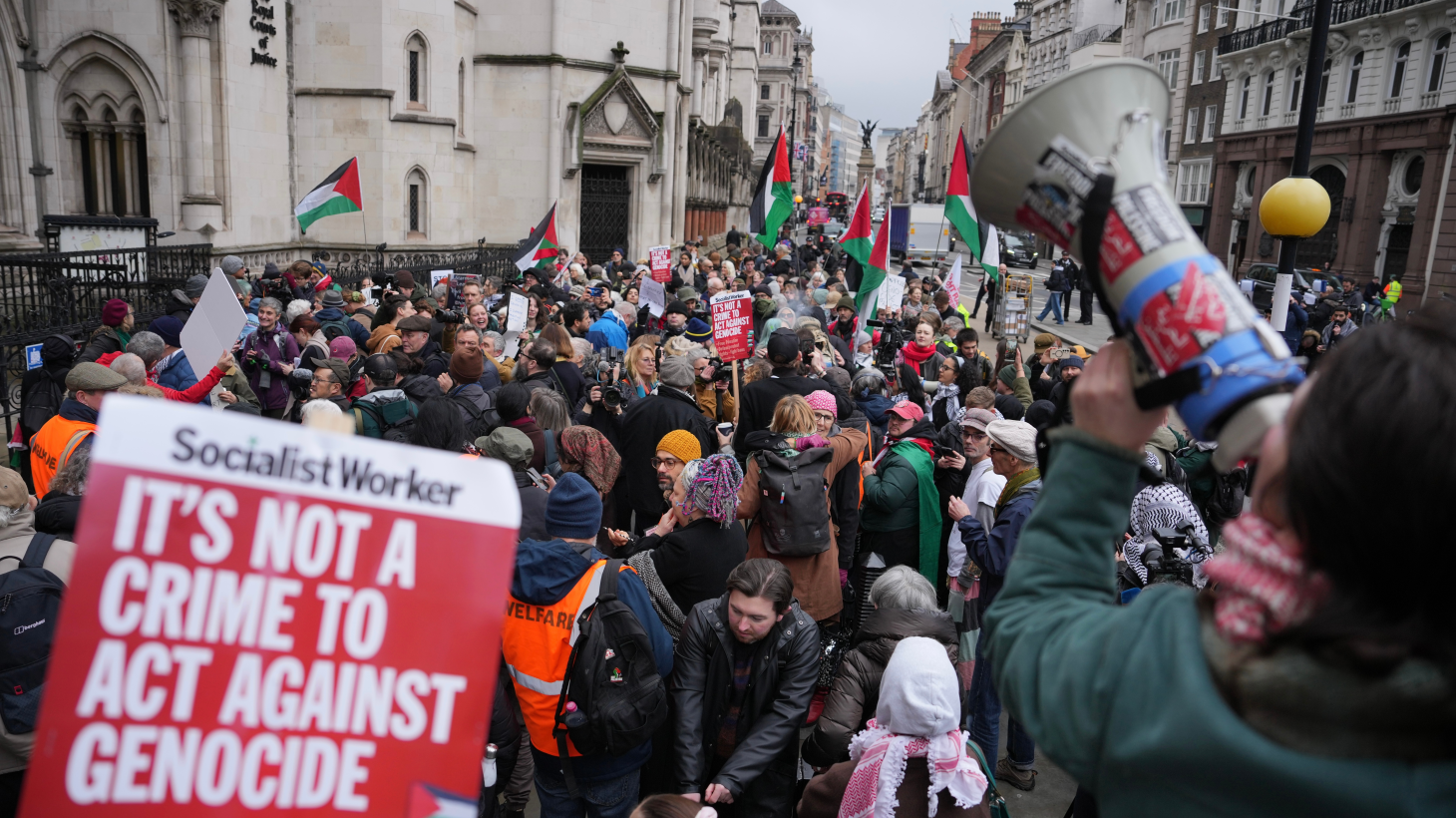
In a stinging rebuke to the British government’s recent crackdown on direct-action protest groups, a specialist court in London has ruled that the decision to proscribe “Palestine Action” as a terrorist organization was unlawful.
The ruling, delivered on Friday by the Proscribed Organisations Appeal Commission (POAC), effectively tears up the Home Office’s order that had placed the activist network in the same legal category as groups like ISIS or Al-Qaeda.
The Background: Protest vs. Terror Palestine Action has made headlines over the last few years for its high-profile, disruptive campaigns against Elbit Systems, an Israel-based defense contractor with factories in the UK. The group’s tactics often involve scaling rooftops, smashing windows, and occupying factory floors to halt the production of drone components they claim are used against civilians in Gaza.
Arguing that these tactics went beyond legitimate protest, the UK Home Office moved to proscribe the group under the Terrorism Act 2000. This designation made membership, support, or even wearing the group’s logo a criminal offense punishable by up to 14 years in prison.
The Court’s Ruling However, the Commission found the government’s reasoning to be legally flawed. In a detailed judgment, the tribunal concluded that while the group’s actions certainly involved criminal damage and trespass, they did not meet the high statutory threshold of “terrorism.”
The judge noted that conflating property damage during a political protest with the intent to terrorize the public or overthrow the government was an “irrational” interpretation of the law. The ruling emphasized that the definition of terrorism cannot be stretched simply to punish disruptive activists more severely.
Reactions from the Ground For Palestine Action, this is total vindication. A spokesperson for the group stated outside the court, “The government tried to crush us by branding us terrorists because they couldn’t stop us with ordinary policing. Today, the court confirmed what we have always said: we are a direct-action movement trying to stop genocide, not a terror cell.”
Civil liberties organizations, including Liberty and Amnesty International, have also welcomed the verdict. They had previously warned that expanding the definition of terrorism to include protest groups sets a dangerous precedent for democracy in the UK.
What Happens Next? The Home Office is expected to appeal the decision, arguing that the disruption caused to defense manufacturing poses a national security risk. However, for now, the proscription order is void. The police can no longer arrest individuals simply for being members of Palestine Action, though activists can still be prosecuted for specific acts of vandalism or trespass under standard criminal law.
This case serves as a critical reminder that while the government has broad powers to maintain order, the judiciary remains a vital check against the misuse of “national security” to silence political dissent.