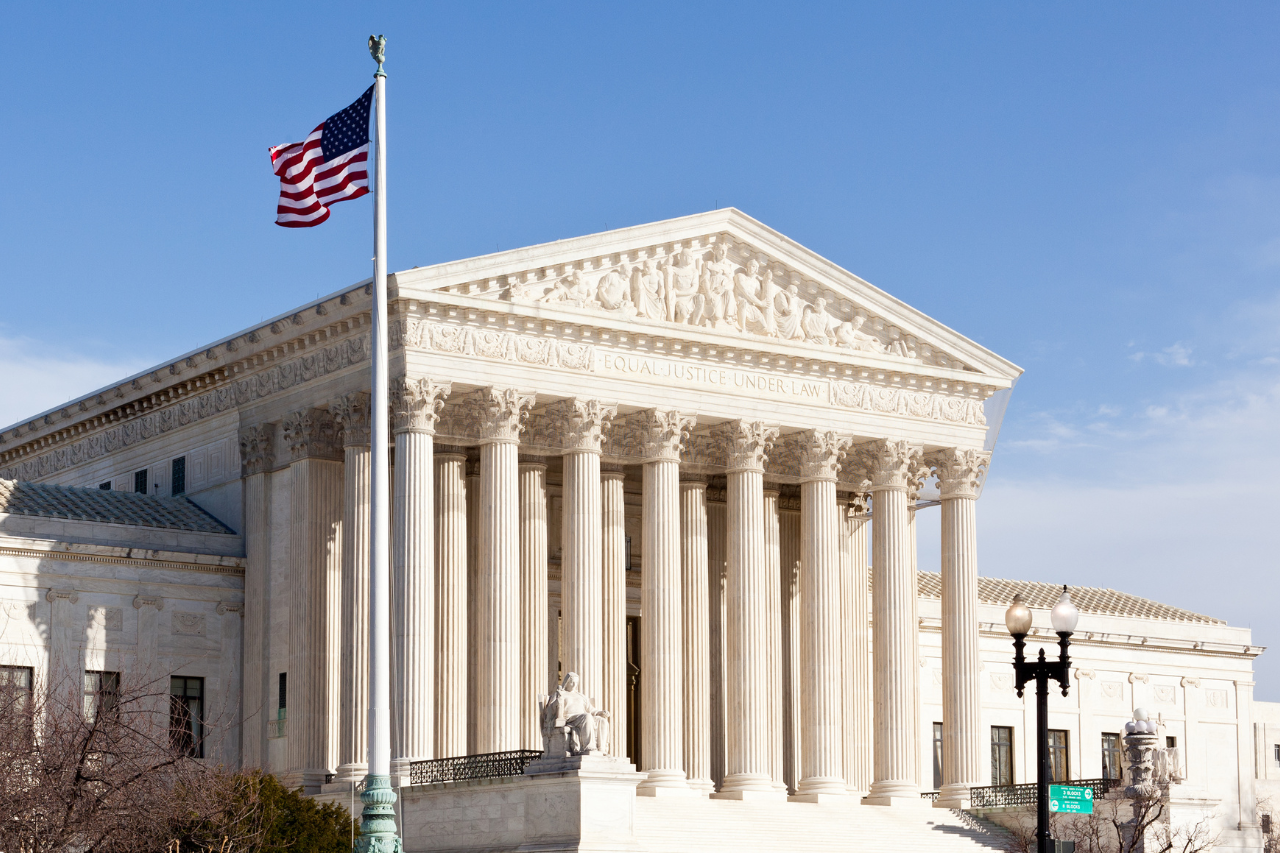
New Delhi — A landmark 6-3 decision by the United States Supreme Court to curb President Donald Trump’s emergency tariff powers has sent ripples through global markets, promising a potential windfall for Indian exporters. The top court ruled on Friday that the President overstepped his constitutional authority by using the 1977 International Emergency Economic Powers Act (IEEPA) to impose sweeping, unilateral import taxes on trading partners.
For India, the immediate consequence of this judicial rebuke is the invalidation of the 18 percent reciprocal tariff that was recently negotiated as part of an interim trade deal. However, the relief comes with a new caveat.
Hours after the Supreme Court struck down his flagship economic policy, a defiant President Trump invoked a rarely used statute—Section 122 of the Trade Act of 1974—to slap a temporary 10 percent baseline global tariff on all imports. This emergency measure will remain in effect for 150 days starting February 24.
Trade analysts explain that the math has now shifted in India’s favor. With the IEEPA-based duties wiped out, Indian goods will now be subject to the new 10 percent global surcharge added to the standard Most-Favored-Nation (MFN) rate, which averages around 3.5 percent. This brings the effective duty on Indian exports down to approximately 10 to 13.5 percent.
This reduction is expected to inject fresh momentum into India’s robust export market, which stood at over $103 billion last year. Sectors heavily reliant on the American market, such as textiles, apparel, leather, and pharmaceuticals, are poised to regain their competitive edge. According to trade experts, the ruling effectively frees about 55 percent of India’s exports to the US from the heavy 18 percent duty. It is important to note, however, that industry-specific tariffs imposed under Section 232—such as the 50 percent levy on steel and aluminum—remain completely unaffected by the court’s decision.
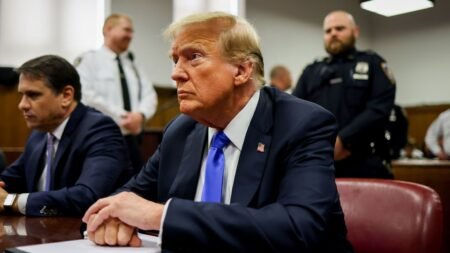
Despite the legal setback, the White House maintained a tough posture. Speaking to reporters, President Trump insisted that the interim trade agreement with New Delhi remains on track. “Nothing changes. They’ll be paying tariffs, and we will not be paying tariffs,” Trump stated, adding that he shares a “fantastic” relationship with India and praised the country for scaling back its purchases of Russian oil.
Back in New Delhi, the government is treading cautiously. The Ministry of Commerce and Industry issued a statement confirming that it is closely monitoring the rapidly evolving situation. “We have noted the US Supreme Court judgement on tariffs… We are studying all these developments for their implications,” the ministry noted.
As an Indian delegation prepares to visit Washington to seek further clarity, the Supreme Court’s ruling undeniably alters the negotiating landscape. While the US administration scrambles for alternative legal avenues to reinstate higher duties, New Delhi now has a crucial window to bargain for better terms before a final bilateral trade agreement is cemented.