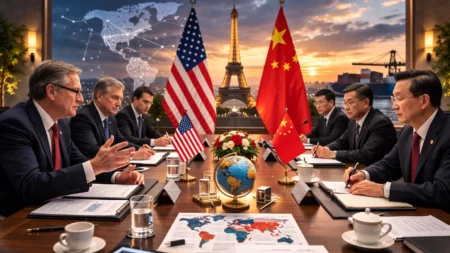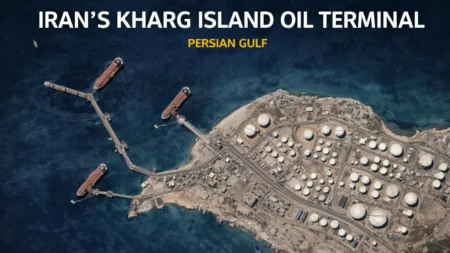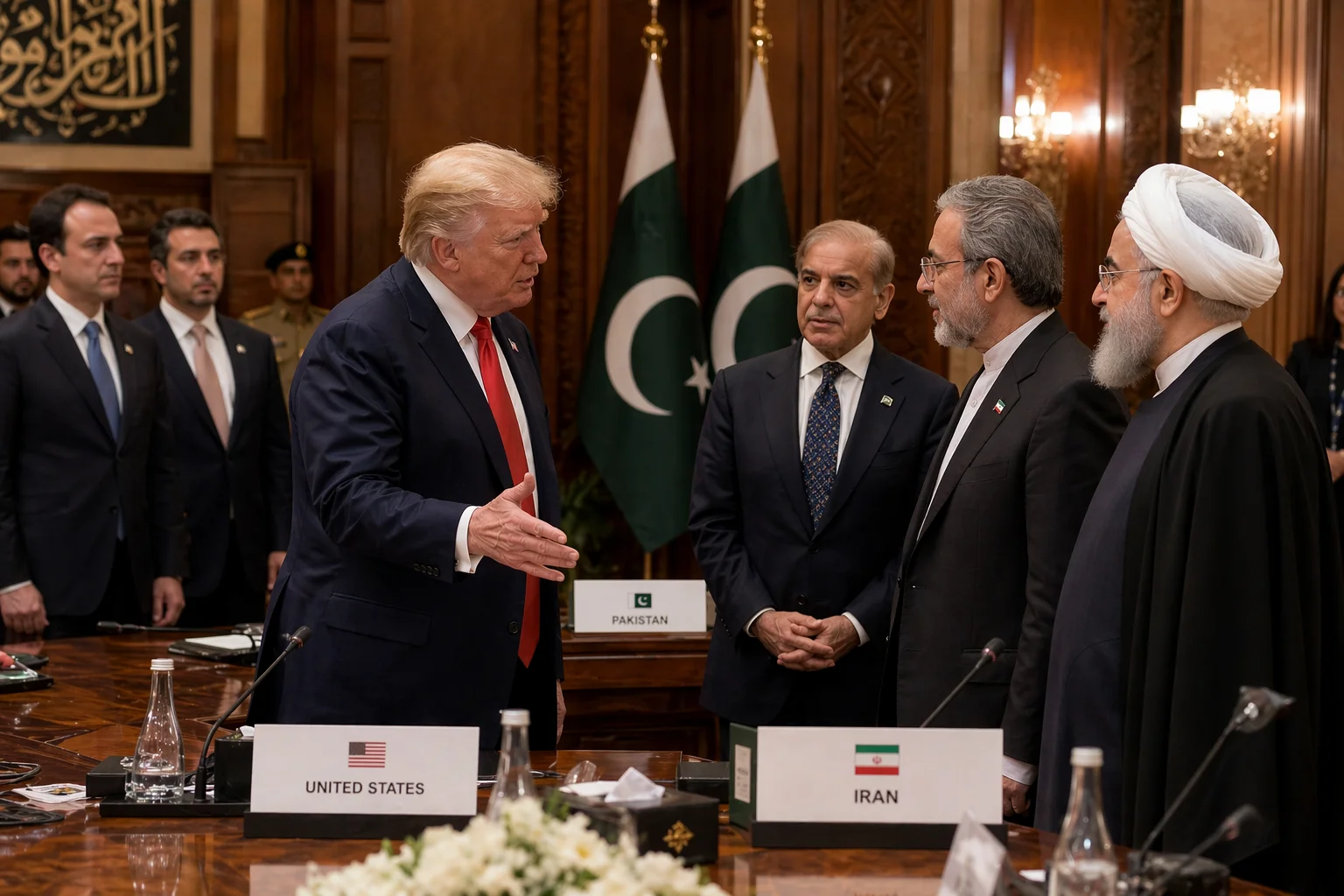
Washington/Islamabad, April 21, 2026: Back channel diplomacy between the United States and Iran appears to be entering a decisive phase, with strong indications that former U.S. President Donald Trump could personally step into the negotiations—either in person or via a virtual platform—if a breakthrough becomes imminent.
According to multiple senior sources familiar with the discussions, Islamabad is being positioned as the potential host city for any face-to-face engagement. The choice signals Pakistan’s growing relevance as a neutral intermediary capable of bridging trust gaps between Washington and Tehran.
Officials suggest that Pakistan, working in coordination with Oman and Qatar, has quietly facilitated months of indirect negotiations aimed at reviving the 2015 nuclear accord—formally known as the Joint Comprehensive Plan of Action (JCPOA). The agreement, abandoned by the U.S. in 2018, has since remained a central point of contention in global diplomacy.
While Trump has yet to officially confirm his participation, insiders believe his involvement could be a decisive political trigger. Notably, he has consistently criticized the original deal, previously calling it “the worst agreement ever negotiated.”
A senior Pakistani official, speaking on condition of anonymity, said:
“Islamabad was chosen because it maintains balanced relations with both Washington and Tehran. We’ve worked extensively to create a conducive environment for dialogue. The possibility of Trump joining—physically or virtually—has injected fresh momentum into the process.”
‘Islamabad Accord’ Takes Shape
The emerging framework—informally being referred to as the “Islamabad Accord”—focuses on three core pillars:
- Limits on Iran’s uranium enrichment
- Phased sanctions relief
- Regional security assurances
Preliminary drafts suggest Iran may agree to cap uranium enrichment at 3.67%, aligning with original JCPOA thresholds. In return, the United States and European Union are expected to offer gradual sanctions relief over a 12-month period.
A separate provision under discussion reportedly addresses Iran’s ballistic missile program and its role in regional conflicts—long-standing concerns for Western and Middle Eastern stakeholders.
Next Round in Geneva
Diplomatic momentum is set to continue next week, with U.S. Secretary of State Marco Rubio scheduled to meet Iranian Foreign Minister Hossein Amir-Abdollahian in Geneva. The talks are expected to focus on finalizing key provisions of the agreement.
A senior U.S. State Department official indicated:
“No final timeline has been locked in yet, but the structure is taking shape. Trump’s potential involvement could significantly enhance trust and political weight behind the deal.”
Iran Signals Conditional Flexibility
Iran’s Supreme Leader Ayatollah Ali Khamenei, in a televised address on April 18, struck a cautiously open tone:
“If the West is genuinely committed to removing all unjust sanctions without preconditions, Iran is prepared to fully restore its nuclear commitments.”
However, he made it clear that Tehran would not accept any temporary or partial arrangements, underscoring the high stakes involved.
Global Reactions Mixed
International responses to the evolving negotiations have been sharply divided.
- European leaders have welcomed the progress, with EU foreign policy chief Ursula von der Leyen calling it “a constructive step toward regional stability and global non-proliferation.”
- In contrast, Israeli Prime Minister Benjamin Netanyahu dismissed the talks as “a dangerous illusion,” warning that Israel would take “all necessary measures” to safeguard its security.
Nuclear Reality Check
A confidential UN assessment indicates that Iran’s uranium stockpile dropped from approximately 12,000 kg in 2021 to around 5,500 kg, reflecting earlier compliance phases.
However, recent developments show Tehran has increased enrichment levels to 60%, far exceeding the original JCPOA cap—raising concerns among global watchdogs.
What’s at Stake
If finalized, the Islamabad Accord would mark the first direct U.S.–Iran engagement in over a decade, potentially reshaping geopolitical alignments across the Middle East.
Pakistan’s foreign office has internally designated the mediation process under the reference code: PAK-MED-2026-045-IRUS, highlighting the structured diplomatic effort behind the scenes.
The White House has remained cautious. A spokesperson stated:
“Our priority remains ensuring Iran does not develop nuclear weapons while addressing destabilizing activities in the region.”
Bottom Line
The coming weeks could determine whether years of stalled diplomacy finally translate into a workable agreement. With Islamabad stepping into a central role—and Trump potentially entering the equation—the negotiations have entered a high-stakes, high-visibility phase.