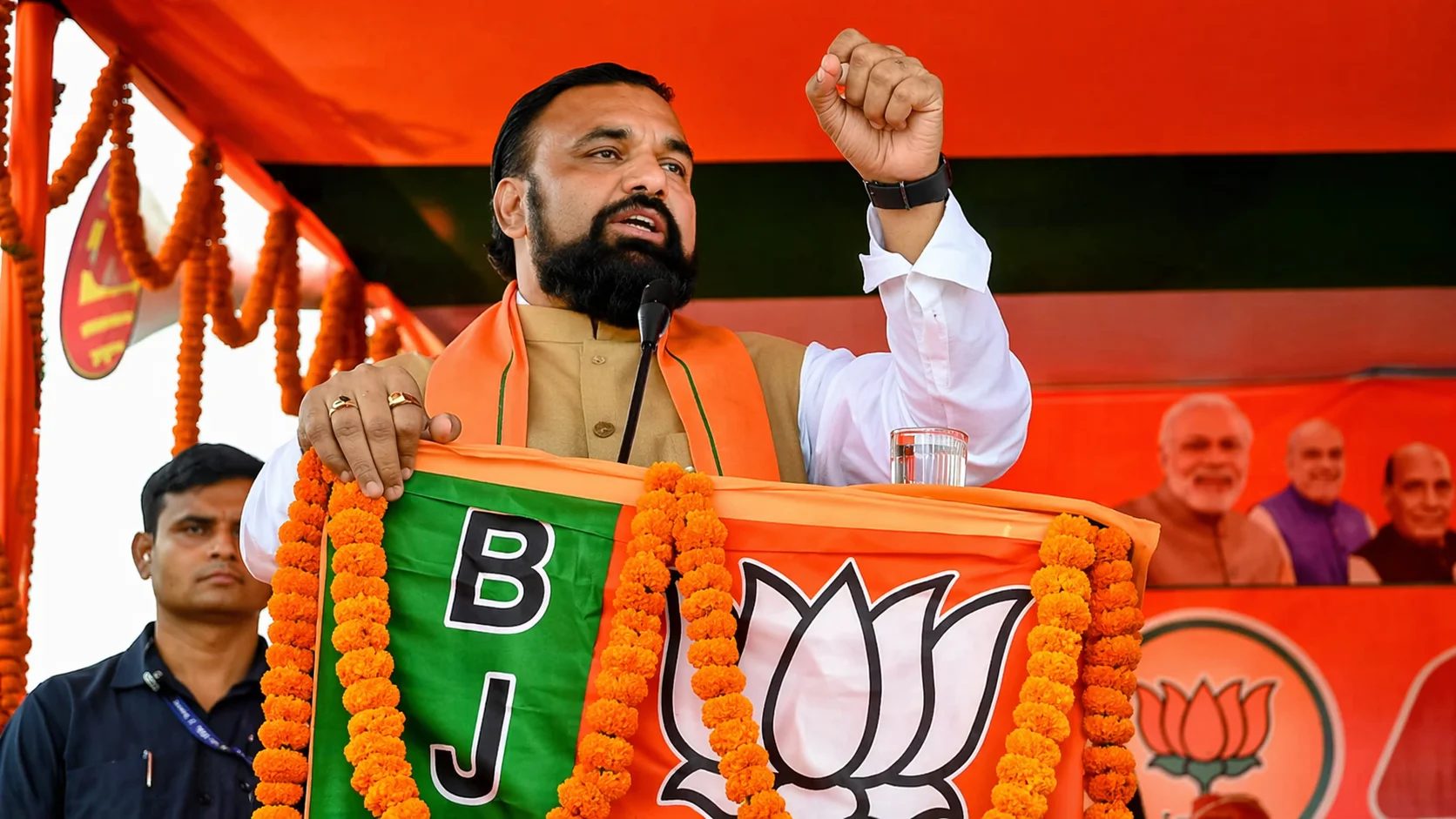
PATNA, April 14: The Bharatiya Janata Party (BJP) on Sunday moved quickly to appoint its Bihar unit president Samrat Choudhary as the next Chief Minister, hours after Nitish Kumar resigned, triggering a fresh phase of political realignment in the state.
Kumar’s resignation, submitted earlier in the day, brought an abrupt end to the existing arrangement and once again highlighted the fluid nature of Bihar’s coalition politics. The BJP, which had been monitoring developments closely, finalised Choudhary’s name after consultations between state leaders and the central leadership.
A senior BJP leader familiar with the discussions said the decision was taken “after internal consultations to ensure continuity in governance,” indicating the party’s intent to move swiftly and avoid any administrative vacuum.
A Decade of Shifting Alliances
The latest development fits into a broader pattern that has defined Bihar politics over the past decade. Nitish Kumar, one of the state’s longest-serving political figures, has repeatedly switched alliances between the BJP-led National Democratic Alliance (NDA) and opposition formations.
Since 2013, Bihar has witnessed multiple realignments, often altering the balance of power within months. Kumar’s ability to reposition himself politically has kept the state’s coalition structure in constant flux, with each shift carrying implications for governance and electoral strategy.
Why Choudhary Matters for BJP
Samrat Choudhary’s elevation reflects both organisational and electoral considerations. As Bihar BJP president, he has been closely involved in expanding the party’s base across districts, particularly in regions where caste alignments play a decisive role.
His appointment also signals the BJP’s emphasis on consolidating support among Other Backward Classes (OBCs), a key voting bloc in the state. By placing an OBC leader at the helm, the party appears to be reinforcing its social coalition ahead of future electoral contests.
Choudhary has held various organisational and ministerial roles in the past, and his selection is seen within the party as a continuation of its strategy to promote leaders with both grassroots experience and administrative exposure.
Immediate Political and Administrative Implications
With the leadership question settled quickly, attention now turns to the formation of the new government. Officials said the swearing-in ceremony is expected soon, although an exact schedule has not yet been formally announced.
The transition is likely to have a bearing on both governance priorities and political alignments in the state. In Bihar’s competitive political environment, leadership changes often trigger recalibration among allies and opponents alike.
For now, the BJP’s rapid decision-making suggests an effort to project stability at a time when political uncertainty could have disrupted administrative continuity.