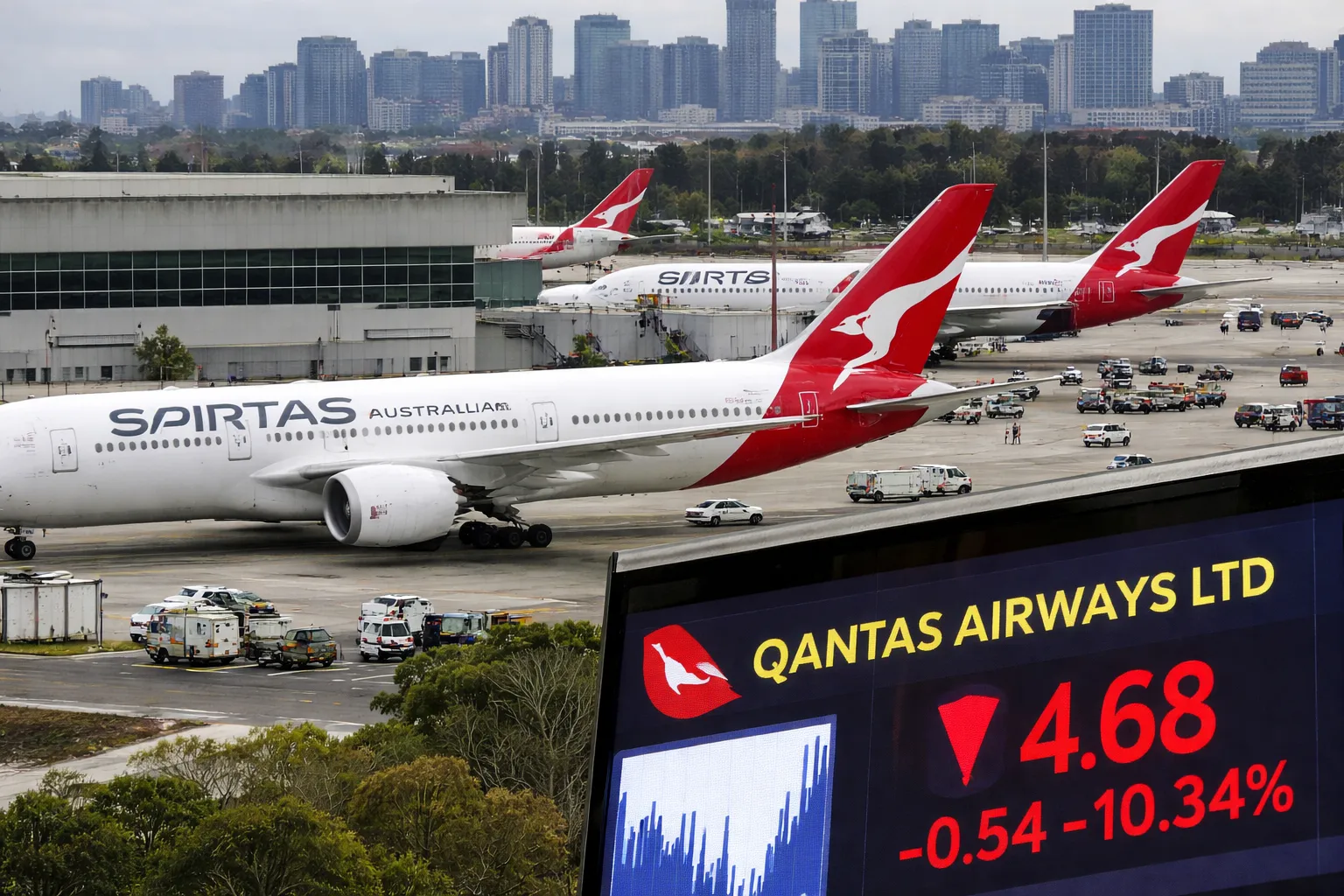
Sydney: Shares of Qantas Airways fell more than 10% on Monday as escalating tensions between the United States and Iran rattled global markets and raised concerns over higher fuel prices and potential disruptions to international air travel.
The sharp decline in Qantas stock came as energy markets reacted to the widening conflict in the Middle East, pushing crude oil prices higher. Aviation analysts noted that airlines are particularly sensitive to fluctuations in fuel costs, which represent a significant portion of operating expenses.
Qantas shares closed sharply lower on the Australian Securities Exchange, marking one of the airline’s steepest single-day declines in recent months. Other carriers in the Asia-Pacific region also saw losses, reflecting broader investor caution toward travel-related stocks.
In a brief statement, Qantas said it continues to monitor geopolitical developments and has contingency measures in place to manage fuel price volatility. The airline did not announce any immediate changes to flight schedules but indicated it would adjust operations if necessary to ensure passenger and crew safety.
Industry observers say airlines typically face a dual challenge during geopolitical crises: rising jet fuel costs and potential shifts in travel demand. If oil prices remain elevated for an extended period, carriers may be forced to reassess ticket pricing, capacity planning, and hedging strategies.
Aviation consultant Mark Reynolds said investors often react quickly to global instability because airlines operate on relatively tight margins. “When there is uncertainty in oil-producing regions, markets immediately price in the risk of sustained fuel cost increases,” he said. “Even if flights are not directly affected, profitability forecasts can change.”
Oil benchmarks rose after reports of increased military activity linked to the US-Iran confrontation. The Middle East accounts for a substantial share of global crude supply, and any threat to production or shipping routes can influence international prices.
Qantas, like many major airlines, uses fuel hedging contracts to manage short-term volatility. However, analysts caution that hedging strategies provide only partial protection if price spikes are prolonged. Higher fuel expenses may eventually filter through to airfares, though airlines must balance pricing decisions against competitive pressures and demand sensitivity.
The latest market reaction also reflects broader concerns about international travel patterns. While Qantas does not operate direct routes through active conflict zones, long-haul services between Australia, Europe, and North America may face operational adjustments if airspace restrictions expand.
Australian Treasurer Elaine Porter said the government is closely watching global economic developments. “Australia’s aviation sector remains resilient, but we recognize that geopolitical tensions can influence fuel prices and financial markets,” she told reporters in Canberra. She added that authorities are maintaining regular contact with key industries.
The airline industry has experienced several shocks over the past decade, including pandemic-related disruptions, supply chain constraints, and fuel price swings. Despite recent improvements in passenger demand and profitability, the sector remains exposed to external risks beyond its control.
Qantas reported solid earnings in its most recent financial update, supported by strong domestic travel and recovering international routes. However, equity analysts note that valuation levels had risen considerably in recent months, leaving the stock vulnerable to broader market corrections.
Investors are also assessing potential impacts on tourism flows. Australia relies heavily on international travel for both business and leisure sectors. Prolonged instability in major global regions could affect consumer confidence and booking behavior, though there has been no immediate indication of widespread cancellations.
Market strategist Olivia Chen said airline shares often act as a barometer for global risk sentiment. “When geopolitical tensions escalate, sectors tied to mobility and discretionary spending tend to experience heightened volatility,” she explained.
As of Monday evening, Qantas had not revised its forward guidance. The company reiterated its commitment to maintaining operational flexibility and safeguarding its balance sheet.
Financial markets are expected to remain sensitive to developments in the Middle East in the coming days. Analysts suggest that sustained increases in oil prices, rather than short-term spikes, will ultimately determine the longer-term outlook for airline profitability.
For passengers, there are currently no announced disruptions to Qantas services. However, travelers are advised to monitor official updates as the situation evolves.