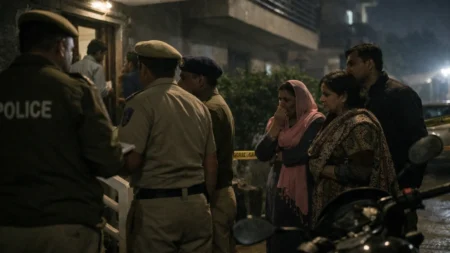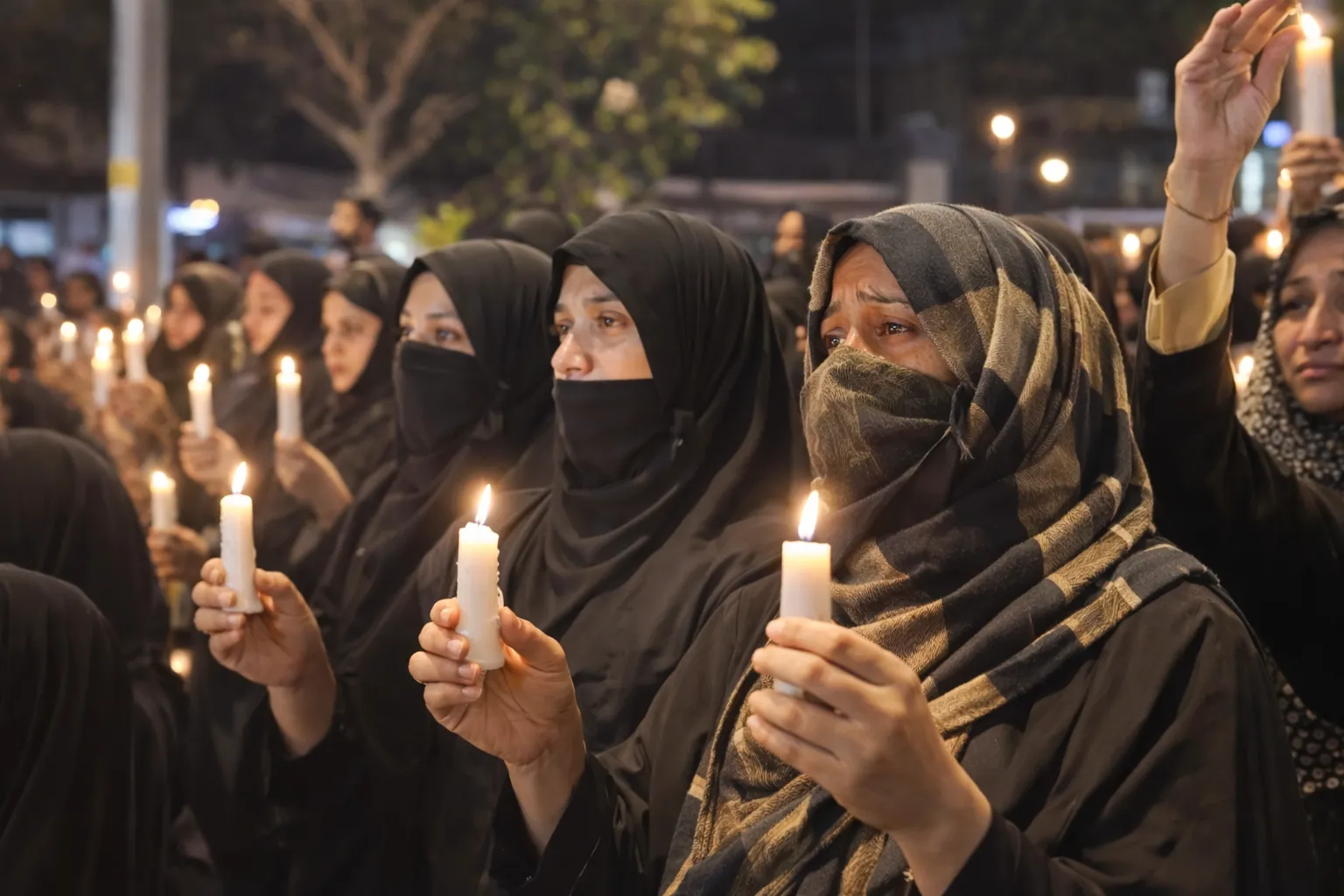
New Delhi: A group of women gathered at the Karbala ground in central Delhi on Monday evening to mourn the death of Iran’s Supreme Leader, Ayatollah Ali Khamenei. The condolence meeting, attended largely by members of the Shia community, was marked by prayers, candlelight tributes and expressions of solidarity.
Participants, many dressed in black abayas and headscarves, stood shoulder to shoulder as religious verses were recited. Several women were seen holding candles, while others offered silent prayers. Organisers described the gathering as a peaceful expression of grief and respect for a religious figure who held influence beyond Iran’s borders.
According to those present, the meeting was convened shortly after news of Khamenei’s death became public. “We came here to offer prayers and remember his leadership,” said one attendee, who declined to be named. “For many in our community, he was a significant religious authority.”
Local police officials confirmed that security arrangements were in place to ensure the event concluded without disruption. An officer stationed at the site said the gathering remained orderly and dispersed peacefully after prayers concluded. No untoward incidents were reported.
Community Response
Leaders associated with local religious organisations said the event was not political in nature but intended as a religious observance. “Our aim was to express condolences and pray for peace,” said a cleric involved in organising the meeting. He added that the programme followed customary practices observed during mourning gatherings.
The Karbala ground has long served as a venue for religious congregations in the capital, particularly during Muharram and other significant dates in the Shia calendar. Monday’s gathering reflected similar traditions, though the occasion was tied to developments abroad.
Some participants described the moment as emotional. “We felt it was important to come together,” another woman attending the vigil said. “Even though the events happened outside India, the news affected many of us personally.”
Background
Ayatollah Ali Khamenei served as Iran’s Supreme Leader for decades and played a central role in shaping the country’s political and religious direction. As the highest authority in Iran’s system of governance, he influenced domestic policy as well as foreign relations. His leadership drew varied responses internationally, reflecting the complex geopolitical position of Iran.
In India, the Shia Muslim community maintains historical and religious links with clerical institutions in Iran and Iraq. While such gatherings are typically religious in nature, they occasionally draw public attention because of broader political contexts.
Delhi, home to diverse communities, has frequently witnessed solidarity events connected to international developments. Authorities generally permit such gatherings provided they comply with local regulations and remain peaceful.
Public and Official Reaction
There was no official statement from the central government regarding the gathering, though police presence indicated routine oversight. Analysts note that public expressions of grief related to global figures are not uncommon in metropolitan centres like Delhi, particularly when they involve communities with shared religious ties.
Observers also pointed out that the gathering took place amid heightened international attention on developments in the Middle East. However, there were no reports linking the vigil to any political mobilisation within India.
Security officials reiterated that maintaining public order was their priority. “Our role is to facilitate peaceful assembly while ensuring safety,” a senior officer said.
Broader Implications
Experts suggest that events such as Monday’s vigil highlight the interconnectedness of global and local communities. Developments abroad can resonate among diaspora populations and religious groups, leading to expressions of solidarity or mourning.
At the same time, authorities often monitor such gatherings to prevent misinterpretation or escalation. In this instance, the event concluded without incident, underscoring its largely ceremonial character.
As the situation in Iran continues to evolve, community leaders in Delhi indicated that any future events would remain focused on religious observance rather than political commentary.
The gathering ended with collective prayers for peace and stability. Participants gradually left the site after nightfall, bringing the vigil to a close.