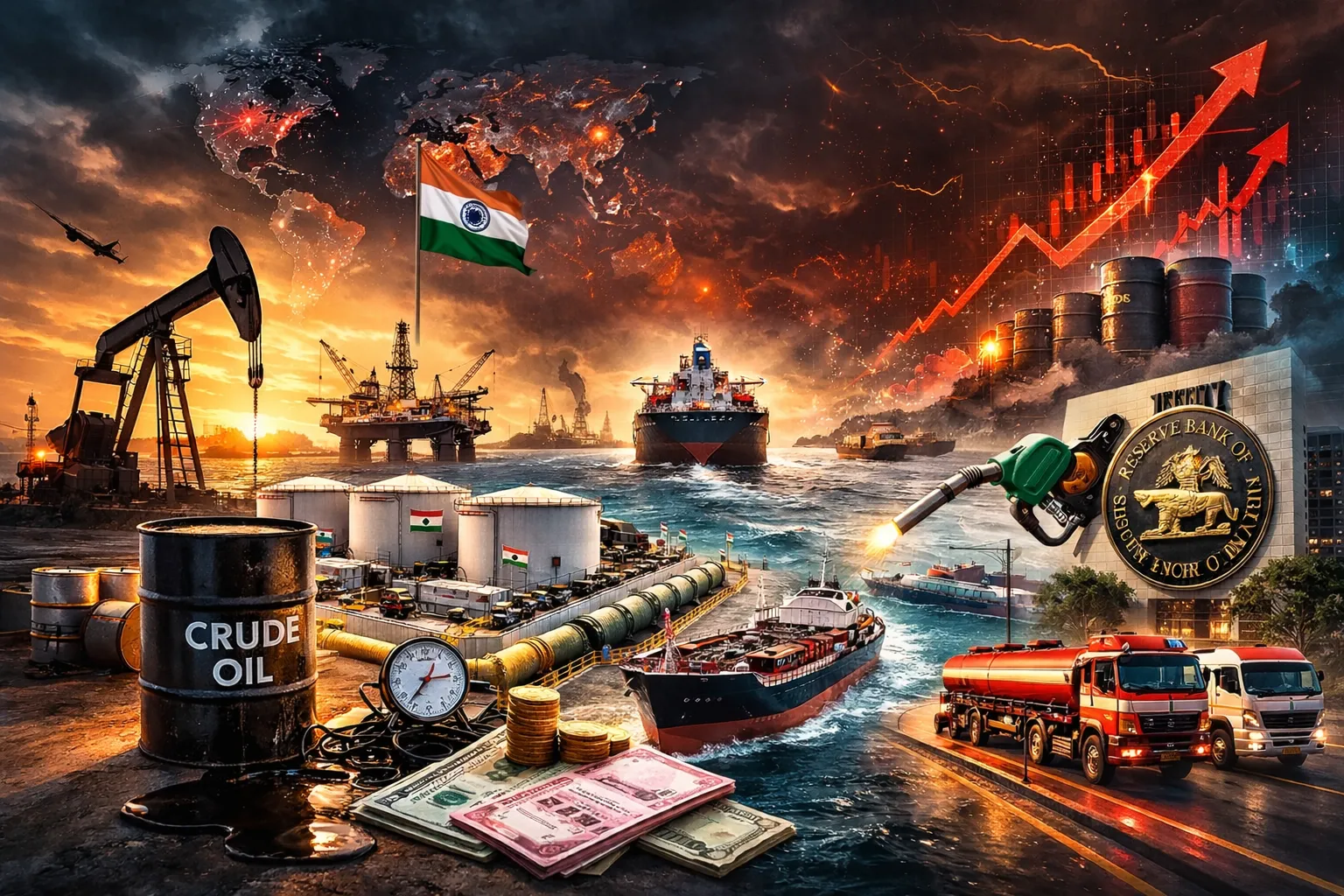
New Delhi: As geopolitical tensions intensify in parts of West Asia and global crude prices show signs of volatility, policymakers in New Delhi are closely monitoring the situation to shield India’s economy from a potential oil shock. With more than 80 percent of its crude requirements met through imports, India remains particularly sensitive to supply disruptions and price spikes in the international market.
Officials in the petroleum and finance ministries have indicated that contingency mechanisms are in place, including the use of strategic petroleum reserves (SPR), diversified sourcing, and calibrated pricing measures, to cushion any immediate impact.
Strategic Reserves as First Line of Defence
India has built underground strategic crude oil storage facilities in locations such as Visakhapatnam, Mangaluru and Padur. These reserves are designed to provide a buffer in case of supply disruptions. Government officials have previously stated that the existing stockpiles can cover several days of national demand, offering temporary protection during sudden global supply shocks.
In addition to these emergency reserves, Indian public sector refiners maintain operational inventories that provide further short-term flexibility.
Diversification of Supply
Over the past few years, India has expanded its supplier base beyond traditional West Asian sources. Following disruptions in global markets in recent years, Indian refiners increased purchases from countries including the United States, Russia and certain African producers.
Energy analysts note that diversification has improved India’s negotiating position and reduced its dependence on any single supplier. Officials have said that procurement decisions are guided by price competitiveness and logistical feasibility, rather than political alignment.
This approach, according to industry observers, provides India with room to adjust procurement strategies if tensions escalate in specific regions.
Pricing and Fiscal Measures
A sustained rise in global crude prices typically puts pressure on India’s current account deficit and inflation. Fuel prices also have a direct bearing on transportation costs and consumer goods pricing.
In previous instances of global oil spikes, the government has used a mix of excise duty adjustments and coordination with oil marketing companies to soften the impact on consumers. While there has been no formal announcement of new measures at this stage, officials have indicated that fiscal tools remain available if needed.
Economists say the government must balance revenue considerations with inflation management, particularly at a time when domestic growth and price stability are key policy priorities.
Broader Economic Context
India is the world’s third-largest oil consumer, and fluctuations in crude prices directly affect trade balances and currency stability. A sharp rise in oil prices can weaken the rupee and widen the current account deficit, increasing external vulnerabilities.
The Reserve Bank of India has, in past episodes, monitored energy-driven inflationary pressures closely. Any sustained surge in oil prices could complicate monetary policy decisions, especially if it feeds into broader price increases.
At the same time, India has accelerated its push toward renewable energy and alternative fuels. The expansion of solar power capacity, electric vehicle adoption and ethanol blending in petrol are part of long-term strategies aimed at reducing oil dependency. However, analysts caution that in the near term, crude imports will continue to dominate the energy mix.
What This Means for Consumers
For households and businesses, the immediate concern is fuel prices. While pump prices remain stable for now, global trends will determine whether adjustments become necessary.
Transportation companies, airlines and logistics operators are particularly sensitive to fuel costs. A prolonged spike could lead to increased freight rates, potentially affecting consumer prices across sectors.
Government officials have reiterated that energy security remains a priority and that India is better positioned today than in earlier decades to manage volatility.
Conclusion
As global energy markets face renewed uncertainty, India is relying on a combination of strategic reserves, diversified sourcing, fiscal flexibility and long-term energy transition policies to mitigate risks. While external factors remain unpredictable, policymakers appear focused on ensuring that any potential oil shock does not translate into prolonged domestic disruption.
The coming weeks will be critical in determining whether precautionary measures remain sufficient or whether further interventions become necessary.