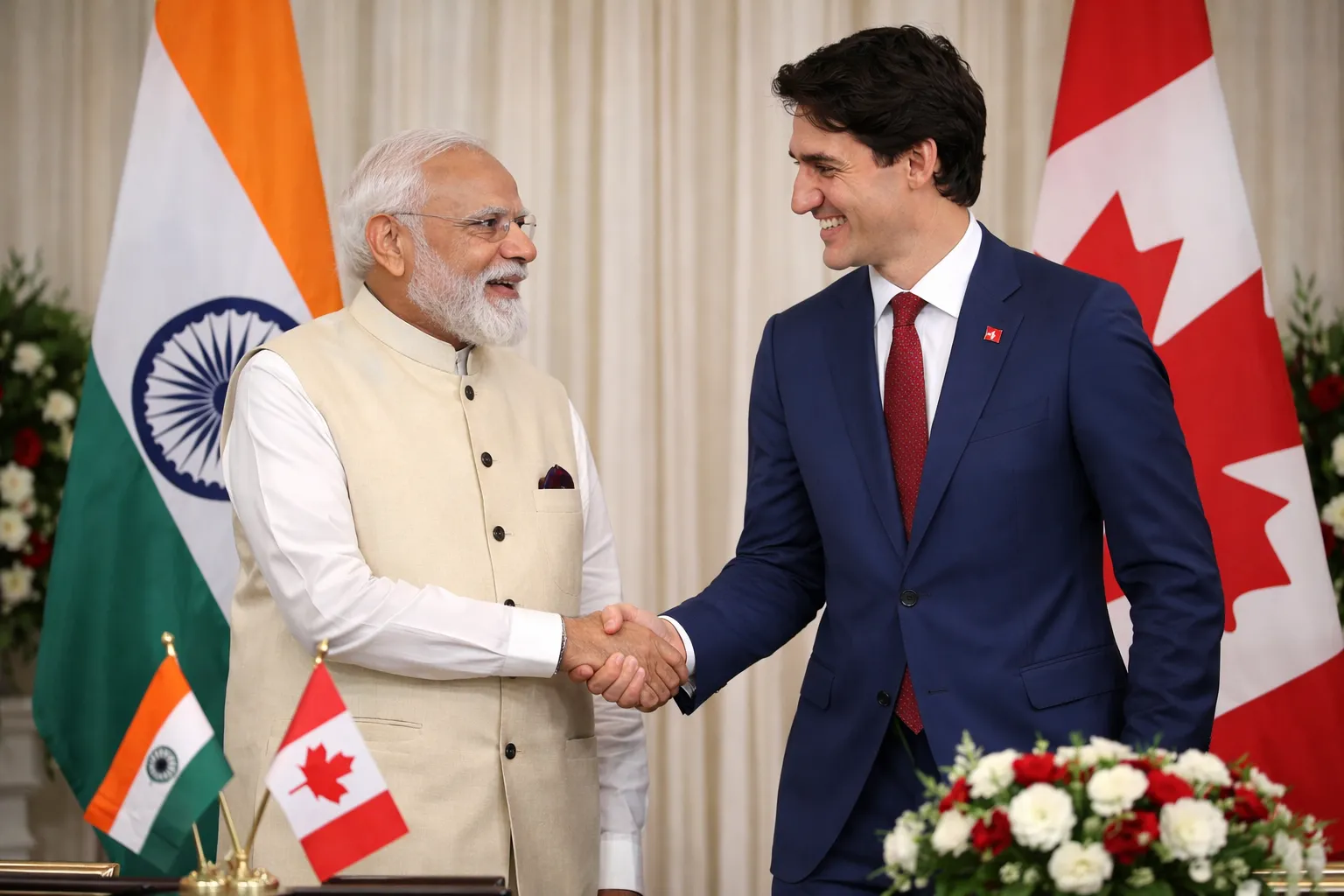
New Delhi/Ottawa: India and Canada have agreed on the terms of reference for negotiating a Comprehensive Economic Partnership Agreement (CEPA), marking a renewed effort to deepen economic ties between the two countries after a prolonged pause in formal trade discussions.
Officials from both governments confirmed that the agreed framework will guide the scope and structure of negotiations aimed at reducing trade barriers, enhancing investment flows, and strengthening cooperation across key sectors. The development signals a reset in economic engagement as both countries seek to expand bilateral trade and diversify supply chains amid shifting global trade dynamics.
India’s Ministry of Commerce and Industry said in a statement that the agreed terms provide a roadmap for comprehensive negotiations covering goods, services, investment, and other trade-related issues. The ministry noted that the objective is to establish a balanced and mutually beneficial agreement that reflects the economic priorities of both sides.
Canadian officials described the agreement on the framework as an important procedural step that allows negotiations to formally resume. They said the CEPA talks are intended to build a predictable and transparent trade environment for businesses in both countries.
Scope of the Agreement
According to officials familiar with the discussions, the CEPA is expected to address tariff reductions on a wide range of products, improve market access for services, and create stronger protections for investors. Areas such as clean energy, agriculture, digital trade, pharmaceuticals, and critical minerals are likely to feature prominently in the negotiations.
India and Canada have complementary economic interests. Canada is a major supplier of pulses and other agricultural commodities to India, while India exports pharmaceuticals, textiles, machinery, and information technology services to Canada. Both governments have previously indicated interest in expanding cooperation in areas such as renewable energy and education.
Negotiators are also expected to examine regulatory standards, intellectual property rules, and mechanisms for dispute resolution as part of the broader agreement.
Background to the Talks
Negotiations for a comprehensive trade pact between India and Canada were first launched more than a decade ago but faced multiple delays. Formal discussions were paused in recent years amid diplomatic tensions that affected broader bilateral engagement.
The latest move to agree on the terms of reference reflects efforts on both sides to stabilise relations and prioritise economic cooperation. Officials have said that restoring momentum in trade discussions could help unlock untapped potential in bilateral commerce.
Two-way trade between India and Canada has grown steadily over the past several years, though it remains modest compared to each country’s trade with other major partners. Bilateral trade in goods and services has crossed several billion dollars annually, with both sides acknowledging room for significant expansion.
Trade analysts note that Canada has been seeking to strengthen economic ties in the Indo-Pacific region, while India has pursued new trade agreements with countries including Australia, the United Arab Emirates, and the United Kingdom in recent years.
Statements from Both Sides
Indian officials said the CEPA framework demonstrates the shared commitment of New Delhi and Ottawa to pursue constructive engagement. They added that the agreement aims to facilitate easier movement of goods and services while safeguarding domestic interests.
Canadian trade representatives emphasised that a comprehensive partnership with India would create new opportunities for Canadian businesses and investors. They also highlighted the importance of stable supply chains and diversified export markets.
Both governments indicated that the next round of formal negotiations will be scheduled in the coming months, though no specific timeline for concluding the agreement has been announced.
Why It Matters
A comprehensive economic partnership between India and Canada could have broad implications for businesses, investors, and consumers in both countries.
For India, improved access to the Canadian market may benefit sectors such as information technology services, pharmaceuticals, and manufacturing. For Canada, expanded access to India’s large and growing consumer market presents opportunities in agriculture, education services, clean technology, and natural resources.
In addition, closer economic ties could contribute to stronger cooperation in critical mineral supply chains, an area of strategic importance for both nations as they transition toward cleaner energy systems.
Trade experts caution, however, that comprehensive agreements often require lengthy negotiations, particularly on sensitive issues such as agricultural tariffs and labour mobility.
Next Steps
With the terms of reference now agreed, officials will move toward detailed negotiations covering specific sectors and tariff schedules. Stakeholder consultations with industry groups are expected on both sides before key decisions are finalised.
While significant work remains before a final agreement is reached, the formalisation of the negotiation framework represents a concrete step toward rebuilding economic engagement between India and Canada.