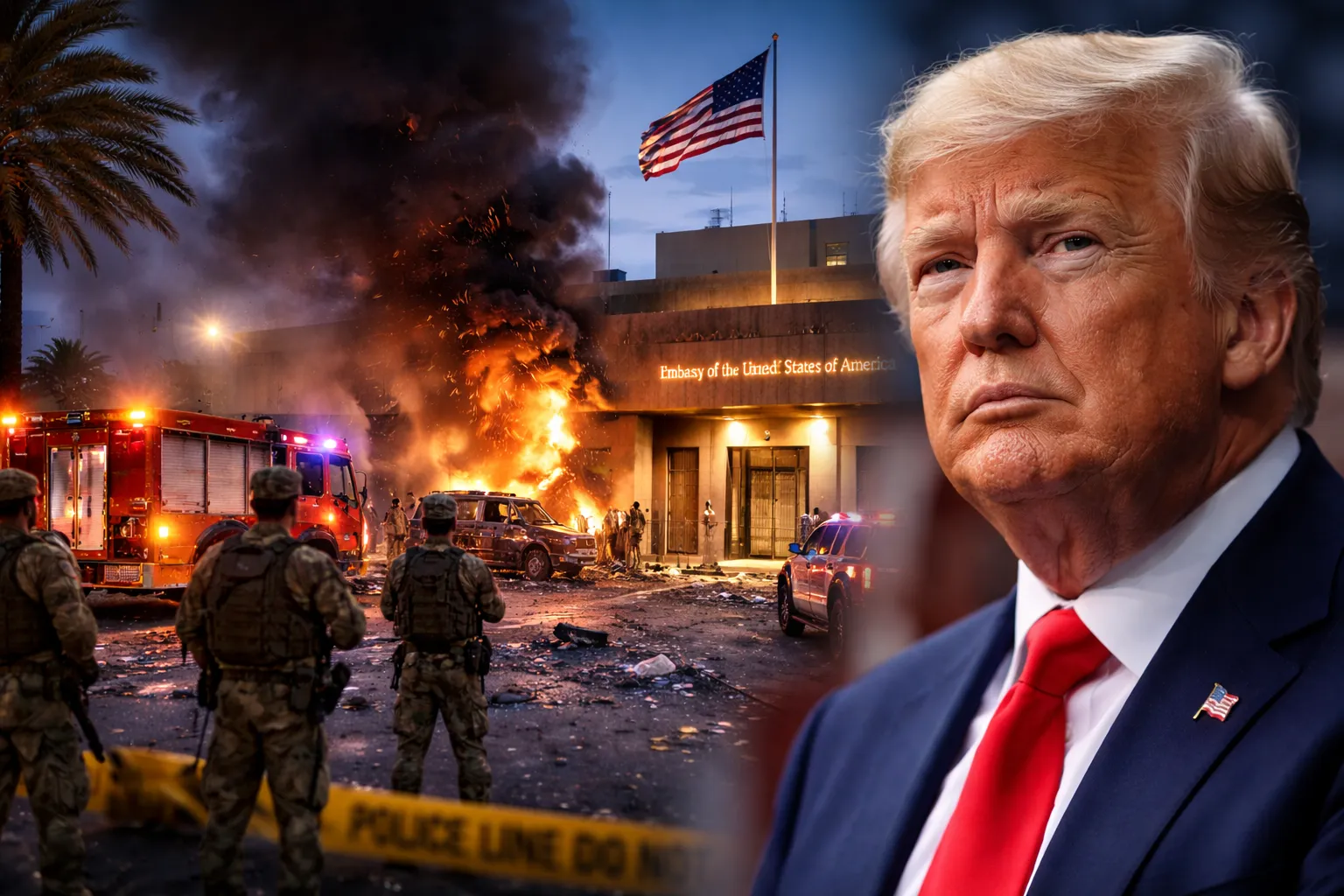
Washington/Riyadh: Former US President Donald Trump has indicated a shift in his position on deploying American ground troops in West Asia after an attack targeted the United States Embassy in Riyadh, Saudi Arabia. The development comes amid heightened tensions linked to the ongoing Iran–Israel confrontation, which has unsettled the broader region.
Speaking to reporters after the incident, Trump said the United States would reassess its security posture in the region and would not rule out any measures necessary to protect American personnel and facilities. His remarks mark a departure from earlier statements in which he had signalled reluctance to commit US ground forces to a fresh conflict in the Middle East.
Embassy Attack Triggers Review
The attack on the US diplomatic mission in Riyadh occurred earlier this week. According to US officials, the assault was contained by Saudi security forces, and there were no confirmed reports of casualties among American staff. The State Department said damage to the facility was limited and that operations continued with enhanced security.
Saudi authorities confirmed that security personnel responded promptly and detained individuals suspected of involvement. Investigations are ongoing to determine responsibility. No group has formally claimed the attack.
In a statement, the US State Department condemned the incident and said it was working closely with Saudi officials to ensure the safety of diplomatic personnel. “We remain in constant coordination with host-nation authorities and are reviewing our security measures,” a spokesperson said.
Trump’s Revised Position
In comments delivered in Washington, Trump acknowledged that he had previously argued against placing “boots on the ground” in response to escalating tensions between Iran and Israel. However, he said the embassy attack required a reassessment.
“Our priority is the safety of Americans,” Trump said. “We are reviewing the situation very carefully. We will take whatever steps are appropriate.”
While he stopped short of announcing a deployment, Trump emphasised that the United States would respond firmly to any threats against its diplomatic missions or citizens.
Earlier in the week, he had suggested that Washington should avoid direct military entanglement and instead rely on regional allies and targeted deterrence measures. Analysts say the attack in Riyadh may have influenced his tone, particularly as it involved a US diplomatic facility in a key partner country.
Broader Regional Context
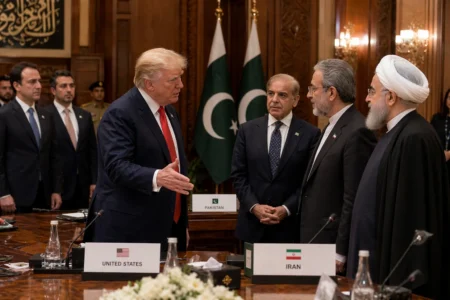
The attack comes against the backdrop of rising hostilities between Iran and Israel, including cross-border strikes and heightened rhetoric. The United States has long been a strategic ally of Israel and maintains significant military and diplomatic presence across the Gulf region.
Saudi Arabia hosts multiple US military installations and has deep security ties with Washington. Any escalation involving American troops could have implications not only for US–Iran relations but also for Gulf stability.
US defence officials have not confirmed any immediate plans to send additional ground forces to the region. A Pentagon official said that while force protection measures are under constant review, “no new large-scale deployment orders have been issued at this time.”
Diplomatic and Security Implications
International observers note that deploying ground troops would represent a significant strategic decision, potentially broadening the scope of US involvement in a volatile theatre. In recent years, successive administrations have sought to limit large-scale troop commitments in West Asia, favouring airpower, naval assets and regional partnerships.
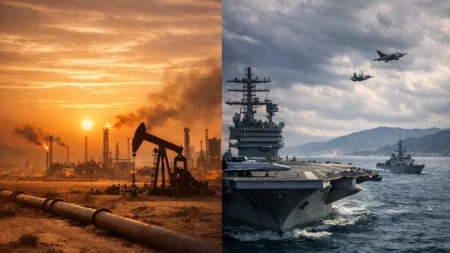
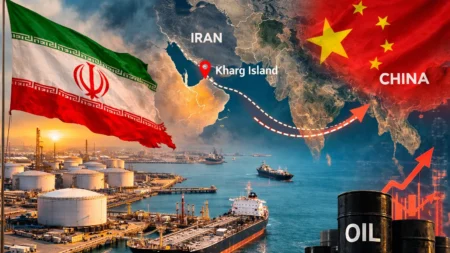
Energy markets reacted cautiously following news of the embassy attack, with oil prices recording modest gains amid concerns over regional stability. Analysts warn that any prolonged escalation could affect global supply routes and economic sentiment.
The United Nations has called for restraint and urged all parties to avoid actions that could widen the conflict. “Diplomatic channels must remain open,” a UN spokesperson said.
Public and Political Reaction
Within the United States, political responses have been measured. Lawmakers from both major parties condemned the attack and expressed support for safeguarding American personnel overseas. However, there were differing views on whether ground deployment would be appropriate.
Foreign policy experts caution that while securing diplomatic missions is essential, broader military engagement carries long-term consequences. “Force protection is necessary, but any escalation needs careful calibration,” said a Washington-based analyst.
What Comes Next
For now, US officials say security reviews are ongoing and additional resources may be allocated to diplomatic facilities across the region. Travel advisories for American citizens in parts of West Asia have been updated.
Trump’s latest remarks suggest that policy options remain fluid as the administration assesses developments. Whether this translates into a concrete military move will depend on intelligence assessments and consultations with regional allies.
As investigations into the Riyadh incident continue, the episode underscores the fragility of the security environment in West Asia and the potential ripple effects on global diplomacy and markets.