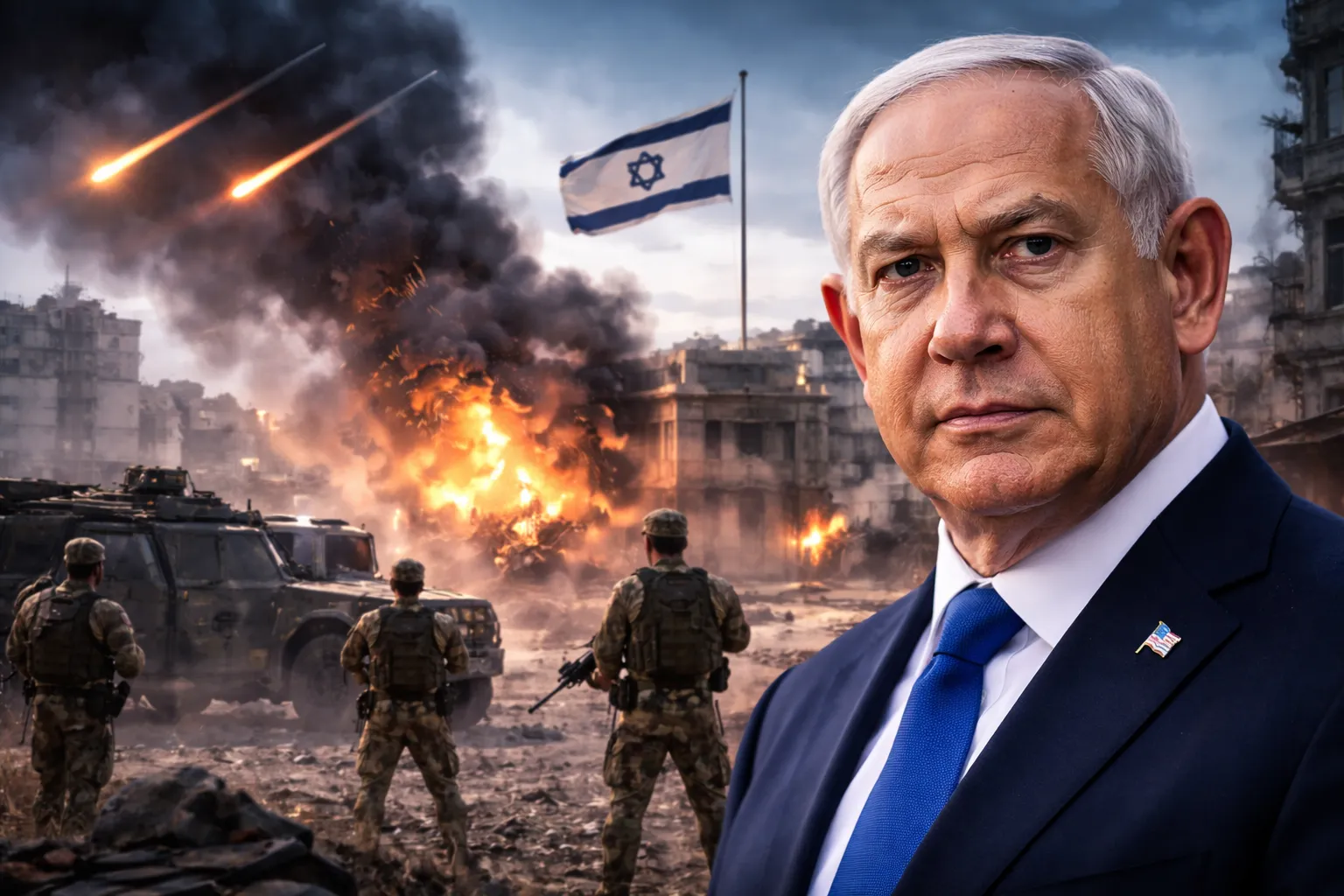
Jerusalem/Washington: Israeli Prime Minister Benjamin Netanyahu said the ongoing confrontation involving Israel, Iran and the United States is not expected to become a prolonged, years-long war, indicating confidence in Israel’s military objectives and coordination with Washington.
Speaking amid escalating hostilities in the region, Netanyahu said Israel’s actions are aimed at neutralising specific threats and restoring security stability. He added that the campaign would not extend indefinitely, though he did not provide a specific timeline.
“We are determined to achieve our goals,” Netanyahu said in remarks released by his office. “This is not something that will go on for years.”
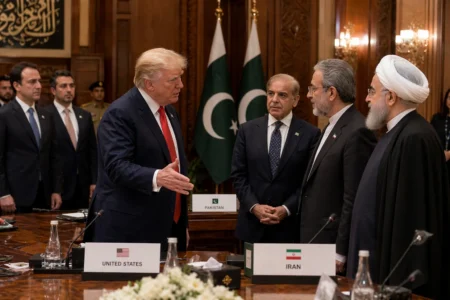
His comments come as tensions between Israel and Iran have intensified following exchanges that have drawn in the United States, Israel’s closest ally. Washington has reiterated its support for Israel while also stating that it does not seek a broader regional war.
Escalation and US Role
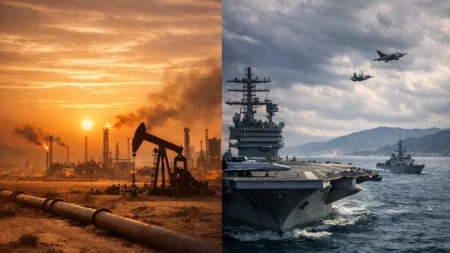
Recent developments have seen cross-border strikes, targeted operations, and heightened rhetoric between Israel and Iran. The United States has deployed additional naval and air assets to the region as a precautionary measure, according to Pentagon officials.
US officials have said their objective is to deter further escalation and protect American personnel and interests in the Middle East. President Joe Biden’s administration has maintained that while it stands firmly with Israel, it is not pursuing direct confrontation with Iran.
A senior US official said Washington is working with regional partners to prevent the conflict from widening. “We are focused on de-escalation and ensuring the safety of our forces and diplomatic missions,” the official said.
Israel’s Strategic Position
Netanyahu has repeatedly described Iran as Israel’s primary security threat, citing Tehran’s support for armed groups hostile to Israel and its nuclear ambitions. Israeli officials argue that recent military actions are intended to limit Iran’s operational reach and deter further aggression.
Security analysts note that Israel’s military doctrine typically emphasizes rapid, decisive campaigns designed to degrade adversary capabilities quickly. Netanyahu’s statement that the conflict will not take years aligns with that approach.
However, experts caution that conflicts in the region have historically evolved in unpredictable ways, especially when multiple actors are involved.
Iran’s Response
Iranian officials have accused Israel of provoking instability and have warned of consequences if attacks continue. Tehran has denied direct involvement in certain incidents but has reiterated its support for regional allies.
Iran’s foreign ministry said it would respond proportionately to any escalation and accused the United States of enabling Israeli actions. The rhetoric from both sides has contributed to concerns about a broader confrontation.
Regional and Global Impact
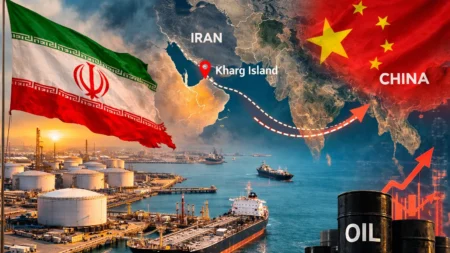
The ongoing tensions have raised concerns among neighboring countries and global markets. Oil prices have shown volatility in recent days, reflecting uncertainty over supply routes and regional stability.
Middle Eastern states have called for restraint. Saudi Arabia and the United Arab Emirates have urged diplomatic engagement to prevent further escalation. The United Nations has also appealed for calm, with Secretary-General officials encouraging dialogue.
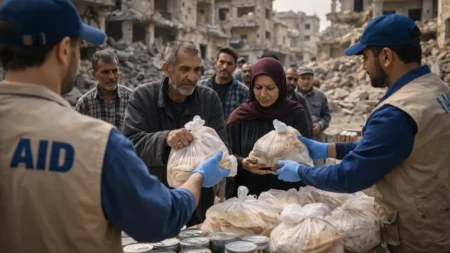
For civilians in affected areas, the uncertainty has disrupted daily life. Airlines have rerouted some flights, and governments have updated travel advisories for the region.
Background
The confrontation between Israel and Iran has developed over years of indirect hostilities, including cyber operations, intelligence activities and strikes targeting Iranian-linked infrastructure in Syria and elsewhere. The current phase represents one of the more direct and visible escalations between the two sides.
The United States has long maintained a military presence in the region and has supported Israel through defense cooperation and diplomatic backing. At the same time, Washington has sought to avoid becoming directly involved in sustained ground conflict.
Netanyahu’s remarks appear intended to reassure both domestic and international audiences that Israel has a defined strategic objective rather than open-ended engagement.
Why It Matters
A prolonged war involving Israel, Iran and potentially US forces could have far-reaching consequences for regional security, global energy markets and diplomatic alignments.
Netanyahu’s assertion that the conflict will not stretch over years may signal confidence in Israel’s operational capacity. However, the trajectory will depend on responses from Iran, the stance of the United States, and actions by regional proxies.
Investors, policymakers and regional governments are closely monitoring developments for signs of either stabilization or further escalation.
Looking Ahead
Israeli officials have said military operations will continue as needed to address security threats. US leaders have emphasized deterrence and protection of their personnel while maintaining open communication channels with regional allies.
Whether the conflict remains limited or evolves into a broader confrontation remains uncertain. For now, Israeli leadership is projecting a timeline measured in months rather than years.