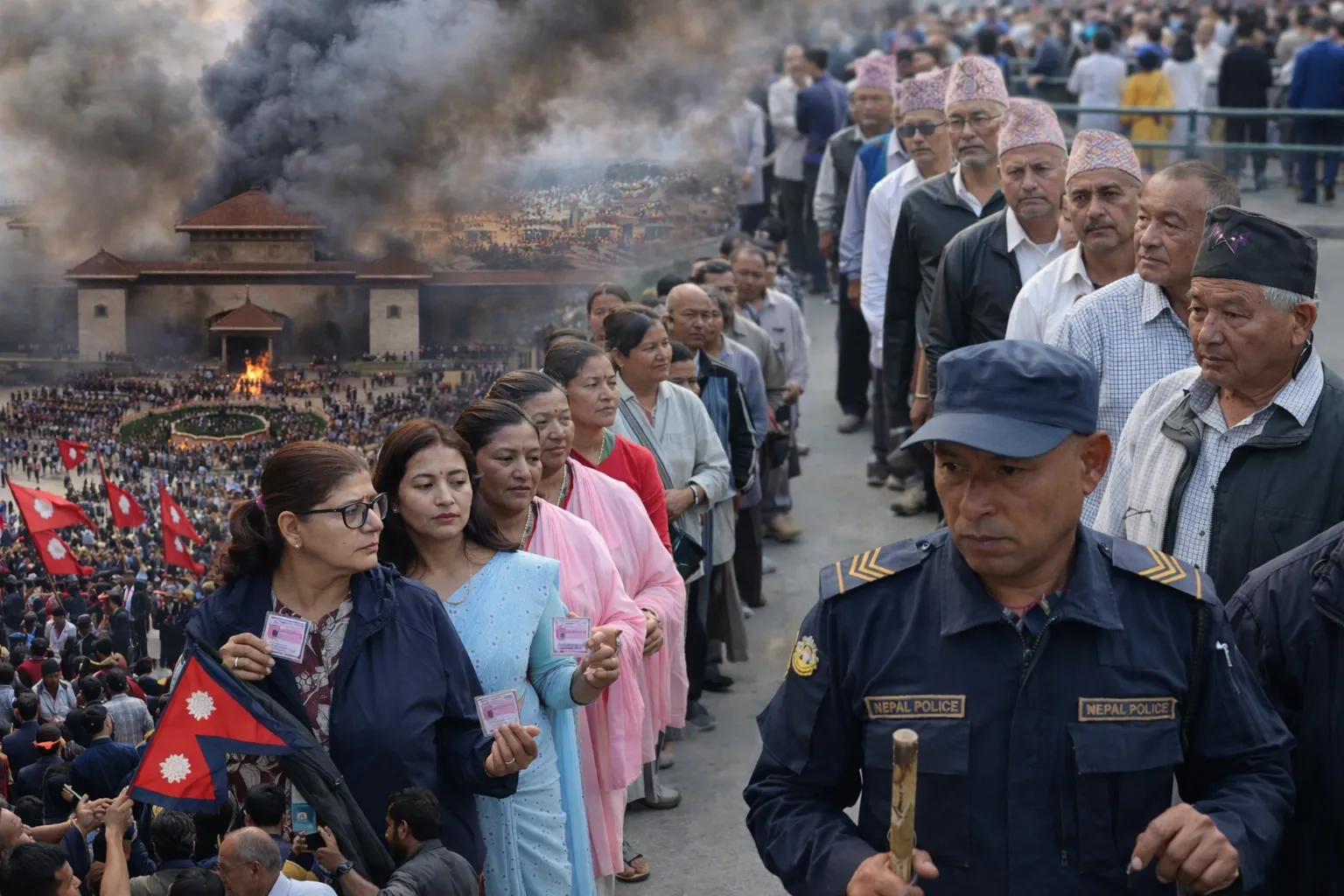
Kathmandu: Nepal went to the polls on Thursday in its first general election since a wave of youth-led protests last year forced the resignation of the government and triggered a major political reset in the Himalayan nation. Millions of voters across the country are casting ballots to choose representatives for the 275-member House of Representatives, in what analysts describe as a pivotal moment for Nepal’s political transition.
Polling stations opened early in the morning across Nepal’s provinces, from the Himalayan mountain districts to the southern plains bordering India. The Election Commission said nearly 19 million citizens are eligible to vote, including a large number of first-time voters who registered after last year’s protests. Voting is expected to determine the direction of Nepal’s political system following months of instability and demands for reform.

A Contest Between Old Parties and New Voices
The election has become a contest between established political parties and emerging groups that gained support during the youth-led protests. Traditional parties such as the Nepali Congress, the Communist Party of Nepal (Unified Marxist–Leninist), and the Maoist-aligned Communist Party have dominated national politics for decades and remain key contenders.
However, several newer political movements have gained traction among younger voters dissatisfied with corruption and economic stagnation. Among them is the Rastriya Swatantra Party, which has attracted attention for its reform agenda and strong backing from urban youth.
Political observers say the growing influence of younger voters may reshape the political landscape. Many of these voters participated in the protests last year and are seeking changes in governance, transparency and economic opportunities.
Security and Voting Arrangements
Authorities deployed extensive security measures to ensure peaceful polling across the country. According to election officials, more than 23,000 polling stations have been set up nationwide, with thousands of security personnel assigned to protect voters and election staff.
Officials reported that voting began smoothly in most parts of the country. Early turnout figures indicated steady participation, with election officials encouraging citizens to vote throughout the day.
The election will fill 275 parliamentary seats, including 165 lawmakers elected directly from constituencies and 110 chosen through proportional representation, a system designed to ensure broader representation of political groups and minority communities.

Background: The Gen Z Protests
The election follows months of political turmoil triggered by large-scale demonstrations led by students and young citizens in September 2025. The protests began after the government introduced restrictions on several social media platforms, a move widely criticized as an attempt to suppress dissent.
Public frustration quickly spread beyond the digital restrictions to broader concerns such as corruption, unemployment and political patronage. Demonstrations escalated in several cities, including Kathmandu, with clashes between protesters and security forces. The unrest resulted in dozens of deaths and injuries across the country.
Amid the crisis, then-Prime Minister K. P. Sharma Oli resigned and the parliament was dissolved to pave the way for fresh elections. Former chief justice Sushila Karki was subsequently appointed as interim prime minister with the mandate of stabilizing the country and organizing a national vote.
Her caretaker administration has overseen the transition period, focusing on restoring public confidence in democratic institutions and ensuring that elections could take place within the constitutional timeframe.
Key Issues for Voters
Economic concerns have emerged as a central theme in the election campaign. Nepal faces persistent challenges including high youth unemployment, slow economic growth and a steady outflow of workers seeking jobs abroad.
Remittances from Nepali workers overseas remain a major source of national income, but economists warn that long-term reliance on foreign employment highlights the need for stronger domestic job creation.
Corruption and governance reforms have also featured prominently in campaign debates. Many voters have called for stronger accountability in public institutions, improved service delivery and greater transparency in government spending.
Relations with neighboring India and China are another important factor in Nepal’s foreign policy outlook. Analysts say the next government will need to balance economic cooperation with both countries while safeguarding Nepal’s strategic interests.
Why the Election Matters
The outcome of the election will determine who leads Nepal’s next government and how the country addresses the demands raised during the protests. It may also signal whether new political forces can challenge the long-standing dominance of traditional parties.
For many voters, particularly younger citizens, the election represents an opportunity to translate last year’s street protests into institutional political change.
Political analysts say the results could reshape Nepal’s leadership and influence policy priorities ranging from economic reforms to governance and youth employment.
What Happens Next
Preliminary vote counts are expected to begin soon after polling ends, though final results may take several days due to Nepal’s complex electoral system and difficult geography.
Once the results are declared, political parties will begin negotiations to form a governing coalition if no single party secures a majority in parliament.
For Nepal, Thursday’s vote marks a critical step in moving beyond the turmoil of the past year and establishing a new government with a fresh public mandate.