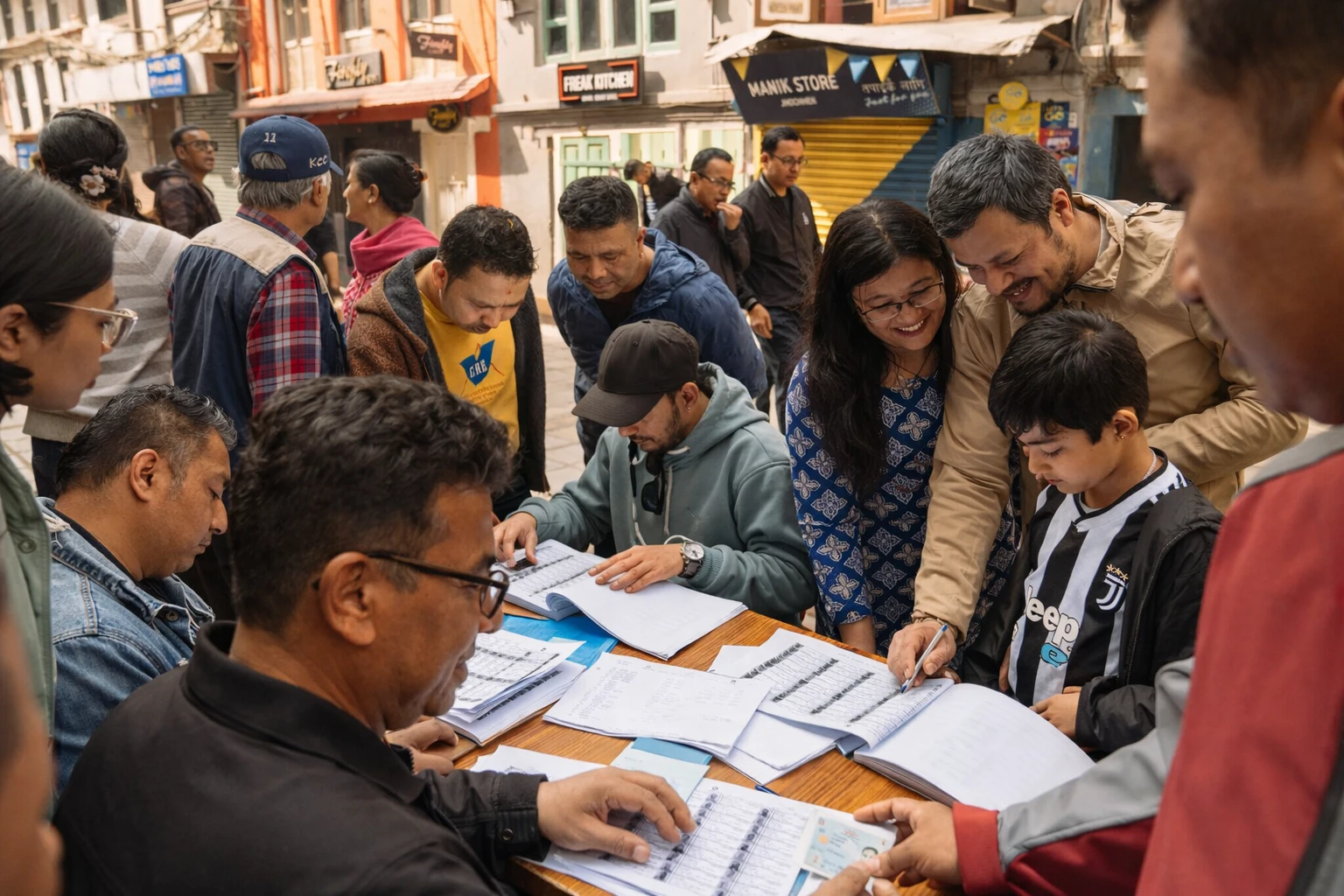
Kathmandu, March 8 — Nepal’s fifth election since becoming a republic has highlighted a significant generational shift in the country’s political landscape, with younger voters and emerging leaders challenging the dominance of long-established political parties. The development reflects changing public expectations nearly two decades after the country abolished its monarchy and adopted a republican system.
The election has drawn attention across South Asia as Nepal continues to navigate the complex process of strengthening democratic institutions while addressing economic and governance challenges.
Growing Influence of Younger Voters
A key feature of the recent election has been the increasing participation of younger voters who are seeking greater transparency, economic opportunities and institutional reform.
Political analysts note that Nepal’s demographic profile has shifted in recent years, with a large proportion of the population now under the age of 35. This demographic change has begun to influence electoral outcomes and policy debates.
Many younger voters have expressed frustration with traditional political leadership and are supporting candidates who promise administrative reforms and improved governance.
Rise of Independent and Reform-Oriented Candidates
The election has also seen the rise of independent candidates and smaller political movements that campaign on anti-corruption and governance reform platforms.
Although Nepal’s major parties continue to dominate parliamentary politics, the success of several independent candidates indicates growing public demand for alternatives to established political structures.
Observers say these developments reflect broader dissatisfaction with political instability and repeated changes of government in recent years.
Nepal’s Republican Transition
Nepal became a federal democratic republic in 2008, ending centuries of monarchy after a decade-long Maoist insurgency and widespread political upheaval.
Since then, the country has held several national and provincial elections under its republican framework. However, the political system has faced persistent challenges, including coalition instability, governance concerns and economic pressures.
Despite these difficulties, elections remain a central mechanism for democratic participation in the Himalayan nation.
Political Landscape After the Election
While traditional parties remain influential, the latest election suggests that Nepal’s political environment may gradually evolve toward a more competitive and diverse system.
Political analysts say that younger leaders and independent candidates could play a larger role in shaping policy debates in the coming years.
At the same time, established parties are expected to adapt their strategies in response to the changing political expectations of voters.
Why This Matters
Nepal’s political transformation carries significance beyond its borders, particularly for South Asia, where democratic institutions continue to evolve in diverse political environments.
The generational shift in Nepal’s politics may influence future governance reforms, economic policy priorities and the country’s engagement with regional partners.
For many voters, the election represents an opportunity to redefine political accountability and encourage more responsive governance.
What Comes Next
The formation of alliances and coalition negotiations will determine the next phase of Nepal’s political process following the election.
Observers say the coming months will reveal whether emerging political voices can translate electoral momentum into meaningful policy change.
As Nepal continues its democratic journey, the latest election marks another milestone in the country’s evolving republican experiment.