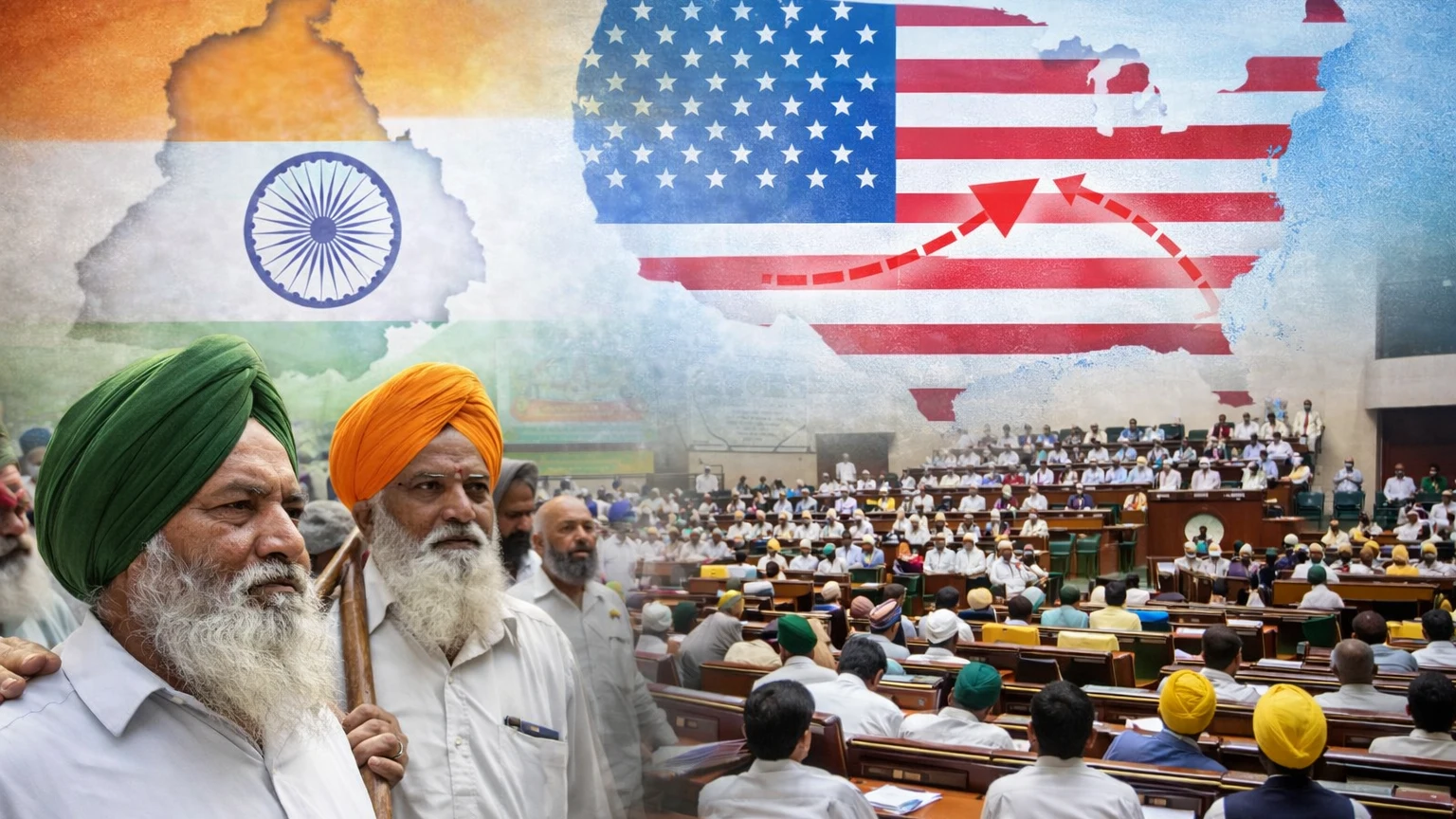
Chandigarh, March 11 — The Punjab Legislative Assembly has passed a resolution opposing the proposed trade agreement between India and the United States, citing concerns about its possible impact on the state’s agricultural sector and domestic industries.
The resolution was adopted during a session of the assembly, where members voiced apprehensions that certain provisions of the proposed agreement could adversely affect farmers, particularly those involved in crops such as wheat and other staples produced in the region.
State leaders argued that international trade arrangements must be carefully evaluated to ensure they do not undermine the interests of local producers or weaken existing agricultural protections.
Concerns Raised Over Agricultural Impact
Lawmakers said Punjab’s economy remains heavily dependent on agriculture, and any trade agreement that allows large-scale imports of agricultural commodities could pose challenges for local farmers.
Members across political parties highlighted that farmers in Punjab already face pressures from rising input costs and fluctuating market prices. They warned that increased competition from imported agricultural products could further strain the rural economy.
According to officials, the resolution urges the central government to take into account the interests of farmers and regional industries while negotiating international trade agreements.
State Government’s Position
During the debate, leaders emphasized the importance of safeguarding the livelihood of farmers and maintaining the stability of the state’s agricultural economy.
The state government said it supports international trade but believes agreements should be designed in a way that protects domestic production and employment.
Officials also stated that consultations with state governments and farmer organizations are essential before finalizing major trade policies.
Bhagwant Mann Says Education Is Key Tool to Eliminate PovertyBroader Policy Debate
Trade agreements between India and major global partners often generate debate among policymakers, economists and industry groups. Supporters argue that such deals can boost exports and expand market access for Indian businesses.
However, critics caution that certain sectors, particularly agriculture, may face increased competition if safeguards are not carefully implemented.
Next Steps
The resolution passed by the Punjab Assembly is expected to be formally communicated to the central government for consideration during ongoing discussions on international trade policy.
Observers note that the debate highlights the broader challenge of balancing global economic engagement with the protection of domestic industries and rural livelihoods.