New Delhi, March 11 — Escalating tensions linked to the conflict involving Iran have begun affecting India’s fast-food industry, with several major restaurant chains facing concerns over liquefied petroleum gas (LPG) supply shortages that could disrupt kitchen operations.
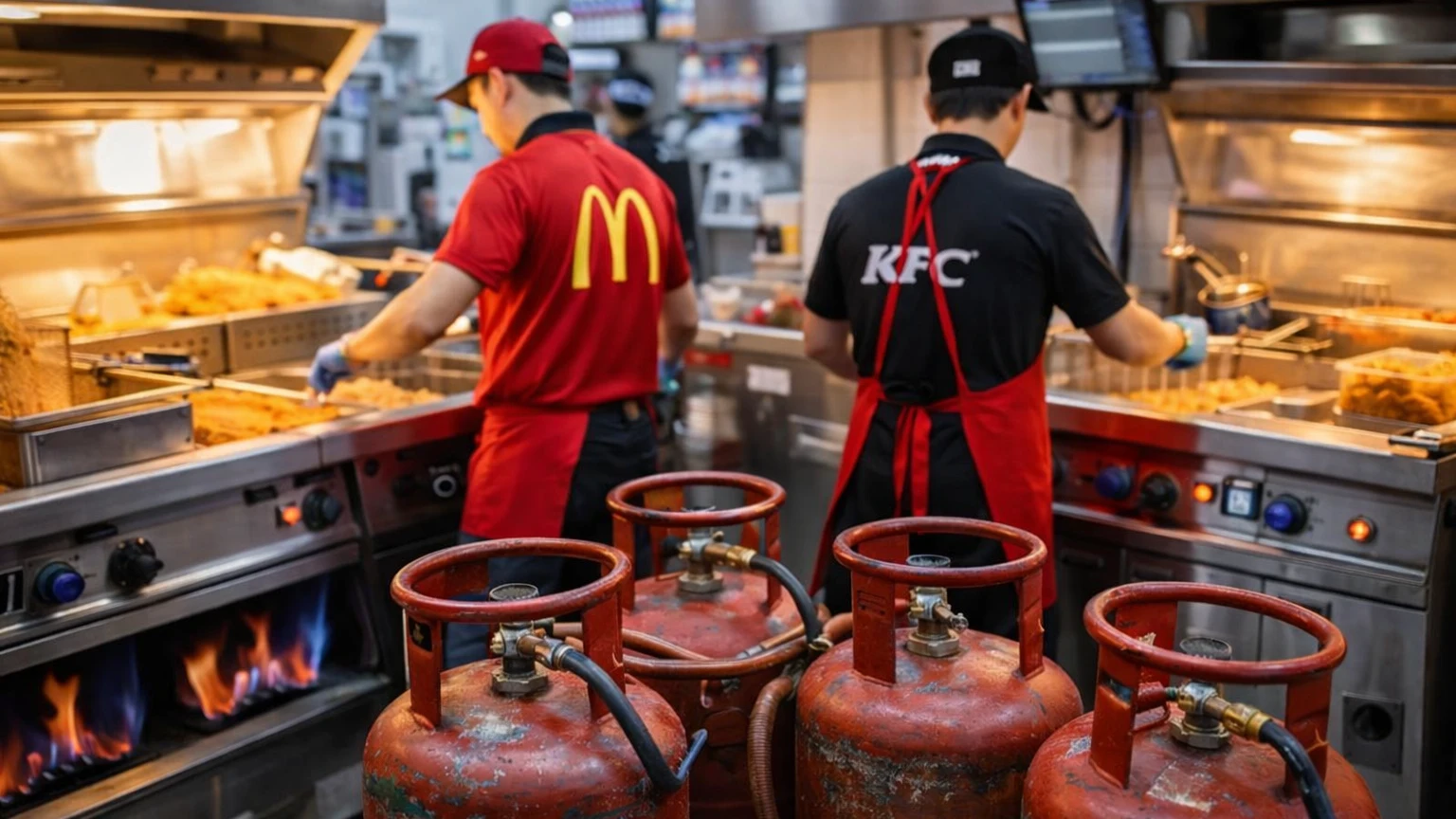
Industry executives say the situation has created uncertainty for popular quick-service restaurant brands such as McDonald’s and KFC, which rely heavily on LPG to run commercial kitchens across hundreds of outlets in India.
The supply pressure follows disruptions in global energy markets caused by geopolitical tensions in the Middle East, a region that plays a crucial role in energy production and shipping routes.
ALSO READ: How global oil and gas conflicts impact India’s economy
Restaurants warn of operational challenges
According to people familiar with the matter, fast-food chains and restaurant associations have raised concerns with authorities about delays and shortages in LPG supply. Commercial kitchens depend on a steady supply of cooking gas, and any disruption could directly impact daily restaurant operations.
Industry representatives have said that restaurants typically operate on tight supply cycles, meaning prolonged delays could affect cooking schedules and food preparation.
Restaurant operators have also highlighted that LPG is a primary energy source for many quick-service outlets because of its efficiency and reliability in high-volume kitchens.
Impact of geopolitical tensions
The recent escalation in the Middle East has created instability in energy supply chains, affecting shipping routes and fuel distribution. Analysts note that any disruption in the flow of petroleum products can have ripple effects across industries that depend on LPG and related fuels.
India imports a significant share of its energy requirements, making the country sensitive to fluctuations in global energy markets. When geopolitical tensions disrupt supply chains, sectors ranging from transport to hospitality can experience operational challenges.
Experts say the food service industry is particularly vulnerable because restaurants rely on uninterrupted cooking fuel to maintain daily operations.
ALSO READ: LPG Supply Disruption Halts Commercial Cylinder Refilling Across Himachal Pradesh
Industry seeks government intervention
Representatives from restaurant bodies have reportedly approached authorities to request priority allocation of commercial LPG cylinders for food service businesses. Industry groups argue that restaurant operations serve millions of customers daily and employ a large workforce across the country.
Operators are seeking assurances that supply chains will remain stable, particularly if the geopolitical situation continues to affect energy markets.
Some restaurant executives have also indicated that contingency measures are being considered, including securing additional gas supplies or exploring alternative energy sources where possible.
Wider implications for the hospitality sector
India’s quick-service restaurant industry has expanded rapidly over the past decade, with global chains and domestic brands opening outlets across metropolitan cities and smaller towns.
Industry observers say that supply disruptions affecting cooking fuel could impact restaurant operations, delivery services and customer experience if the situation persists.
While authorities have not announced any immediate policy changes, industry stakeholders remain hopeful that supply constraints will be addressed quickly to prevent broader disruptions in the hospitality sector.