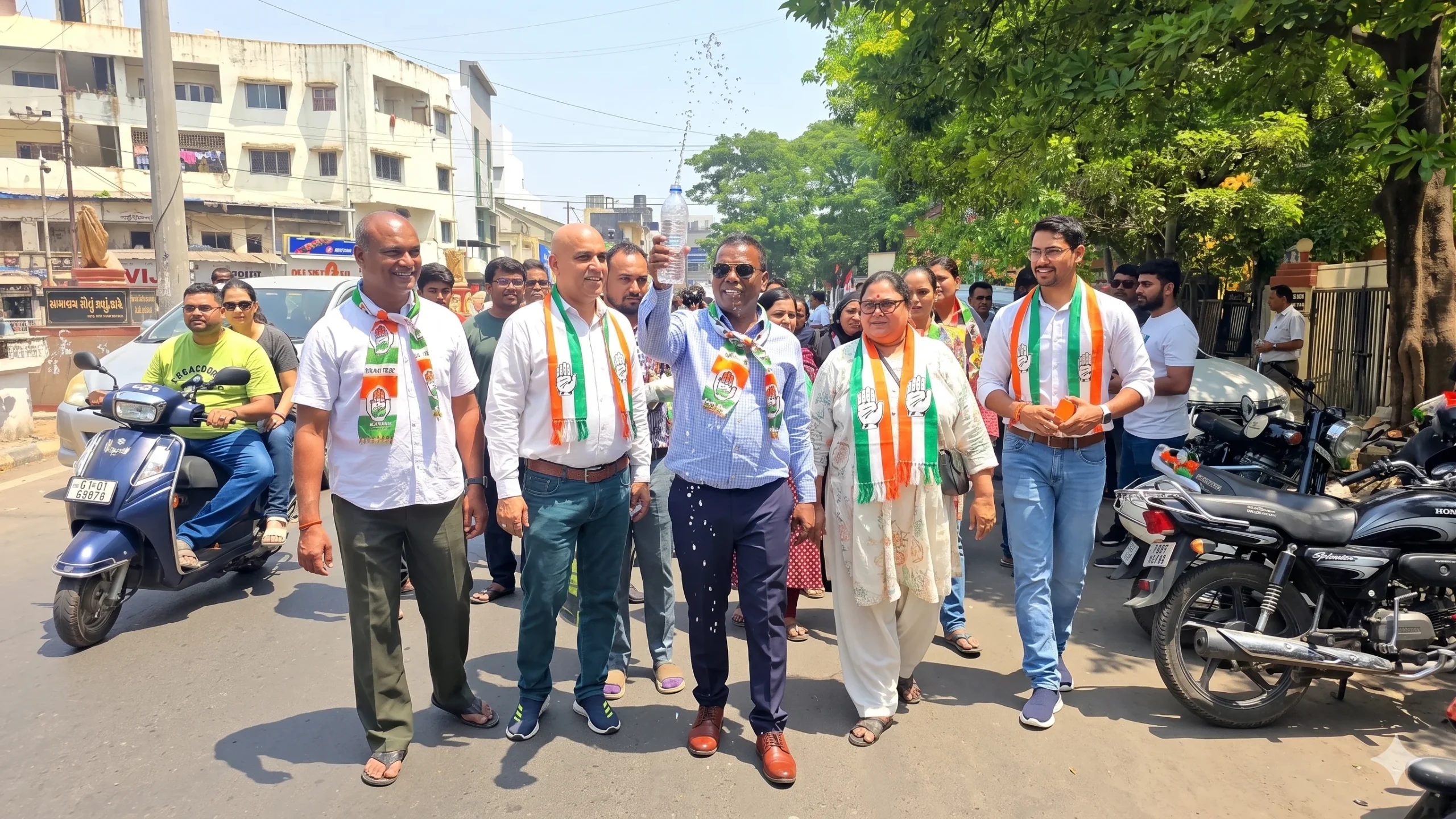
AHMEDABAD, April 14: With Gujarat’s multi-tier civic elections entering a crucial phase, the Congress has moved more than 100 of its candidates to an undisclosed “safe house”, citing fears of alleged poaching and coercion as the Bharatiya Janata Party (BJP) consolidates an early advantage.
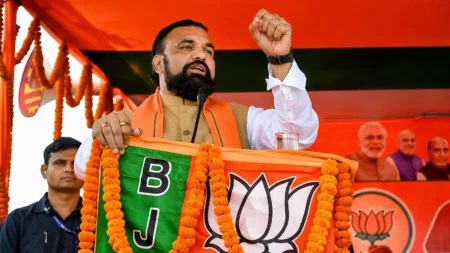
The move comes against the backdrop of the BJP already securing over 50 seats uncontested across local bodies — a development that has significantly altered the pre-poll landscape even before voting begins.
Party leaders said candidates, particularly from Navsari district’s Vansda taluka, were relocated together after reports that rival operatives were approaching contestants with inducements or pressure to withdraw nominations.
Numbers Behind the Early BJP Advantage
According to available election data, the BJP has already won at least 52 seats unopposed across district panchayats, municipalities and taluka panchayats. These include rural and semi-urban pockets where organisational control often determines uncontested victories.
Such wins are critical in local body elections, where total seats run into the thousands. Even a small percentage of uncontested seats can translate into a strong structural advantage before ballots are cast.
For context, Gujarat’s civic elections typically cover:
- District Panchayats (Zila Panchayat)
- Taluka Panchayats
- Municipalities
- Municipal Corporations (in larger cities)
In previous cycles, particularly the 2021 local body elections, the BJP dominated across most tiers, winning a majority of seats in district and taluka panchayats and securing sweeping victories in several municipalities.
Congress Flags Pressure, BJP Yet to Respond
Congress leaders have alleged that candidates are being targeted through a mix of inducements and pressure to withdraw, especially in closely contested rural segments.
Navsari district Congress president Shailesh Patel claimed that “money and pressure are being used to force withdrawals,” prompting the party to isolate candidates — a strategy often referred to as “resort politics” in Indian elections.
There has been no official response from the BJP on these specific allegations. In similar situations in the past, the party has maintained that its electoral success stems from organisational strength and voter support.
Why Civic Polls Matter Beyond Local Governance
While civic elections primarily determine local governance — including sanitation, water supply, and infrastructure — they also serve as a key indicator of political momentum at the grassroots level.
In Gujarat, where the BJP has been in power for over two decades, strong performance in local bodies reinforces its organisational network ahead of Assembly and national elections.
For the Congress, retaining candidates and ensuring contest in maximum seats is crucial to maintaining political relevance in the state.
‘Resort Politics’ Returns to Centre Stage
The relocation of candidates highlights a recurring feature of Indian politics — isolating party members to prevent defections or withdrawals during sensitive phases.
This strategy has been used in multiple states, particularly during government formation or tightly contested elections, where even small shifts in numbers can change outcomes.
In Gujarat’s case, the Congress’s move suggests that the battle is not just about voter mobilisation but also about retaining candidates through the nomination and polling stages.
What to Watch in the Coming Days
With polling approaching, attention will remain on:
- Final candidate lists after withdrawals
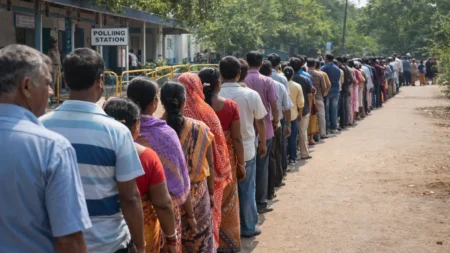
- Turnout in rural vs urban areas
- BJP’s ability to convert early gains into majority control
- Congress’s capacity to remain competitive in contested seats
Even before voting begins, the numbers indicate that the BJP has already secured a measurable advantage — but the scale of its final victory will depend on how the remaining contests unfold.